
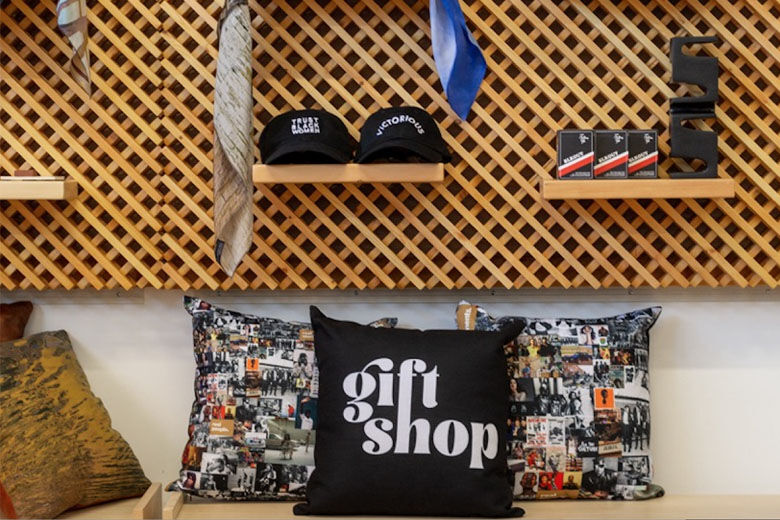
D.C.-based marketing firm Creative Theory Agency has opened The Gift Shop at Union Market, exclusively featuring brands and products from Black-owned businesses and designers.
The Gift Shop’s 1,700-square-foot space also doubles as the headquarters for Creative Theory Agency.
“The Gift Shop is not just about picking up a shirt or art print,” said Tamon George, co-founder of Creative Theory Agency. “It is about supporting Black businesses. It’s about economic empowerment and amplifying Black creative voices who are carrying the culture forward.”
The Gift Shop had a soft open Feb. 6 to kick off Black History Month, but officially opens Feb. 17 with merchandise from Black designers across the region, including candles, pillows, lamps and puzzles and clothing.
George, and co-founder Gary Williams Jr., expect it to be a cultural hub for Black-owned concepts, some of which have never had a brick-and-mortar presence.
It could lead to a big break from some of those designers.
Creative Theory Agency’s clients include Facebook, Netflix, Under Armor, Bevel, YouTube and Google. The firm helps companies develop brand identifies that speak to a diverse audience.
Creative Theory was named one of Ad Age’s Small Agencies of the Year in 2020.
The Gift Shop at Union Market will be open Wednesday through Sunday from 11 a.m. to 6 p.m. Creative Theory currently plans to keep the store open indefinitely.
Union Market opened in 2012. It average 15,000 visitors per weekend and has hosted more than 500 retail pop-ups and events.