Just a thousand feet from the U.S. border, and more than 6,000 miles from home, Ukrainians fleeing war eat and sleep on the streets of Tijuana.
Correspondent Manuel Bojorquez reports Ukrainian refugees are arriving via Mexico because they can obtain a visa to travel to Mexico as tourists, and then make their way to the San Ysidro port of entry.
Volunteers helping them say about 150 Ukrainians a day have been allowed to enter the U.S. on a humanitarian basis — and more are coming.
The Biden administration has promised to welcome 100,000 Ukrainian refugees into this country.
As hundreds of Ukrainians gather in Mexico, many are waiting at an encampment in Tijuana, south of San Diego. Anastasyia Petukh, whose parents stayed behind, showed Bojorquez her home in Tijuana for the next few days – a tent – and the only possessions she could bring with her.
“You have hope that it will get better [in the U.S.]?” he asked.
“Just hope, yeah. And pray.”
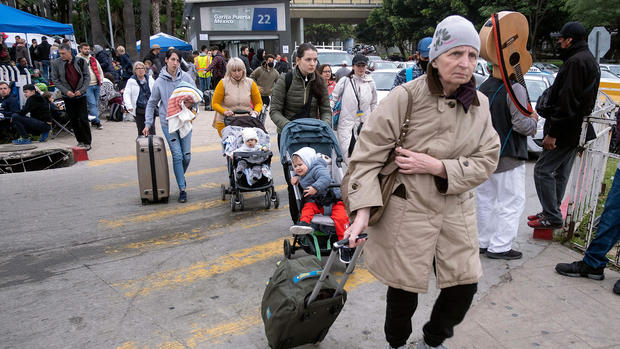 Asylum seekers from Ukraine walk towards the Mexico-U.S. San Ysidro Crossing port in Tijuana, Mexico, on April 2, 2022.
GUILLERMO ARIAS/AFP via Getty Images
Others here stay at hotels, but come back to check their number – assigned to them by Ukrainian-American volunteers – that determine when they can present themselves to U.S. Border agents.
Veronika Sviatetska told Bojorquez her number was 1,185.
- Ukrainian refugees add to millions displaced around the world
- The plight of Ukrainians fleeing Putin’s war (“Sunday Morning”)
- Warsaw mayor on the plight of Ukraine refugees: “The West has to wake up” (“CBS Mornings”)
The Tijuana encampment started at the last bus station before reaching the U.S. border. Just days ago, there were only a few dozen people here, but it has grown exponentially. It’s now estimated there are more than 1,000 Ukrainians waiting in this general area.
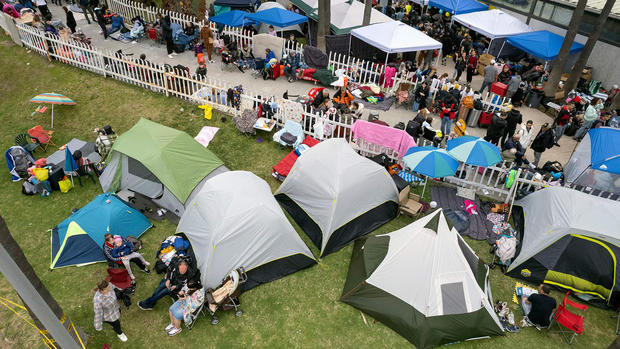 An aerial view of an improvised camp of Ukrainians seeking asylum in the United States, on the Mexican side of the San Ysidro Crossing, in Tijuana, Mexico, April 2, 2022.
GUILLERMO ARIAS/AFP via Getty Images
It’s the same place where asylum-seekers, largely from Latin America and the Caribbean, have previously gathered, but most have been turned away due to current U.S. immigration policies.
At this shelter, they told us they feel for the Ukrainians, but say they, too, are facing life and death situations. Roxana Ruiz Ramirez, from Honduras, says gangs are threatening to kill her family. “Tambien nosotros tenemos necesidad” – “we need help, too,” she said.
For now, more Ukrainians are coming. Volunteers greet them at Tijuana’s airport, and a gym is being turned into a shelter.
Back at the border, a woman named Mila, from Los Angeles, met her 17-year-old grandson, Anthony, who traveled alone for almost a month from Kyiv.
“God bless Ukraine,” said Mila, hugging him. “God bless Mexico. And God bless America.”
She told Bojorquez, “He’s very, very happy that he’s here on this land and, you know, can be reunited with his family.”
Russians are also arriving here – about 800 in February, the month the war began. They say they do not support the war and are fleeing political persecution. But their cases are more complicated, because the U.S. has not created an official exemption for asylum seekers from Russia.
- Want to help people in Ukraine? Here are ways to donate (CBS Moneywatch)