▶ Watch Video: Russia launches artillery and missile attacks at Kyiv
The national soccer teams for Poland and Sweden will not play Russia in pivotal FIFA World Cup playoff qualifiers in March because of the country’s invasion of Ukraine.
Poland’s football association president Cezary Kulesza said in a tweet on Saturday it is “time to act!”
“Due to the escalation of the aggression of the Russian Federation towards Ukraine the Polish national team does not intend to play the play-off match against Russia,” he wrote.
Sweden’s soccer federation later joined Poland’s call, saying in a statement they will not play against Russia “regardless of where the match is played” and urged FIFA to cancel the playoff matches where Russia is a participant, according to CBS Sports.
The Czech Republic’s soccer federation has yet to comment on Poland and Sweden’s actions, but joined them in a letter on Thursday to move the games out of Russia.
Russia was set to play Poland on March 24 in a semifinal playoff game in Moscow, and the winner of that match would face the victor between Sweden and the Czech Republic, who were scheduled to play on the same date in Sweden. That winner goes onto the World Cup in Qatar later this year.
The response comes days after FIFA President Gianni Infantino on Thursday failed to cancel the playoff games or condemn the actions of Russian President Vladimir Putin, who Infantino has praised in the past. Putin, who hosted the 2018 World Cup, awarded Infantino with a “friendship” medal in 2019.
Polish and Bayern Munich star Robert Lewandowski supported the decision to back out of playing against Russia.
“It is the right decision!” he said. “I can’t imagine playing a match with the Russian National Team in a situation when armed aggression in Ukraine continues. Russian footballers and fans are not responsible for this, but we can’t pretend that nothing is happening.”
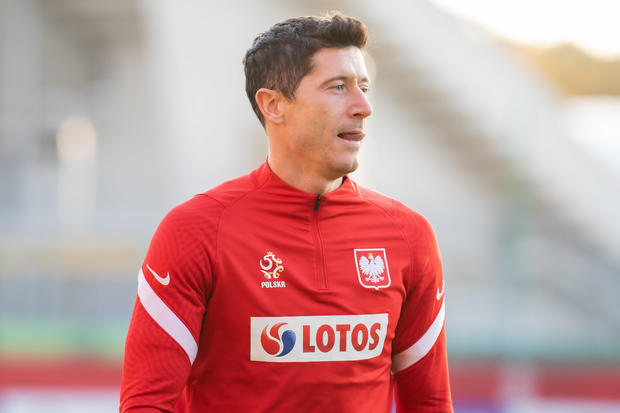 Poland’s Robert Lewandowski said he can’t “imagine playing” against the Russian national team while the country attacks Ukraine.
Mikolaj Barbanell/SOPA Images/LightRocket via Getty Images
Russia’s assault on Ukraine intensified overnight Saturday. Putin’s military launched coordinated artillery and missile attacks, taking aim at key sites in Kyiv and other cities.