▶ Watch Video: COVID deaths and cases surge in new peak worldwide
India’s COVID surge is getting worse. There were 400,000 new cases on Saturday — and a stream of critical cases arriving at hospitals already over full.
Everywhere, there is a shortage of oxygen. In the hospitals, and on the street, where family members line up for an hour to refill tanks for patients at home. A Sikh temple in East Delhi even set up curbside oxygen for the very sickest.
Like Abu Sadat, whose brother is doing what he can until he can find hospital care.
“No beds,” he said. He’s been looking for more than a week.
As funeral pyres burn day and night, Indians are both devastated and furious.
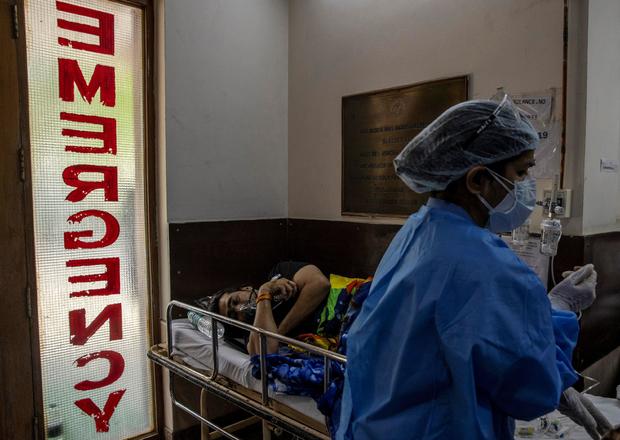 A patient suffering from the coronavirus disease (COVID-19) receives treatment inside the emergency ward at Holy Family hospital in New Delhi, India, April 29, 2021.
DANISH SIDDIQUI / REUTERS
The country managed to beat its first COVID wave a year ago and opened up, even to mass religious and political gatherings.
Now Indian families — especially the poor — are now paying the price.
The other current COVID hotspot is Brazil, with a per capita death rate even higher than India’s at the moment.
A vaccination program that’s reached into Brazil’s vast interior has distributed more than 40 million doses.
But in the cities — with no lockdown — it’s no surprise the virus has continued to spread.
And in Turkey, where the COVID rate started to climb steeply last month, authorities anxious not to lose control imposed the country’s first-ever lockdown.
From Europe, at last some good news. Deaths and infections are falling as vaccination rates rise — and some countries are even starting to talk about opening their border again to foreign travelers.