Anyone driving in Northern Virginia over the last four months has noticed fewer cars on the road due to the coronavirus pandemic.
Before the pandemic, it was impossible to imagine the peak trip from Tysons Corner to the end of the Dulles Toll Road taking less than 15 minutes, but that travel time became routine in March, April, May and June. The length of the road is just over 13 miles.
However, the reduced traffic is taking a toll on the toll road, according to the Metropolitan Washington Airports Authority, in a document released ahead of an upcoming board meeting.
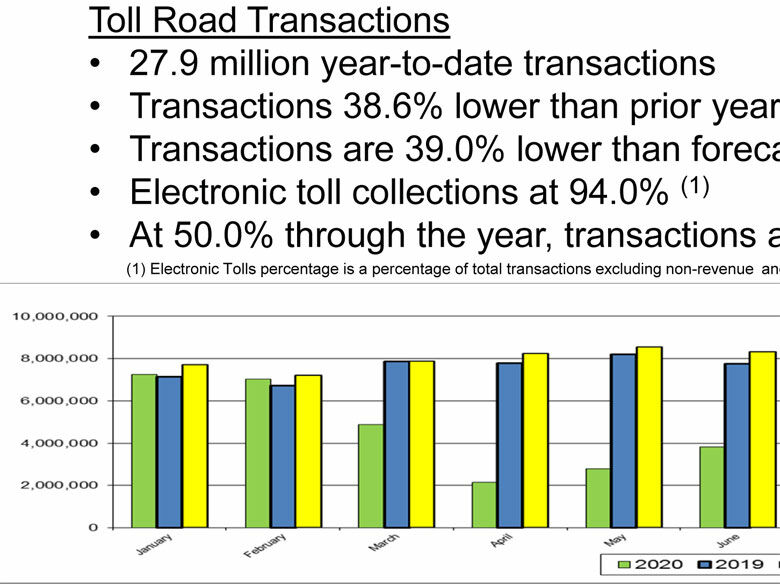
For example, in the first half of 2019, the toll road saw about 45 million transactions. This year, that number is down by almost 40%. In June alone, there were about 50% fewer transactions, and that’s even with significantly more cars on the road in June compared to April and May.
The problem with the reduced toll collection is that the toll road is a major source of funding for the expansion of the Silver Line to Dulles International Airport.
The year started with relatively normal toll road use in January and February before dropping off significantly in the second half of March.
In April, the region’s first full month under coronavirus-related stay-at-home orders, toll road transactions dropped to just over 80,000 per weekday. In April of 2018 and 2019, the transactions were closer to 300,000 per weekday.
The MWAA income for this year and its expenses have also decreased compared to the same period last year. The Dulles Corridor Enterprise Fund, which MWAA uses to pay down debt and other Silver Line-related expenses, is down overall this year by about $14 million, which includes nearly $12 million this year in Silver Line-related expenses.
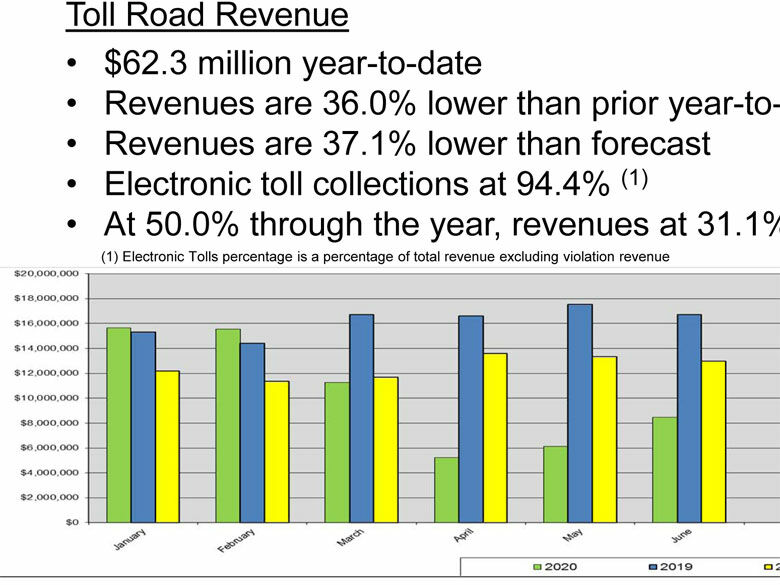
In June alone, the road’s revenue was down about $1 million compared to the same month a year ago. In 2020 overall, the revenue is down over $4 million compared to the same time frame in 2019.
While the slowdown starting in the second half of March through June is significant, the level of traffic is increasing. Tolls in June brought in about $8.45 million, while the two prior months combined to generate only about $11 million.
Toll road rates increased in 2019, which offset a slight reduction in the use of the road. The road from Tysons to Dulles International Airport is not the only tolled road to have seen an extreme reduction in traffic during the first half of 2020. Similar changes have been seen on the Capital Beltway, 95 and 395 Express Lanes, according to reports by the Washington Business Journal.
The Silver Line stations linking the current end of the line — in Reston — to the airport may not open until 2021.
- Sign up for WTOP alerts
- Latest coronavirus test results in DC, Maryland and Virginia
- Coronavirus FAQ: What you need to know
- Coronavirus resources: Get and give help in DC, Maryland and Virginia
- DC’s National Gallery of Art West Building to partially reopen Monday
- Virus spread, not politics should guide schools, doctors say
- Parenting in a pandemic: Anxieties working parents face with back-to-school decisions
- Why it’s particularly important for diabetics to manage stress during the pandemic
Looking for more information? D.C., Maryland and Virginia are each releasing more data every day. Visit their official sites here: Virginia | Maryland | D.C.