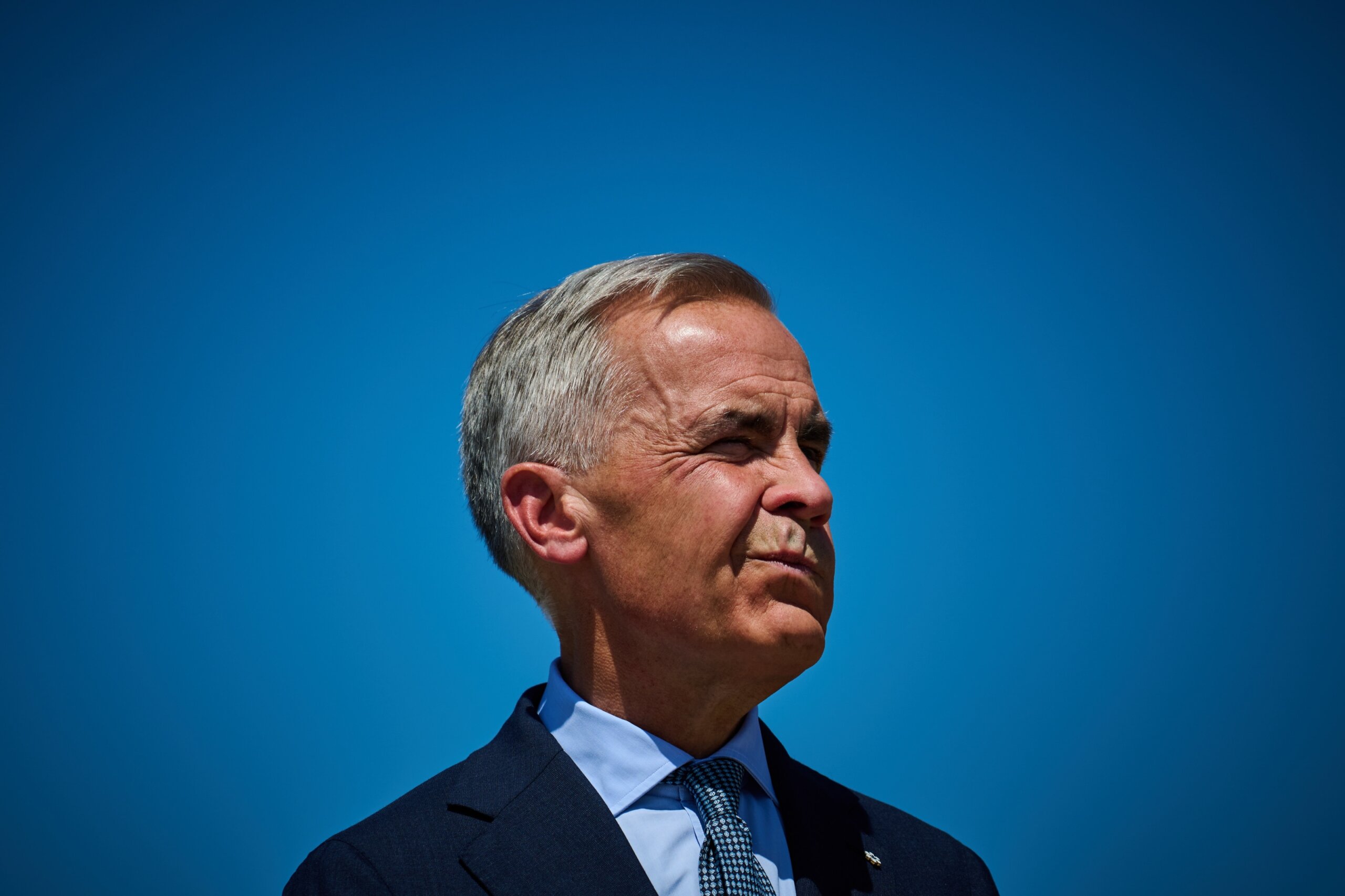
Trump is threatening to bomb Oman, but why?

The world knows that U.S. President Donald Trump is angry with Iran. But he’s not happy with the small country lying across the Strait of Hormuz from the Islamic Republic, either: Oman.

Oman has played a relatively low-profile role since the Iran war began, including as a mediator. But its geography has thrust the sultanate into the uncomfortable position of negotiating with Tehran over management of the strait while facing Trump’s threats.

Trump this week told Fox News reporter Trey Yingst that the U.S. would bomb Oman if it “gets in the way,” using an expletive for emphasis. It’s not the first such threat he’s made. Oman’s foreign ministry didn’t immediately respond to emailed questions about Trump’s threat and when Oman and Iran might issue a joint statement on their deal.

Here’s a look at the country in the middle of the Washington-Tehran tug-of-war.

Trump is not happy about emerging Oman-Iran deal

Trump threatened Oman because he’s not happy that it’s close to a deal with Iran over the strait, two regional officials said Tuesday.

Trump is under pressure. He vowed a quick war and a weakened Iran, along with a better deal on Tehran’s nuclear program. Instead, Iran has seized on the Strait of Hormuz as a new weapon in talks, asserting control of what had been seen as an international waterway before the war.

U.S.-Iran negotiations have dried up. This week ended the 60-day period that launched when the U.S. and Iran signed an interim agreement. It had been meant to open the way for more detailed talks. There’s no sign of it being extended. Trump now says there are no planned talks with Iran.

So the only confirmed discussions happening now are between Iran and Oman about shipping on the strait. These have been going on for weeks. Oman hasn’t said much about them publicly. Tehran says they’re finalizing a joint statement. There’s widespread thinking that Iran is not in much of a hurry.

Trump has made plenty of threats against Iran. Now he’s venting his frustration at Oman, too.

The sultanate had been trying to make peace

Oman, with a population of just over 5 million, is one of the quieter actors in the Gulf. It has allowed the U.S. military to use its facilities, though Washington has described defense relations as smaller in scale compared with Gulf neighbors like the United Arab Emirates.

Unlike other regional states, Oman hasn’t been targeted during the war in the way that Tehran has lashed out at other Gulf neighbors. The Washington-based Quincy Institute for Responsible Statecraft notes that while Omani ports have been targeted by drones, Iran hasn’t claimed responsibility and Oman hasn’t blamed Iran, and no missiles have struck Omani territory.

Oman’s leaders have long preferred engagement with Iran. The sultanate has been involved in mediation efforts, but that work is now being driven by Qatar and Pakistan.

The world’s focus has turned more toward Oman since the interim agreement was signed. Not long after the signing, the relative calm was shattered when Iran started firing at ships trying to transit the Strait of Hormuz near the Oman coast on a route supported by the U.S.

Now Oman is in discussions that appear to be driven by Iran, which has described the talks as aiming to “develop mechanisms to ensure safe navigation through the Strait of Hormuz while respecting the sovereign rights and sovereignty of both coastal states, as well as Iran’s security and national interests.” The mechanisms might include fees.

Regional officials have said the emerging deal calls for ships to enter the Persian Gulf through an Iranian-controlled route and exit through a route controlled by Oman. But any deal appears to rely on the U.S. lifting its blockade of Iranian ports.

Oman earlier this month described the talks as “proceeding in a positive and constructive atmosphere,” while in the same statement condemning repeated attacks on ships transiting the strait.

After a meeting Tuesday between Oman’s foreign minister and his Egyptian counterpart, Egypt said the Iranian-Omani deal could pave the way for the U.S. and Tehran to return to negotiations for a “comprehensive and permanent deal that addresses all concerns and enhances regional security and stability.”

It is not clear what effect Trump’s threat might have

Oman is caught between two heavily armed and stubborn powers. Meanwhile, global supplies of oil, natural gas and related goods are only able to get through the strait at a reduced level, with ships still at risk of attack.

Since Trump’s latest threat, the government’s Oman News Agency has been posting about other things — the Muscat Stock Exchange, sports, imports of coffee and tea. Foreign ministry statements have focused on diplomatic meetings and greetings.

It is not clear whether Trump’s threat will make any difference in Oman’s talks with Iran, including in hurrying the countries to finalize and announce a deal.

But it’s clear that the U.S. president is passing along the growing heat his administration feels as midterm elections approach, and as the global economy watches events on the Iran-gripped strait for any sign of relief.

___

Associated Press writer Samy Magdy in Cairo contributed to this report.
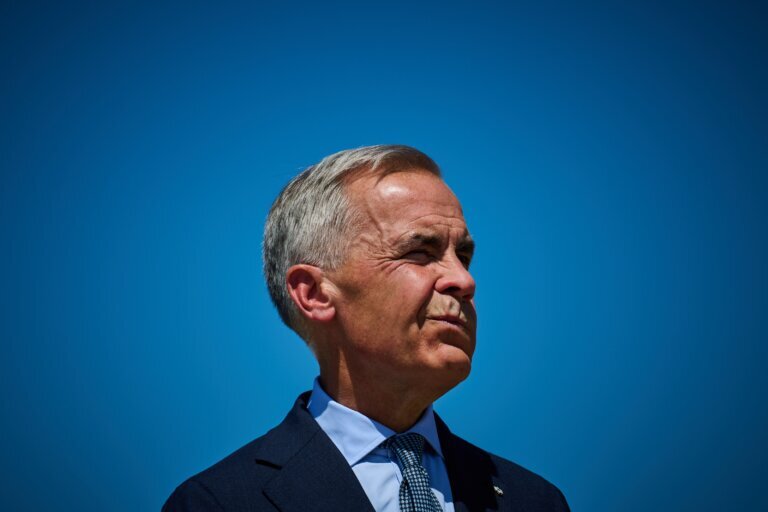
Pete Buttigieg returns to first-in-the-nation South Carolina with a fresh appeal to Black voters

Orangeburg, South Carolina (CNN) — Pete Buttigieg has been to this small but historic city in South Carolina’s Midlands at least twice before, as an underdog presidential candidate in 2020 and then as the better-known transportation secretary under President Joe Biden in 2023.Now a private citizen eying a second White House bid, Buttigieg returned this weekend with renewed urgency, appealing to Black voters who have newly solidified influence in the 2028 nominating process and whom he failed to win over in his last presidential campaign.Buttigieg told party activists during a morning speech in Florence that Republicans were using redistricting as “the culmination of a generational project to dismantle Black representation.” He held a roundtable with students at a historically Black college where he discussed his idea of reparations for slavery. And during an evening speech to the storied NAACP branch here, he said President Donald Trump’s second term may feel all too familiar to activists who fought for civil rights in Orangeburg in the 1960s.“The mid-2020s does not represent our nation’s first experience with corruption and self-dealing, with bigotry and exclusion, with inequality and injustice, with undemocratic behavior or with political violence,” Buttigieg said, adding that prior struggles played out “not on some distant shore, but in places like Orangeburg.”With a midterm election looming where both parties are campaigning over the cost of living, Buttigieg chastised fellow Democrats whom he said prefer to prioritize economic concerns over tackling more fundamental questions about democracy. He argued that civil rights legends such as Martin Luther King Jr. and Rev. Jesse Jackson have shown that Americans “can — and we must — do both.”His trip to South Carolina, Buttigieg’s first since leaving the Biden administration, marked the beginning of a new phase of political maneuvering ahead of the next presidential election, with Buttigieg making a concerted effort to get in front of Black voters and demonstrating new bonafides from his transportation secretary tenure.It was also the first major visit by a potential 2028 candidate to the state since the Democratic National Committee voted on August 15 to keep it as the location for the first presidential primary in the nation, a nod to the political power of its large Black electorate.Buttigieg brushed off a question about his 2028 plans after his speech in Florence, telling reporters he is “totally focused on 2026.” But there were ample reminders of speculation about his next move on Saturday, including a scattering of homemade signs reading “PETE” and “2028” that sprung up when he took the stage. Surveying the enthusiastic crowd, he observed he should “come here more often.”One fan, 64-year-old retiree Karen Ench, wore a “Pete Buttigieg 2028” shirt to the speech. Contemplating his 2028 ambitions afterward, she said she thought he was “really taking it much more serious” and focusing on areas of improvement from 2020.A 2028 bid would undoubtedly start with higher expectations for the onetime mayor of South Bend, Indiana, compared to his first run.“The Pete Buttigieg of 2020 is not the Pete Buttigieg of 2026,” said Marlon Kimpson, a Black former state senator who backed Biden in the 2020 primary. “He has name recognition, he’s no longer introducing himself. I think people generally like Pete, and that’s a big deal in an open race because he starts out at a plus. But as we look at his economic agenda, just for the average South Carolinian, with emphasis on the African American community … and the political infrastructure he has deployed in our state, there will be questions with respect to those issues.”Buttigieg’s 2020 campaign, despite winning the Iowa caucuses with a much Whiter demographic, came to an end in South Carolina, dogged by his weaknesses with Black voters. After powerful South Carolina Rep. Jim Clyburn endorsed Biden and gave his flagging bid a shot of momentum that ultimately propelled him to the presidency, Buttigieg finished fourth in the Palmetto State and dropped out a day later.Biden received 61% support from Black voters in South Carolina, while Buttigieg got 3%, according to exit polls.Colleen Condon, a Charleston lawyer and longtime party activist who backed Buttigieg in 2020, said that “2020 is so hard to compare against” due to the unique circumstances of Clyburn’s support for Biden. Now, Condon, who is White, said, Democrats are “anxious for someone young and energetic” and noted Buttigieg would bring more experience to the 2028 race.“He has done a lot of work in the last eight years, (including) as secretary of transportation, in showing his ability to work on the federal level,” Condon said.‘What he’s actually done’In interviews across the state on Saturday, Black Democrats agreed Buttigieg’s experience as transportation secretary has distinguished him since he last sought their support. He played a high-profile role in promoting Biden’s bipartisan infrastructure law, visiting communities small and large across the country to announce funding for long-awaited projects.In Florence, Mattie Thomas, a member of the South Carolina Democratic Party executive committee, said she did not know about his time as mayor but now she sees him as “one of our best transportation secretaries.”“I think he’ll fare extremely well this go around because people, they’ve seen what he’s actually done,” Sandra Burgess Glover, a retired educator, said in Orangeburg as Buttigieg mingled with the dinner crowd before his speech.Buttigieg was showered with praise at the dinner for his June 2023 announcement in the city with Clyburn of a $23 million federal grant to better connect Orangeburg’s two HBCUs to downtown. Orangeburg Mayor Michael Butler prompted a standing ovation for Buttigieg when he brought up the project, calling it “a long time coming.”Deloris Frazier, a member of the Orangeburg County Council, embraced Buttigieg as he worked the crowd before the dinner, telling him that she keeps a photo in her home of the two of them from that day in 2023. She told CNN afterward that she’d support Buttigieg for president if he ran, joking that she would take the photo and “just blow it up and make it bigger.”Earlier Saturday, Buttigieg visited one of Orangeburg’s HBCUs, Claflin University, and held an hourlong roundtable with about 20 students. The conversation topics ranged from artificial intelligence to reparations for slavery, which was a litmus test in the 2020 primary.Buttigieg said he still supported legislation to create a commission to study reparations. But he said he learned as transportation secretary that the federal government could take “reparative” steps sooner, pointing to his efforts to combat decades-old urban planning that led to highways cutting across Black neighborhoods.“I have a perspective on that that I didn’t have before when I didn’t have a chance to work on federal policy,” Buttigieg said.Usir Jackson, the president of the Student Government Association, said afterward he found Buttigieg “down to earth” and “authentic.”Buttigieg, who took notes at some points, appeared moved when the roundtable topic turned to young voters feeling disillusioned – and Jackson shared why he still makes sure to vote.“I do it to respect people who came before me,” Jackson said, “so I could vote.”Hurdles remain with Black votersFor all the praise of his record in the Biden administration, some of Buttigieg’s admirers acknowledge he needs it to translate into far more Black voter support than he saw in 2020.While the crowd he spoke to in Orangeburg was overwhelmingly Black, the audience that came to see him earlier in the day in Florence, at the state Democratic Party’s Spratt Issues Conference, was mostly White.State Rep. JA Moore was a crucial Black supporter for Buttigieg in 2020 in South Carolina, backing him after then-California Sen. Kamala Harris dropped out. Moore said in an interview that any potential 2028 candidate needs to focus less on tailoring a message to Black voters and more on developing a “cadence” of regularly reaching out to them where they are.“What we call it is the difference between a ‘come here’ and a ‘been here,’” Moore said. “I think one of the things people missed about Joe Biden – he was a ‘been here’ in the sense that he had been coming to South Carolina for over 40 years.”Some Black Democrats said he may continue to face hurdles in the state as a gay man, an issue that came up in 2020 as he reached out to socially conservative church congregations. “This is the Bible Belt,” Thomas said matter-of-factly.“Sometimes they want to categorize a candidate or individual because of their sexual preferences,” said Brenda Montgomery, a 67-year-old training specialist from Lake City who saw Buttigieg in Florence. “But for me, he is everyone. He represents everyone, and I really like him as a person because he is approachable.”Buttigieg, whose crowd in Florence was dotted with some small rainbow flags, does not go out of his way to talk about his sexual orientation. But on Saturday, he spoke regularly about his two children, who are mixed-race, that he adopted with his husband, Chasten, noting fatherhood is the biggest personal change he has experienced since 2020.It’s a life change that would be put to the test by another grueling presidential campaign, which South Carolina Democrats see as likelier than ever. While he mostly avoided talk of 2028, he said in Florence that he was excited about South Carolina’s first-in-the-nation status and how it would spotlight the state’s diversity.Buttigieg has fielded the 2028 speculation by becoming one of the most prolific endorsers in the midterms, with an eye on supporting Black Democrats and Democrats running in Republican-leaning territory. He kicked off his South Carolina trip on Friday night by headlining a fundraiser in Charleston for Nancy Lacore, a retired Navy officer running for an open House seat in a district that Trump carried by 13 percentage points in 2024.Condon, the Democratic activist who helped host Buttigieg’s fundraiser for LaCore, said it was “extremely early, but I’m very inclined to” support Buttigieg again in 2028 if he runs.Moore said it was too early for endorsements but said he especially likes Buttigieg for at least one reason.Buttigieg “has the ability to learn and adapt,” Moore said. “I find that refreshing and appealing.”The-CNN-Wire™ & © 2026 Cable News Network, Inc., a Warner Bros. Discovery Company. All rights reserved.
Read Next Story