With more people donning face masks to curb the spread of the coronavirus, some criminals are taking advantage of the situation.
“Being anonymized has always been associated with more deviant and criminal behavior,” ranging from bank robberies to the Ku Klux Klan, said Bryanna Fox, a former FBI Agent and associate professor in the University of South Florida’s criminology department.
Fox said studies have found “people who wear masks feel more enabled and empowered to do things that they normally wouldn’t have done if their face was seen in public.”
She said that for someone who otherwise wouldn’t commit a crime, “this could be an opportunity that they take up because they feel more protected.”
And, of course, this makes those who would have committed crimes anyway harder to identify.
“The big issue is you have both of those happening at the same time,” Fox said.
Scattered robberies involving suspects wearing medical-style face masks have been reported across the country.
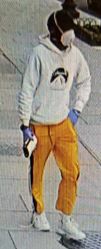
In a surveillance image released by D.C. police, a suspect can be seen wearing one of the masks during a robbery in the 1300 block of Massachusetts Avenue NW on March 30.
In D.C. and Virginia, there are laws against using masks to conceal one’s identity.
Virginia Gov. Ralph Northam said at a news conference earlier this week that police will not issue citations to people who wear masks for medical protection.
- Sign up for news alerts from WTOP
- Masks in public likely, despite Va., D.C. mask laws
- ‘Rumor has it’: Maryland moves to inoculate against false coronavirus rumors
- Montgomery County could make face masks mandatory for businesses
- Coronavirus test results in D.C., Maryland and Virginia
- Coronavirus FAQ: What you need to know