‘He’s terrified’: Iraqi man fears deportation fueled by Trump travel ban

WASHINGTON — Jony Jarjiss came from Iraq to the United States for the love of a woman — 25 years later he’s fighting to stay for the love of his new country.

And, to avoid being killed in his former home.

Jarjiss, who was detained Thursday, is one of several hundred Iraqi nationals fighting desperately to remain in the United States, despite deportation orders that are being fueled by President Donald Trump’s most recent travel ban.

Also this week, a federal judge ruled that the U.S. cannot immediately deport nearly 200 Iraqi nationals who were arrested last month by U.S. Immigration and Customs Enforcement.

The ICE raids were precipitated, indirectly, by the Trump administration’s travel restrictions that bar new visas for people from six predominantly Muslim countries. Iraq was dropped from the list when the president reissued the order in March.

For decades, Iraq has refused to issue paperwork to accept Iraqi nationals whom the United States wanted to deport.

However, in March, Iraq agreed to begin accepting deportees in exchange for being dropped from the list of countries affected by Trump’s revised travel ban.

U.S. District Court Judge Mark Goldsmith, in Michigan, has ordered the government to keep the Iraqis here while their deportation cases are reviewed by immigration courts.

If the Iraqis were deported now, it would subject them to “substantial risk of death, torture, or other grave persecution before their legal claims can be tested in a court,” Goldsmith’s order reads.

One man’s story

“Jony left Iraq because he was in love with a woman who lived here in the U.S., who grew up with him in his village in Iraq,” said Jarjiss’ lawyer, Edward Bajoka. “He entered the U.S. on a fiance visa, which lets a person stay in the country for 90 days, during which he must get married to his sponsor.”

But that didn’t happen.

“Long story short, the marriage never occurred,” said Bajoka. “He and his fiancee, it just didn’t work out.”

His client, who lives in Saginaw, Michigan, overstayed his three-month visa — in large part because he feared Iraqi President Saddam Hussein.

“He was afraid to go back to Iraq because he had deserted the Iraqi army before the first Gulf War,” Bajoka said. “Desertion of the army is punishable by death, and Saddam’s regime would definitely not hesitate to put him to death.”

In 1994, Jarjiss was ordered deported, but remained here because at the time the U.S. had no diplomatic relationship with Iraq.

“Iraq would not accept him back throughout the entire reign of Saddam Hussein, or even after the Saddam regime fell, after the U.S. invasion (of Iraq in 2003),” Bajoka said.

So, Jony Jarjiss has been living the life of an American.

“He works in a grocery store seven days a week, doesn’t make much money, pays his taxes,” said Bajoka. “He barbecues on the 4th of July, celebrates Thanksgiving — he’s an average, everyday, American guy.”

And, once a year he checked-in with immigration officials. But this week, Jarjiss’s American dream turned into a nightmare.

“He reported to ICE with me for his regular check in,” said Bajoka. He said his client was nervous, waiting outside the ICE field office in Detroit.

“They detained him there on the spot, after making us wait six hours.”

Bajoka said Jarjiss was kept in solitary confinement but was transported to a prison in Youngstown, Ohio, on Friday.

“I spoke with him by phone. He’s scared. He’s nervous,” said his attorney. “He told me he feels he might have been better off jumping in the river and trying to make his way across to Canada.”

Why Jarjiss?

Since the June roundup, ICE officials have said most of the people arrested and scheduled for deportation have committed a crime, other than being in the United States illegally.

“Jony has never been convicted of any crime whatsoever, in the United States or any other country,” Bajoka said. “Jony is the first person that I’m aware of that has been detained that does not have a criminal history.”

Contacted by WTOP, an ICE spokesman in Detroit said he would research the specifics of Jarjiss’ detention but has not yet said why he was detained.

Jarjiss has a 21-year-old daughter, and a baby grandson, who are both American citizens. In addition, his siblings are all American citizens or permanent residents.

“She’s beside herself at the thought of her father being deported,” said Bajoka, of Jarjiss’ daughter given Iraq’s current climate.

“Anyone who has been in the West, particularly the United States, that’s sent back to Iraq is a target for Shiite militias, for ISIS, for other paramilitary groups that would seek to do harm to Americans,” said the attorney.

“Jony, in particular, is a Christian. He’s a Caldean Catholic,” said Bajoka. “The Caldean Catholic villages were specifically targeted, and taken over, ransacked and looted by ISIS in June 2014.”

“Jony would be a prime target.”

Not giving up

Bajoka said his client, and he, are continuing to fight.

“Thankfully, he cannot be just sent away, right away,” Bajoka said.

With the federal stay in place until July 24, Bajoka plans to file emergency motions in the next few days to get Jarjiss released on bond.

In addition, he will file an emergency motion to reopen Jarjiss’ immigration case, on the grounds that conditions have changed in Iraq. “Because Iraq has certainly changed since the 90s, when he was originally ordered deported.”

“Jony is praying that the United States will prove itself to be the greatest country on Earth, and allow him to stay here with his family.”
Pete Buttigieg returns to first-in-the-nation South Carolina with a fresh appeal to Black voters

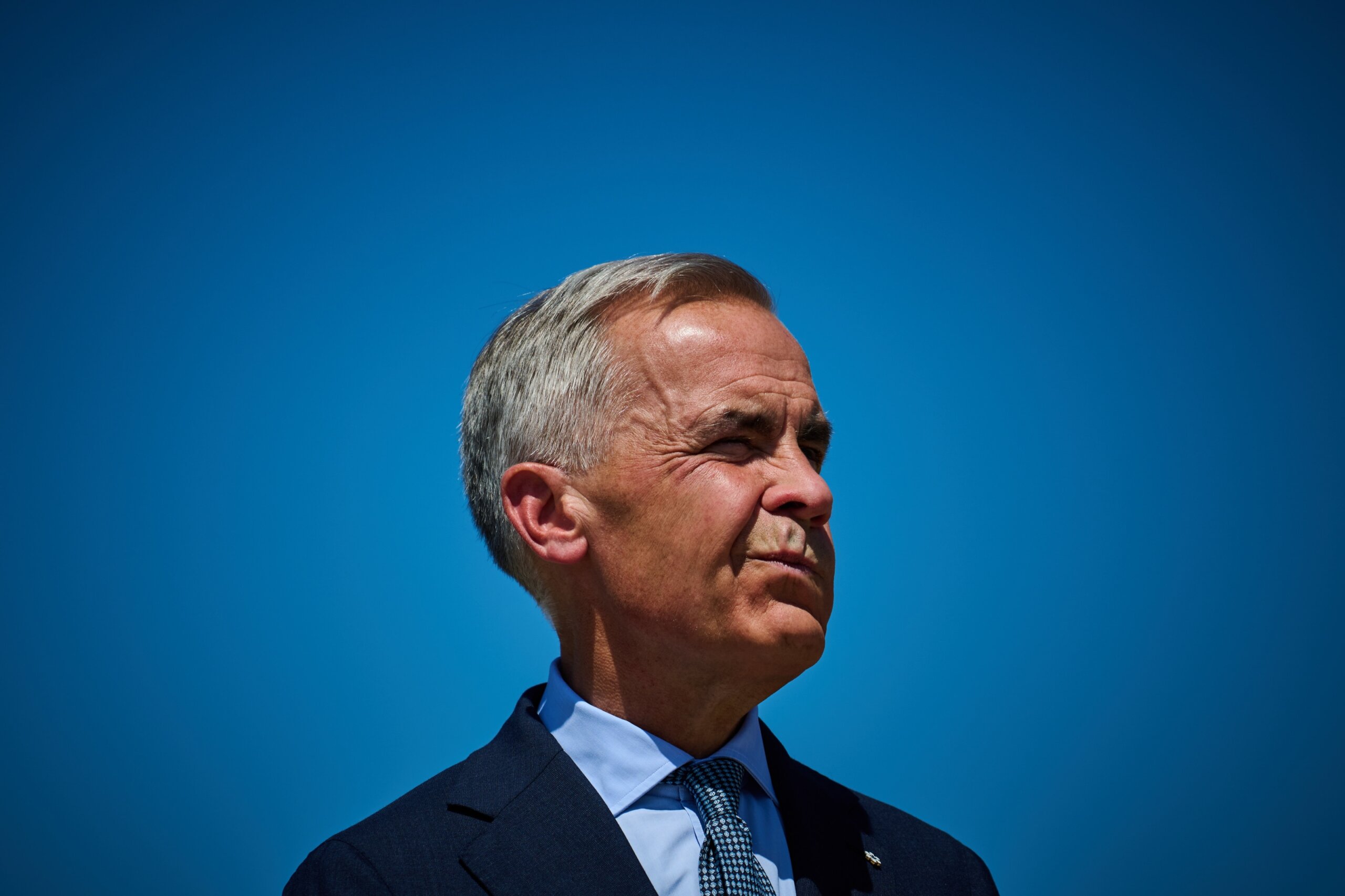
Orangeburg, South Carolina (CNN) — Pete Buttigieg has been to this small but historic city in South Carolina’s Midlands at least twice before, as an underdog presidential candidate in 2020 and then as the better-known transportation secretary under President Joe Biden in 2023.Now a private citizen eying a second White House bid, Buttigieg returned this weekend with renewed urgency, appealing to Black voters who have newly solidified influence in the 2028 nominating process and whom he failed to win over in his last presidential campaign.Buttigieg told party activists during a morning speech in Florence that Republicans were using redistricting as “the culmination of a generational project to dismantle Black representation.” He held a roundtable with students at a historically Black college where he discussed his idea of reparations for slavery. And during an evening speech to the storied NAACP branch here, he said President Donald Trump’s second term may feel all too familiar to activists who fought for civil rights in Orangeburg in the 1960s.“The mid-2020s does not represent our nation’s first experience with corruption and self-dealing, with bigotry and exclusion, with inequality and injustice, with undemocratic behavior or with political violence,” Buttigieg said, adding that prior struggles played out “not on some distant shore, but in places like Orangeburg.”With a midterm election looming where both parties are campaigning over the cost of living, Buttigieg chastised fellow Democrats whom he said prefer to prioritize economic concerns over tackling more fundamental questions about democracy. He argued that civil rights legends such as Martin Luther King Jr. and Rev. Jesse Jackson have shown that Americans “can — and we must — do both.”His trip to South Carolina, Buttigieg’s first since leaving the Biden administration, marked the beginning of a new phase of political maneuvering ahead of the next presidential election, with Buttigieg making a concerted effort to get in front of Black voters and demonstrating new bonafides from his transportation secretary tenure.It was also the first major visit by a potential 2028 candidate to the state since the Democratic National Committee voted on August 15 to keep it as the location for the first presidential primary in the nation, a nod to the political power of its large Black electorate.Buttigieg brushed off a question about his 2028 plans after his speech in Florence, telling reporters he is “totally focused on 2026.” But there were ample reminders of speculation about his next move on Saturday, including a scattering of homemade signs reading “PETE” and “2028” that sprung up when he took the stage. Surveying the enthusiastic crowd, he observed he should “come here more often.”One fan, 64-year-old retiree Karen Ench, wore a “Pete Buttigieg 2028” shirt to the speech. Contemplating his 2028 ambitions afterward, she said she thought he was “really taking it much more serious” and focusing on areas of improvement from 2020.A 2028 bid would undoubtedly start with higher expectations for the onetime mayor of South Bend, Indiana, compared to his first run.“The Pete Buttigieg of 2020 is not the Pete Buttigieg of 2026,” said Marlon Kimpson, a Black former state senator who backed Biden in the 2020 primary. “He has name recognition, he’s no longer introducing himself. I think people generally like Pete, and that’s a big deal in an open race because he starts out at a plus. But as we look at his economic agenda, just for the average South Carolinian, with emphasis on the African American community … and the political infrastructure he has deployed in our state, there will be questions with respect to those issues.”Buttigieg’s 2020 campaign, despite winning the Iowa caucuses with a much Whiter demographic, came to an end in South Carolina, dogged by his weaknesses with Black voters. After powerful South Carolina Rep. Jim Clyburn endorsed Biden and gave his flagging bid a shot of momentum that ultimately propelled him to the presidency, Buttigieg finished fourth in the Palmetto State and dropped out a day later.Biden received 61% support from Black voters in South Carolina, while Buttigieg got 3%, according to exit polls.Colleen Condon, a Charleston lawyer and longtime party activist who backed Buttigieg in 2020, said that “2020 is so hard to compare against” due to the unique circumstances of Clyburn’s support for Biden. Now, Condon, who is White, said, Democrats are “anxious for someone young and energetic” and noted Buttigieg would bring more experience to the 2028 race.“He has done a lot of work in the last eight years, (including) as secretary of transportation, in showing his ability to work on the federal level,” Condon said.‘What he’s actually done’In interviews across the state on Saturday, Black Democrats agreed Buttigieg’s experience as transportation secretary has distinguished him since he last sought their support. He played a high-profile role in promoting Biden’s bipartisan infrastructure law, visiting communities small and large across the country to announce funding for long-awaited projects.In Florence, Mattie Thomas, a member of the South Carolina Democratic Party executive committee, said she did not know about his time as mayor but now she sees him as “one of our best transportation secretaries.”“I think he’ll fare extremely well this go around because people, they’ve seen what he’s actually done,” Sandra Burgess Glover, a retired educator, said in Orangeburg as Buttigieg mingled with the dinner crowd before his speech.Buttigieg was showered with praise at the dinner for his June 2023 announcement in the city with Clyburn of a $23 million federal grant to better connect Orangeburg’s two HBCUs to downtown. Orangeburg Mayor Michael Butler prompted a standing ovation for Buttigieg when he brought up the project, calling it “a long time coming.”Deloris Frazier, a member of the Orangeburg County Council, embraced Buttigieg as he worked the crowd before the dinner, telling him that she keeps a photo in her home of the two of them from that day in 2023. She told CNN afterward that she’d support Buttigieg for president if he ran, joking that she would take the photo and “just blow it up and make it bigger.”Earlier Saturday, Buttigieg visited one of Orangeburg’s HBCUs, Claflin University, and held an hourlong roundtable with about 20 students. The conversation topics ranged from artificial intelligence to reparations for slavery, which was a litmus test in the 2020 primary.Buttigieg said he still supported legislation to create a commission to study reparations. But he said he learned as transportation secretary that the federal government could take “reparative” steps sooner, pointing to his efforts to combat decades-old urban planning that led to highways cutting across Black neighborhoods.“I have a perspective on that that I didn’t have before when I didn’t have a chance to work on federal policy,” Buttigieg said.Usir Jackson, the president of the Student Government Association, said afterward he found Buttigieg “down to earth” and “authentic.”Buttigieg, who took notes at some points, appeared moved when the roundtable topic turned to young voters feeling disillusioned – and Jackson shared why he still makes sure to vote.“I do it to respect people who came before me,” Jackson said, “so I could vote.”Hurdles remain with Black votersFor all the praise of his record in the Biden administration, some of Buttigieg’s admirers acknowledge he needs it to translate into far more Black voter support than he saw in 2020.While the crowd he spoke to in Orangeburg was overwhelmingly Black, the audience that came to see him earlier in the day in Florence, at the state Democratic Party’s Spratt Issues Conference, was mostly White.State Rep. JA Moore was a crucial Black supporter for Buttigieg in 2020 in South Carolina, backing him after then-California Sen. Kamala Harris dropped out. Moore said in an interview that any potential 2028 candidate needs to focus less on tailoring a message to Black voters and more on developing a “cadence” of regularly reaching out to them where they are.“What we call it is the difference between a ‘come here’ and a ‘been here,’” Moore said. “I think one of the things people missed about Joe Biden – he was a ‘been here’ in the sense that he had been coming to South Carolina for over 40 years.”Some Black Democrats said he may continue to face hurdles in the state as a gay man, an issue that came up in 2020 as he reached out to socially conservative church congregations. “This is the Bible Belt,” Thomas said matter-of-factly.“Sometimes they want to categorize a candidate or individual because of their sexual preferences,” said Brenda Montgomery, a 67-year-old training specialist from Lake City who saw Buttigieg in Florence. “But for me, he is everyone. He represents everyone, and I really like him as a person because he is approachable.”Buttigieg, whose crowd in Florence was dotted with some small rainbow flags, does not go out of his way to talk about his sexual orientation. But on Saturday, he spoke regularly about his two children, who are mixed-race, that he adopted with his husband, Chasten, noting fatherhood is the biggest personal change he has experienced since 2020.It’s a life change that would be put to the test by another grueling presidential campaign, which South Carolina Democrats see as likelier than ever. While he mostly avoided talk of 2028, he said in Florence that he was excited about South Carolina’s first-in-the-nation status and how it would spotlight the state’s diversity.Buttigieg has fielded the 2028 speculation by becoming one of the most prolific endorsers in the midterms, with an eye on supporting Black Democrats and Democrats running in Republican-leaning territory. He kicked off his South Carolina trip on Friday night by headlining a fundraiser in Charleston for Nancy Lacore, a retired Navy officer running for an open House seat in a district that Trump carried by 13 percentage points in 2024.Condon, the Democratic activist who helped host Buttigieg’s fundraiser for LaCore, said it was “extremely early, but I’m very inclined to” support Buttigieg again in 2028 if he runs.Moore said it was too early for endorsements but said he especially likes Buttigieg for at least one reason.Buttigieg “has the ability to learn and adapt,” Moore said. “I find that refreshing and appealing.”The-CNN-Wire™ & © 2026 Cable News Network, Inc., a Warner Bros. Discovery Company. All rights reserved.
Read Next Story