CIA Director William Burns downplayed the utility of Russian President Vladimir Putin’s recent visit to Iran on Wednesday, saying an alliance between the two countries would be limited by their historic rivalry in energy exports and an overall lack of trust.
“I think beneath the images that we all saw, the reality is that Russians and Iranians need each other right now,” Burns said. “Both federally sanctioned countries, both looking to break out of political isolation as well — but if they need each other, they don’t really trust each other, in the sense that they’re energy rivals and historical competitors.”
Burns, who spoke at the annual Aspen Security Forum in Aspen, Colorado, also acknowledged a declassified U.S. intelligence assessment cited last week by national security adviser Jake Sullivan, who announced during a White House briefing that Russia was preparing to buy armed drones from the Iranian government.
Moscow’s outreach to Tehran for military support was “a reflection, in some ways, of the deficiencies of Russia’s defense industry today,” Burns said, noting Russia had suffered significant losses in its war against Ukraine.
Burns, who, over a decadeslong career as a diplomat, served as U.S. ambassador to Russia and, as deputy secretary of state, helped pave the way for the 2015 nuclear deal with the Iranians, acknowledged military cooperation between the two countries was “troubling” but was skeptical about its long-term viability.
“There are limits, I think, to the ways in which they’re going to be able to help one another right now,” he said.
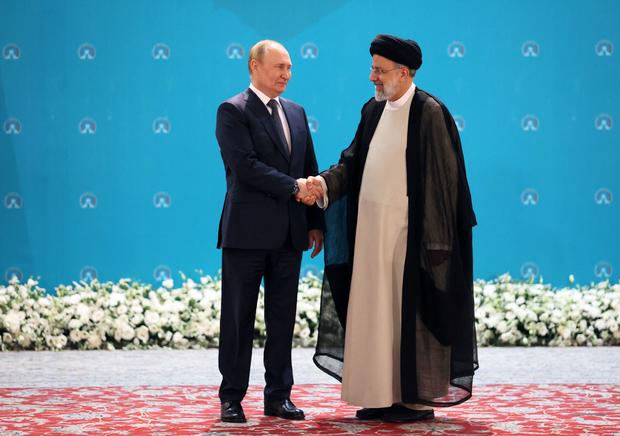
Burns’ comments followed a rare visit by the Russian leader this week to the Iranian capital, where Putin held talks with Supreme Leader Ali Khamenei and President Ebrahim Raisi, as well as Turkish President Recep Tayyip Erdogan. Khamenei later criticized the West for its hostility toward an “independent and strong” Russia and accused NATO of wanting to wage war on Moscow.
In a later exchange on Wednesday, Burns said Putin’s “bet” in Ukraine was that he would be successful in a war of attrition, wearing down the Ukrainian military and economy and waiting out waning resilience from Europe and the United States, even as his own military’s losses mounted. He said assessments showed the Russians have lost an estimated 15,000 soldiers, with triple that number wounded.
“Putin’s view of Americans is that we always suffer from attention deficit disorder, and we’ll get distracted by something else,” Burns said. “I think — my own strong view is — that Putin was wrong in his assumptions about breaking the alliance and breaking Ukrainian will before the war began. And I think he’s just as wrong now.”
The CIA chief also dismissed persistent rumors about Putin’s health, quipping that the Russian leader appeared to be “entirely too healthy.” He stressed that was a personal view and not a formal assessment made by the intelligence community.