D.C. updated its list of high-risk coronavirus states Monday, removing Delaware — whose beaches are a top destination for summer vacationers from the Washington area.
Ohio and Washington state were also removed.
Alaska, Illinois, Indiana, Kentucky and Minnesota are the newest additions to D.C.’s high-risk list.
There are a total of 29 states on the District’s high-risk list.
Mayor Muriel Bowser’s order to self-quarantine for 14 days remains in place for those traveling to the District from the following states:
- Alabama
- Alaska
- Arizona
- Arkansas
- California
- Florida
- Georgia
- Idaho
- Illinois
- Indiana
- Iowa
- Kansas
- Kentucky
- Louisiana
- Minnesota
- Mississippi
- Missouri
- Montana
- Nebraska
- Nevada
- New Mexico
- North Carolina
- North Dakota
- Oklahoma
- South Carolina
- Tennessee
- Texas
- Utah
- Wisconsin
Bowser’s order stipulates that anyone coming to the District from a high-risk state for non-essential activities will be required to self-quarantine for 14 days from their arrival.
The next update on high-risk states is slated for Aug. 24.
DC coronavirus numbers
The District reported 54 new coronavirus cases Monday, bringing the total to 12,807.
No new deaths were reported. D.C.’s death toll stands at 591.
Track the District’s coronavirus data online.
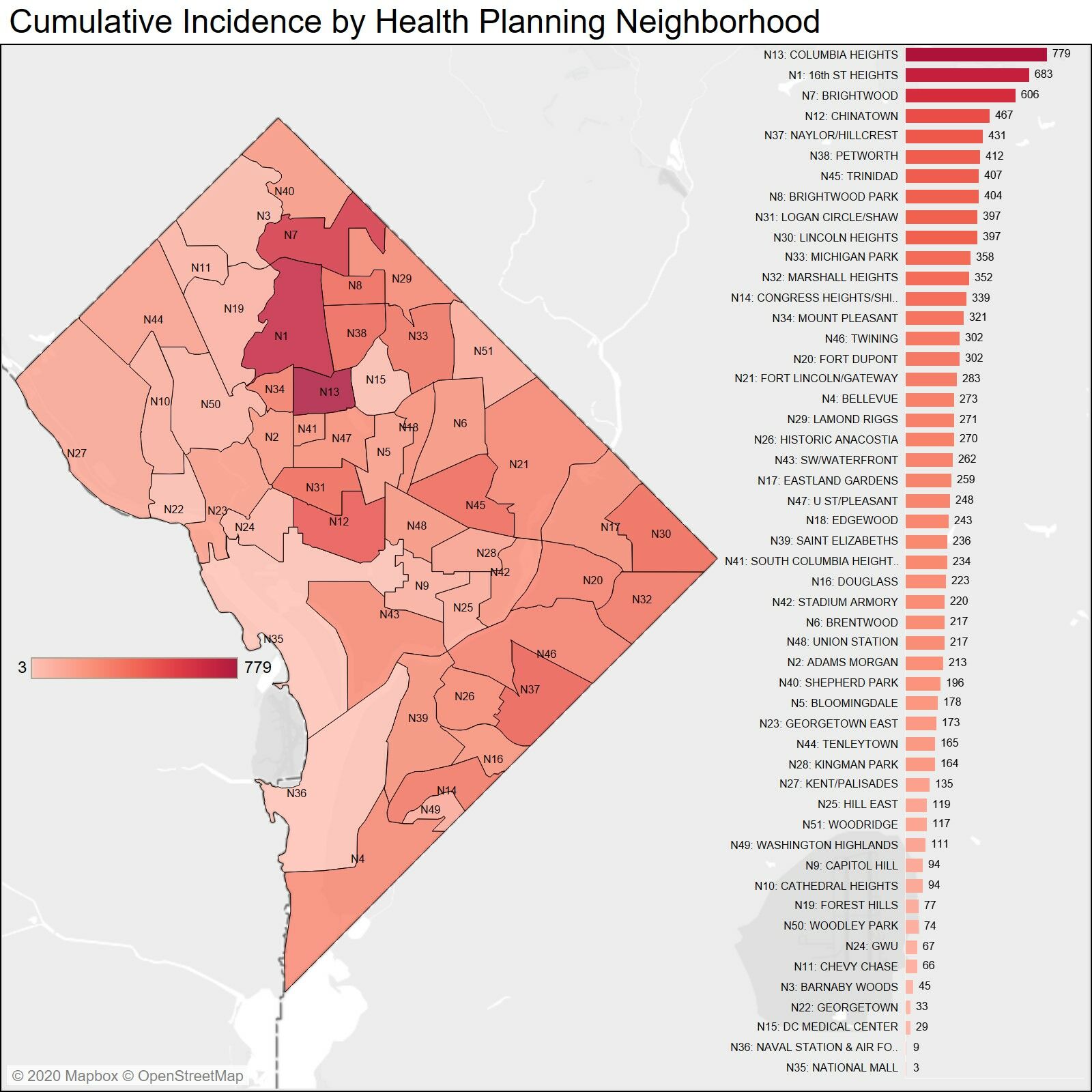
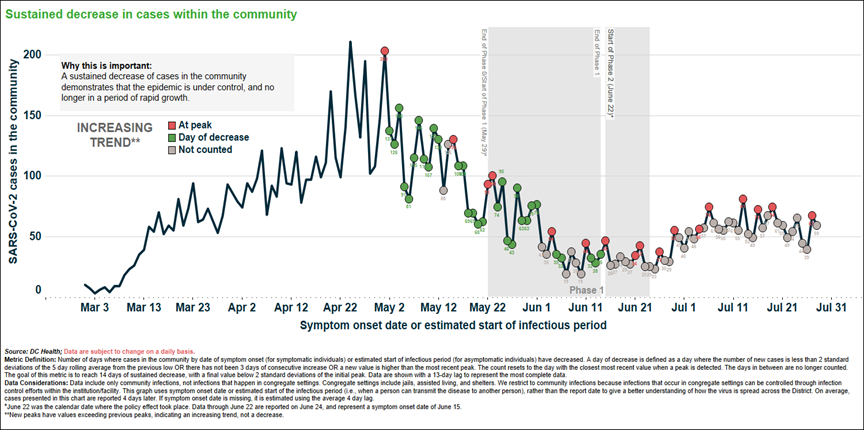
Below are maps of coronavirus cases by ward, neighborhood and community spread (click to enlarge).