
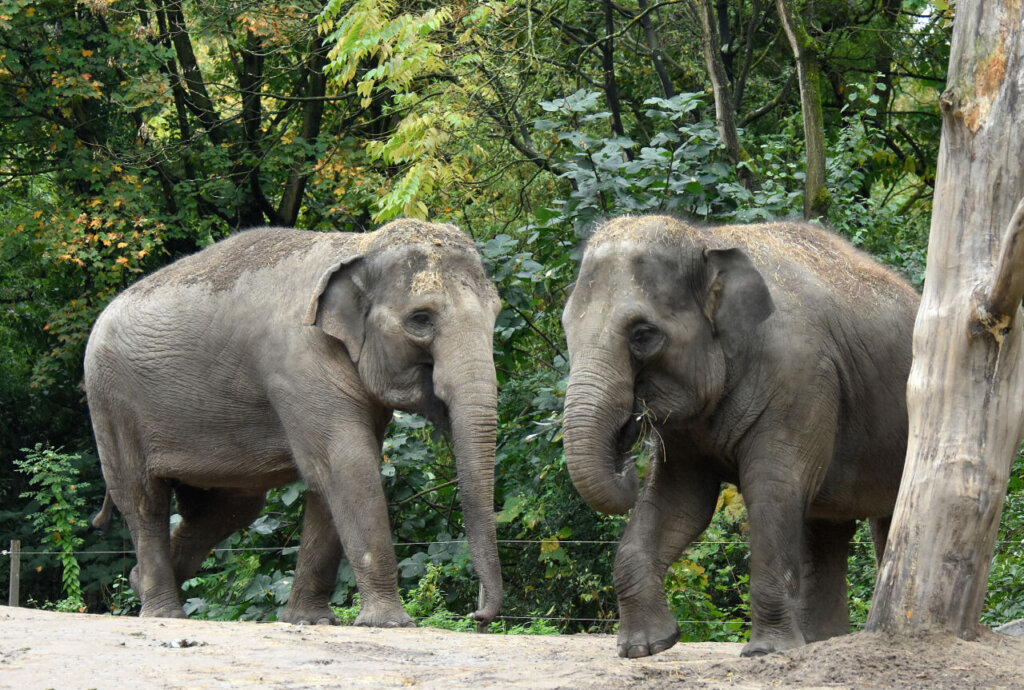
The Smithsonian’s National Zoo and Conservation Biology Institute has two new residents: a pair of female Asian elephants.
They’re 19-year-old Trong Nhi and her daughter, 9-year-old Nhi Linh. The pair are a gift from the Rotterdam Zoo in South Holland, Netherlands. They join a herd at the institute that includes a 41-year-old male named Spike and four older females.
The Association of Zoos and Aquariums’ Species Survival Plan – which matches individual animals for breeding — has recommended that Trong Nhi and Nhi Linh breed with Spike.
“Trong Nhi and Nhi Linh are not only important social additions to our herd, but also they are key to our efforts to help sustain the Asian elephant population in North America and around the world,” said Brandie Smith, who is the John and Adrienne Mars director of the institute, in a statement.
“… Trong Nhi and Nhi Linh are an energetic, dynamic duo, and we’re looking forward to seeing how their relationships with our team and their future herd-mates develop.”
Asian elephants are considered endangered by the International Union for Conservation of Nature. Estimates of the total population’s size range from 30,000 to 50,000 elephants.
For now, the pair are being quarantined but will have access to stalls inside the institute’s elephant barn as well as an outdoor yard. When the quarantine is over, introductions will be made with the other resident elephants through a safety barrier, and staffers will determine whether the other elephants are comfortable with sharing their space.
The new elephants are expected to make their public debut sometime next month.