
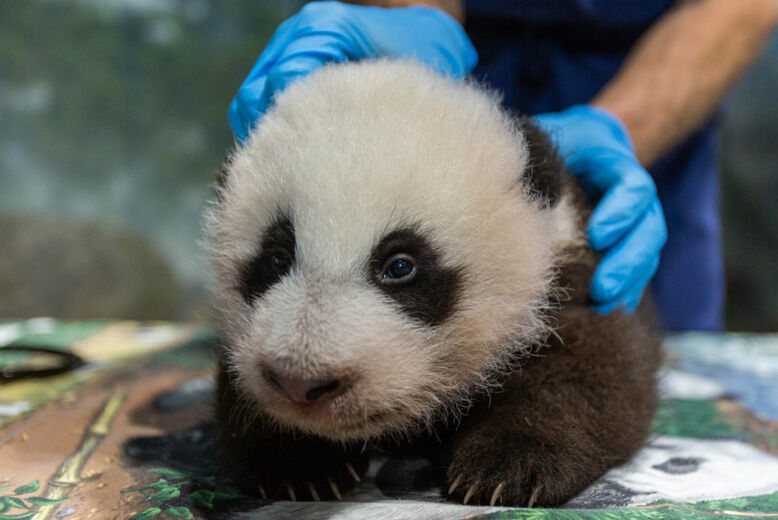
The public will have a chance to name the Smithsonian’s National Zoo’s newest giant panda cub before its three-month birthday.
The zoo on Monday said that it is holding a naming contest for the male cub. Voters will have four options, chosen by the zoo and its Chinese partners, from which to select.
The names, according to the news release, reflect the “extraordinary circumstances” of the cub’s birth during the COVID-19 pandemic while celebrating the collaboration to keep the species alive.
The nominees (and their meanings) for the cub’s new name are:
- Fu Zai (福仔) [fu-tzai]: prosperous boy
- Xiao Qi ji (小奇迹) [shiau-chi-ji]: little miracle
- Xing Fu (幸福) [shing-fu]: happy and prosperous
- Zai Zai (仔仔) [tzai-tzai]: a traditional Chinese nickname for a boy
Listen to the names on the zoo’s website.
Voters can select their favorite name on the zoo’s website starting until Friday, Nov. 20. Only one vote per day will be allowed by the same voter.
The zoo will announce the winning name on Monday, Nov. 23.
Since being born on Aug. 21, the panda cub has grown up quickly. As of his last checkup on Nov. 9, the cub weighed 9.2 pounds and is 21.3 inches tall. According to the zoo, the cub excels at napping, nursing and cuddling with his mother, Mei Xiang.
The zoo reminds voters that its two Giant Panda Cams are up on its website. Fans of Mei Xiang and Tian Tian can see them interact with their new cub at any time.
The panda’s birth was live-streamed on the panda cam, and since then, more than a million virtual visitors tune in to watch the cub grow.
Editor’s note: This story has been updated to correct the photo’s caption.