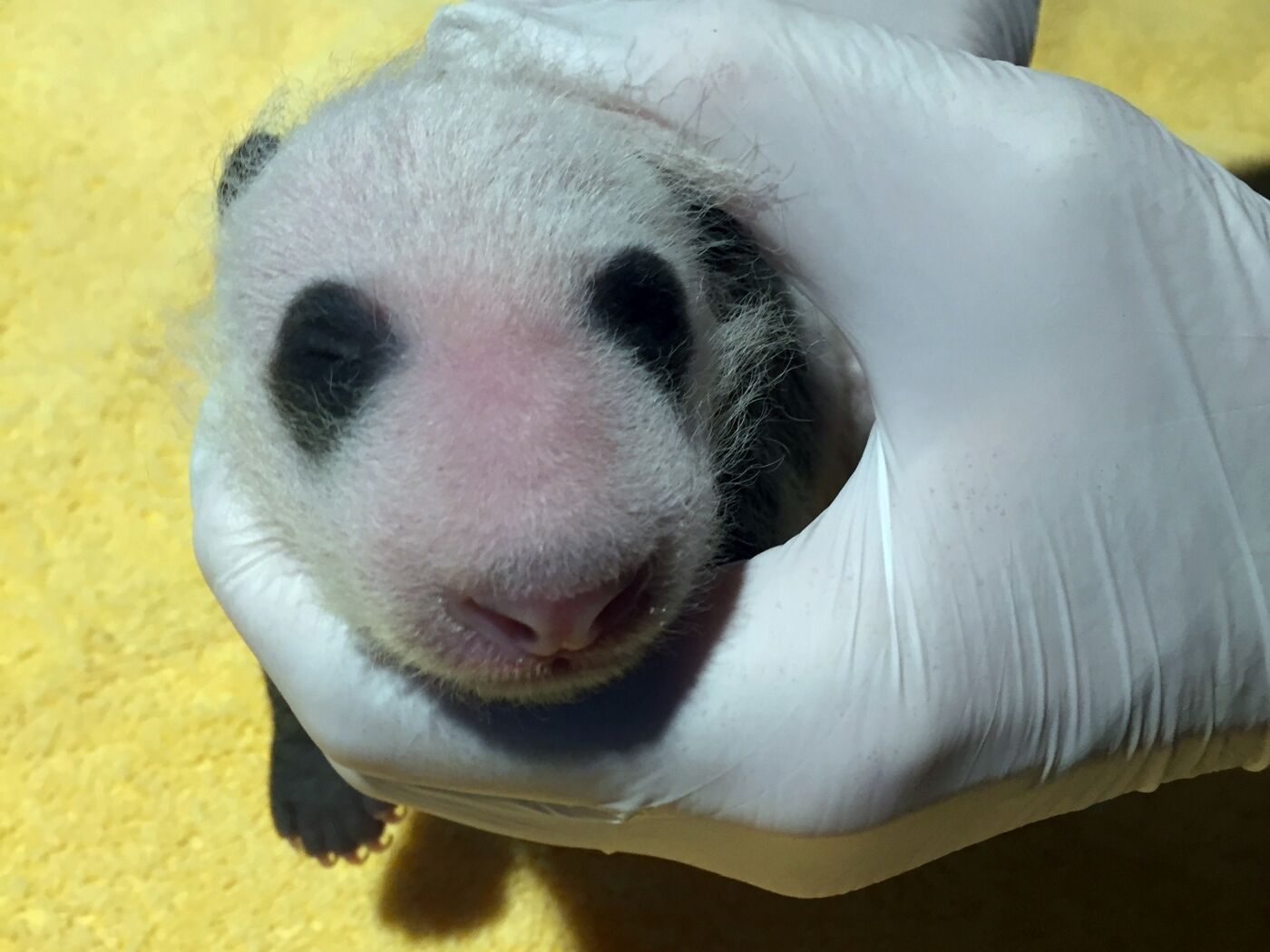
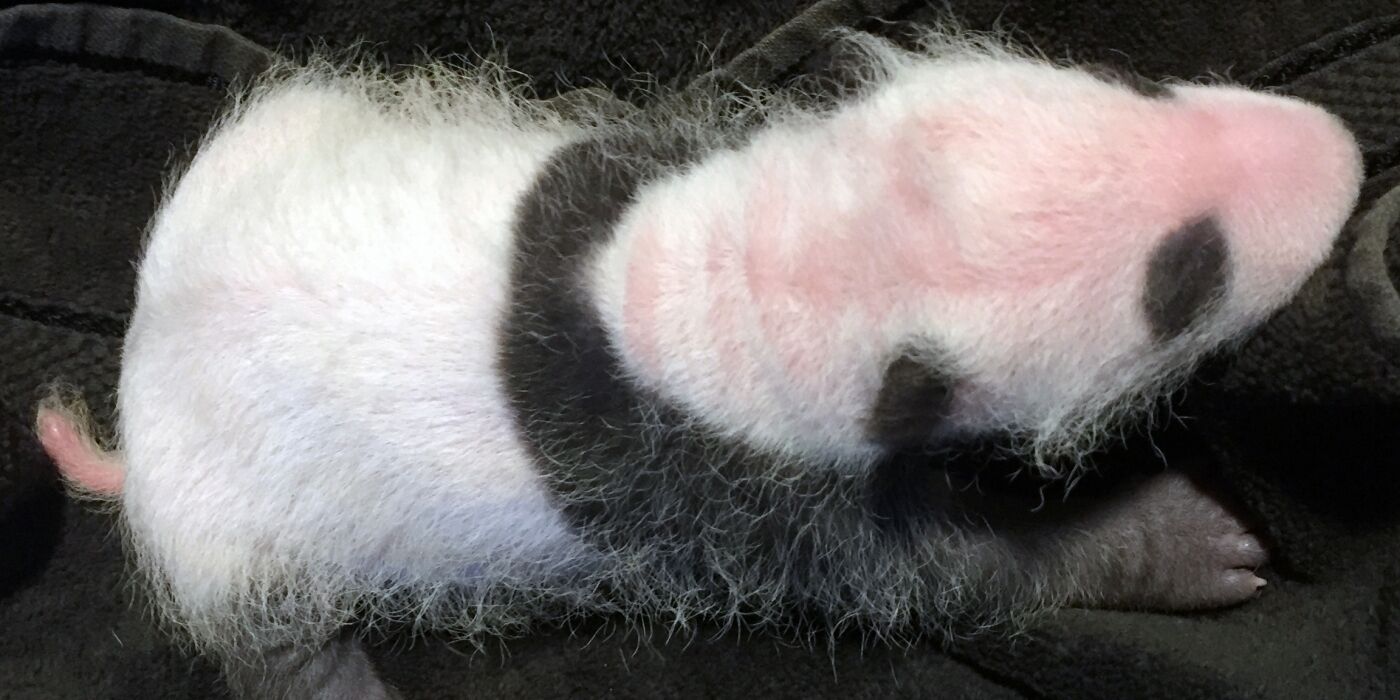
The National Zoo’s newborn panda gets a checkup. (Courtesy National Zoo) Those giant pandas grow up so fast. D.C.’s newest baby panda got its first checkup. On Sunday, the National Zoo’s giant panda Mei Xiang left the den to eat some bamboo, which gave the zoo staff a chance to give her 3-week-old cub its first neonatal exam. The wee bairn comes in at just under 1.5 pounds and appears healthy and vibrant, according to the zoo’s latest update. A typical adult female giant panda can weigh between 155 to 220 pounds, while an adult male panda can weigh between 190 to 275 pounds. The cub’s fur is also growing nicely, but its pink skin is still showing on its muzzle, at the top of its head, upper back and tail. The newborn panda at the National Zoo gets inspected by zookeepers. (Courtesy National Zoo) In another few weeks, its eyes and ear canals will begin to open, the zoo said. Zoo staff do not want to upset Mei Xiang by handling the cub longer than necessary, and as the attentive mom leaves the den for longer periods of time, staff will get more opportunities to perform more thorough health checks, including getting a cheek swab to determine the cub’s sex. Watch the baby cub yawning, while cuddled up with its mom. And to see what the National Zoo’s pandas are up to, tune in to its Panda Cam.
To view this content referenced from YouTube, click here.
Mesmerizing jellyfish take center stage at 1st US museum dedicated solely to the floating predators
POMPANO BEACH, Fla. (AP) — The floating tentacled predators pulse and swirl in hypnotic patterns in the dark museum space, lit primarily by images projected on the walls and the glowing light from the saltwater tanks.
The private Jellyfish Museum in Pompano Beach, Florida, just north of Fort Lauderdale, is believed to be the first museum in the United States dedicated solely to the translucent invertebrates, and one of the few such spaces in the world, according to the city and the museum’s founders.
It was created by Alex and Yana Yanovsky, who previously developed successful aquariums in Ukraine, including their first jellyfish museum in Kyiv. The couple left those facilities behind when they fled Ukraine following the 2022 Russian invasion, operations manager Jessica Eisenbarth said.
The museum, which opened this past spring, is the couple's first aquatic attraction since immigrating to the U.S., but they'd like to expand.