
Nobel laureate Narges Mohammadi needs months of care after collapse in Iran prison, foundation says

CAIRO (AP) — Doctors who examined Nobel Peace laureate and activist Narges Mohammadi more than a week after she collapsed at a prison in Iran say she needs months of treatment, her foundation said Wednesday.

An angiography procedure showed two of her main arteries have significant blockage and that her vascular disease has significantly deteriorated since she last had the procedure in 2024, the foundation said in a statement.

Mohammadi, 53, was urgently transferred from prison to a hospital in northwestern Iran on May 1 after she fell unconscious. She was released on bail nearly 10 days later and transferred to a hospital in Tehran where her specialists examined her.

The attending physician said her blood pressure continues to fluctuate, in part due to damage to part of the brain that is responsible for such regulations.

The doctors recommended an eight-month treatment course in an environment “free from external stressors, where she can receive permanent care and long-term treatment.”

Her foundation and dozens of Nobel Prize laureates have called for the unconditional release of Mohammedi, a vocal advocate of human and women’s rights.

She was awarded the Nobel in 2023 while in prison and has been jailed repeatedly throughout her career. Her latest imprisonment began in December when she was arrested in the northeastern Iranian city of Mashhad.

Her family has said that her health had been deteriorating in prison, in part because she was heavily beaten during her arrest. She had a heart attack in March and has had a blood clot in her lung since before her imprisonment that needs blood thinners and monitoring to manage it.
Iran attacks Bahrain and Kuwait following US strikes, threatens to end talks to end the war

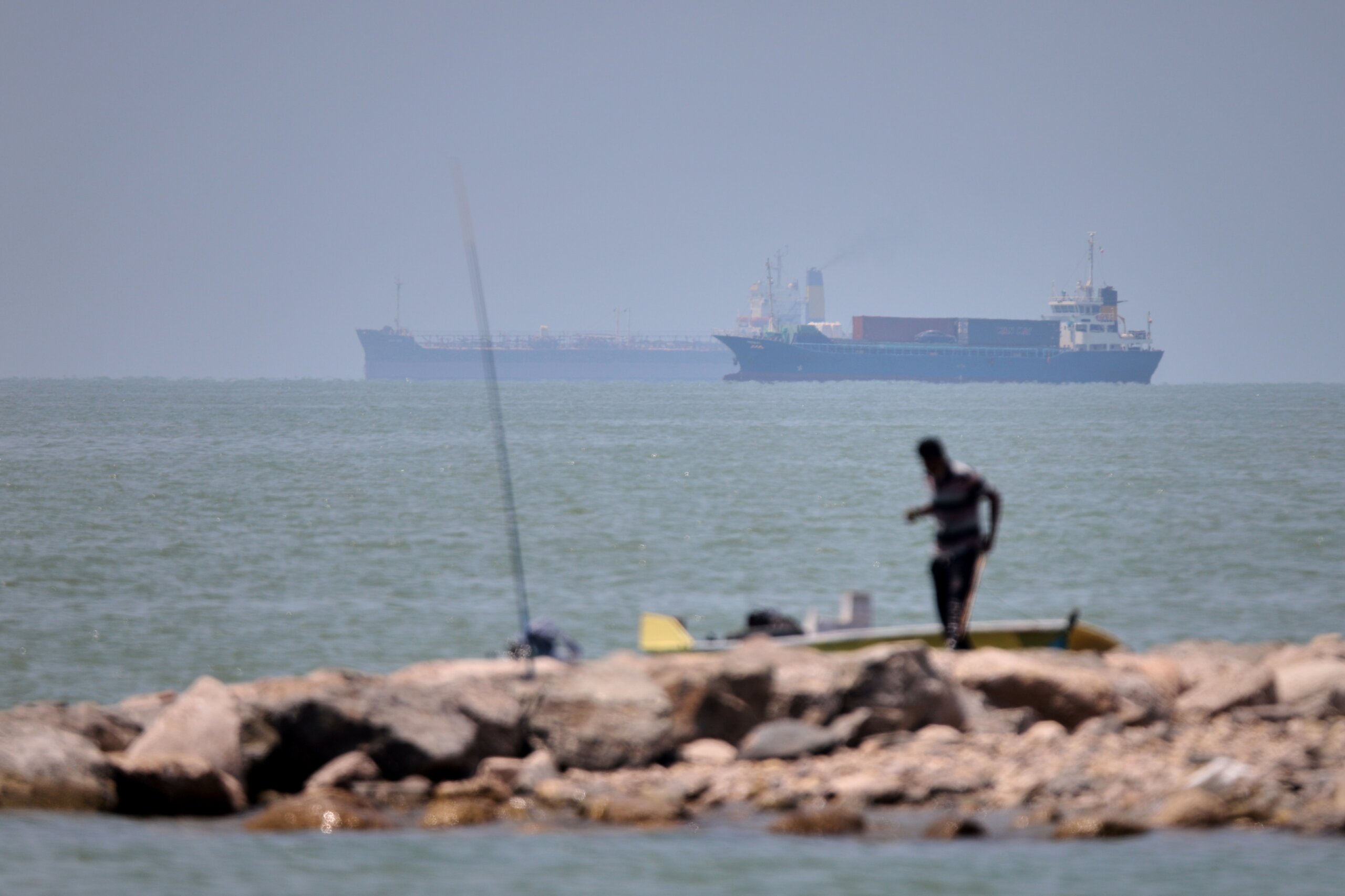
DUBAI, United Arab Emirates (AP) — Iran's paramilitary Revolutionary Guard launched drone and missile attacks Sunday targeting Bahrain and Kuwait in response to U.S. airstrikes that hit the Islamic Republic, and threatened a “complete halt” could come to negotiations to end the war if Washington continues its attacks. Efforts to reopen the Strait of Hormuz, the narrow mouth of the Persian Gulf that once carried a fifth of the world's oil and natural gas, without Iran's direct oversight sparked the crossfire now gripping the region. A multinational maritime body overseen by the U.S. Navy said Saturday that it would expand a route near Oman in the Strait of Hormuz to allow for both inbound and outbound traffic — setting up a new flashpoint with Tehran. Iran insists it alone must govern the strait after the war, upending decades of the world considering that the strait was international waters free for all, despite its sitting in Iran and Oman's territorial waters. Tehran has twice attacked vessels going through the Oman route, backed by a United Nations agency, in recent days. Early Sunday, the U.S. military’s Central Command said it struck Iranian military “surveillance infrastructure, communication systems, air defense sites, drone storage facilities and minelayer capabilities” following an attack on a ship at sea early Saturday morning. That ship, the Panamanian-flagged tanker Kiku, carried crude oil for the state-run energy company of Qatar, a key negotiator between Iran and the United States.
Read Next Story