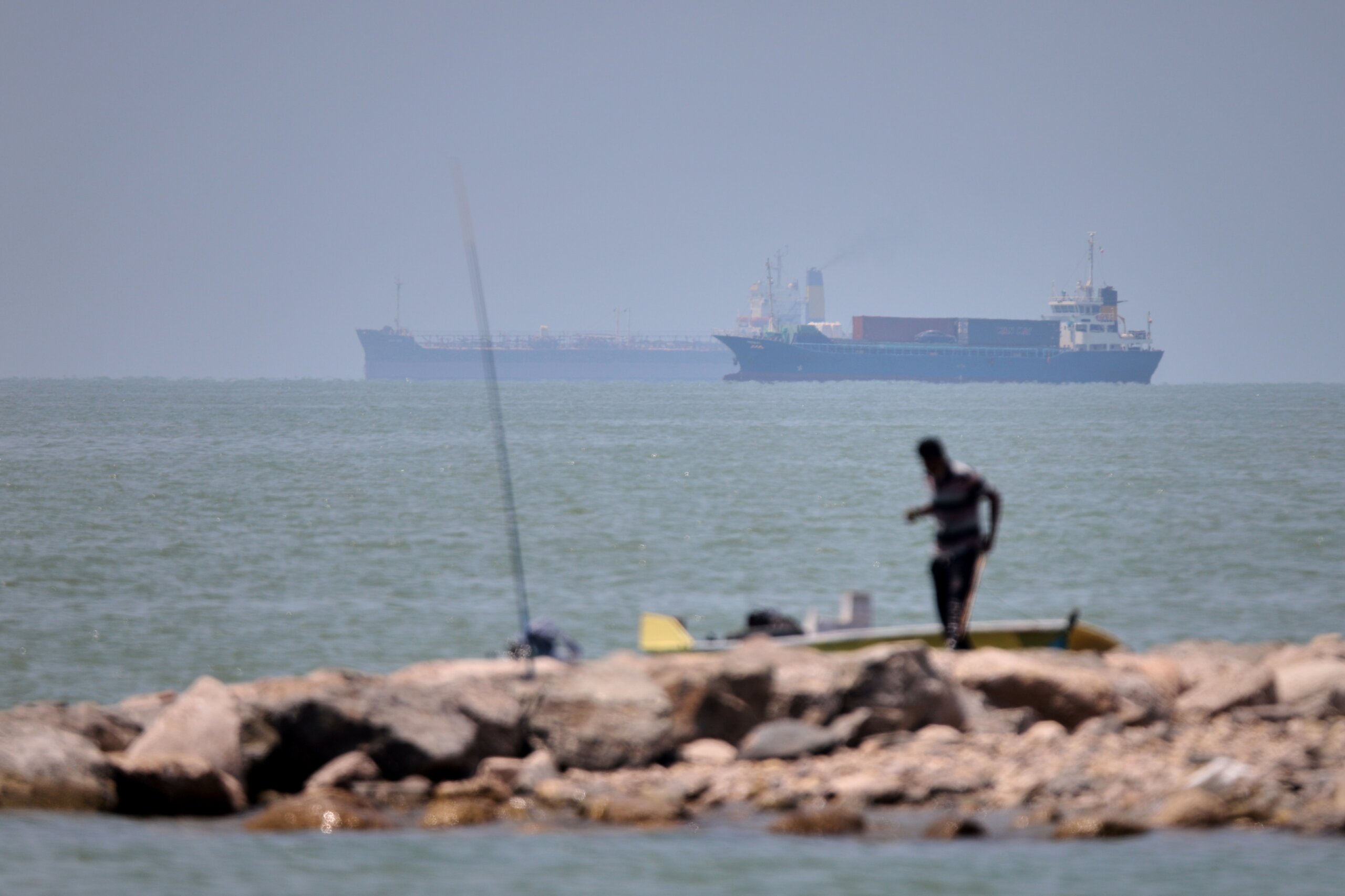
SEOSAN, South Korea (AP) — A Malta-flagged tanker carrying 1 million barrels of crude oil arrived off South Korea’s west coast Friday after passing through the Strait of Hormuz in mid-April, a South Korean refinery said.
Like many other Asian nations, South Korea imports much of its crude oil from the Middle East. The latest shipment of 1 million barrels reportedly equals 35-50% of South Korea’s daily crude oil consumption.
With Iran’s grip on the Strait of Hormuz jolting the world economy and causing a spike in fuel prices, the prolonged Iran war has also raised concerns about a looming energy crisis in South Korea’s trade-dependent economy. The country has introduced price caps on gasoline and other petroleum products for the first time in decades to prevent costs from soaring, and instructed refiners to divert naphtha exports for domestic use while scrambling to secure alternative oil supplies and shipping routes.
On Friday morning, the tanker, Odessa, reached waters off South Korea’s western port city of Seosan, weeks after passing through the Strait of Hormuz during a period of ceasefire talks between Iran and the United States, according to HD Hyundai Oilbank.
The tanker is scheduled to berth at the company’s offshore mooring facility later Friday to unload its crude oil. HD Hyundai Oilbank said it plans to refine the crude oil into petroleum products like gasoline, diesel and naphtha. It said it has facilities to refine up to 690,000 barrels of crude oil per day.
South Korea last year imported more than 60% of its crude and 50% of its naphtha, a key petrochemical feedstock used in plastics manufacturing, through the Strait of Hormuz.
___
Associated Press writers Kim Tong-hyung and Hyung-jin Kim contributed to this story from Seoul, South Korea.