Central African Republic opposition leader denounces seizure of his passport

BANGUI, Central African Republic (AP) — Central African Republic’s former prime minister and major opposition figure, Anicet Georges Dologuélé, criticized the confiscation of his diplomatic passport as an abuse of power on Wednesday.

Dologuélé, who served as prime minister between 1999 and 2001, said he was not allowed to board a flight to an African Union meeting in Addis Ababa on Wednesday.

“It was at the airport that I learned I was forbidden from leaving the country after being declared stateless in my own country,” he told a news conference in capital Bangui.

He is on the board of directors for the African Union Peace Fund, a role he has held since 2018.

Dologuélé renounced his French citizenship last year in line with the country’s constitution to contest President Faustin-Archange Touadéra, who ran for a third term last year.

Dologuélé denounced last year’s election as “very far from the truth” and has regularly criticized Touadéra. He won 13.1% of the votes according to the country’s electoral body.

He has since used his diplomatic passport accorded to him as a former prime minister, claiming the government has refused to issue him a new passport.

___

Follow AP’s Africa coverage at: https://apnews.com/hub/africa
Iran attacks Bahrain and Kuwait following US strikes, threatens to end talks to end the war

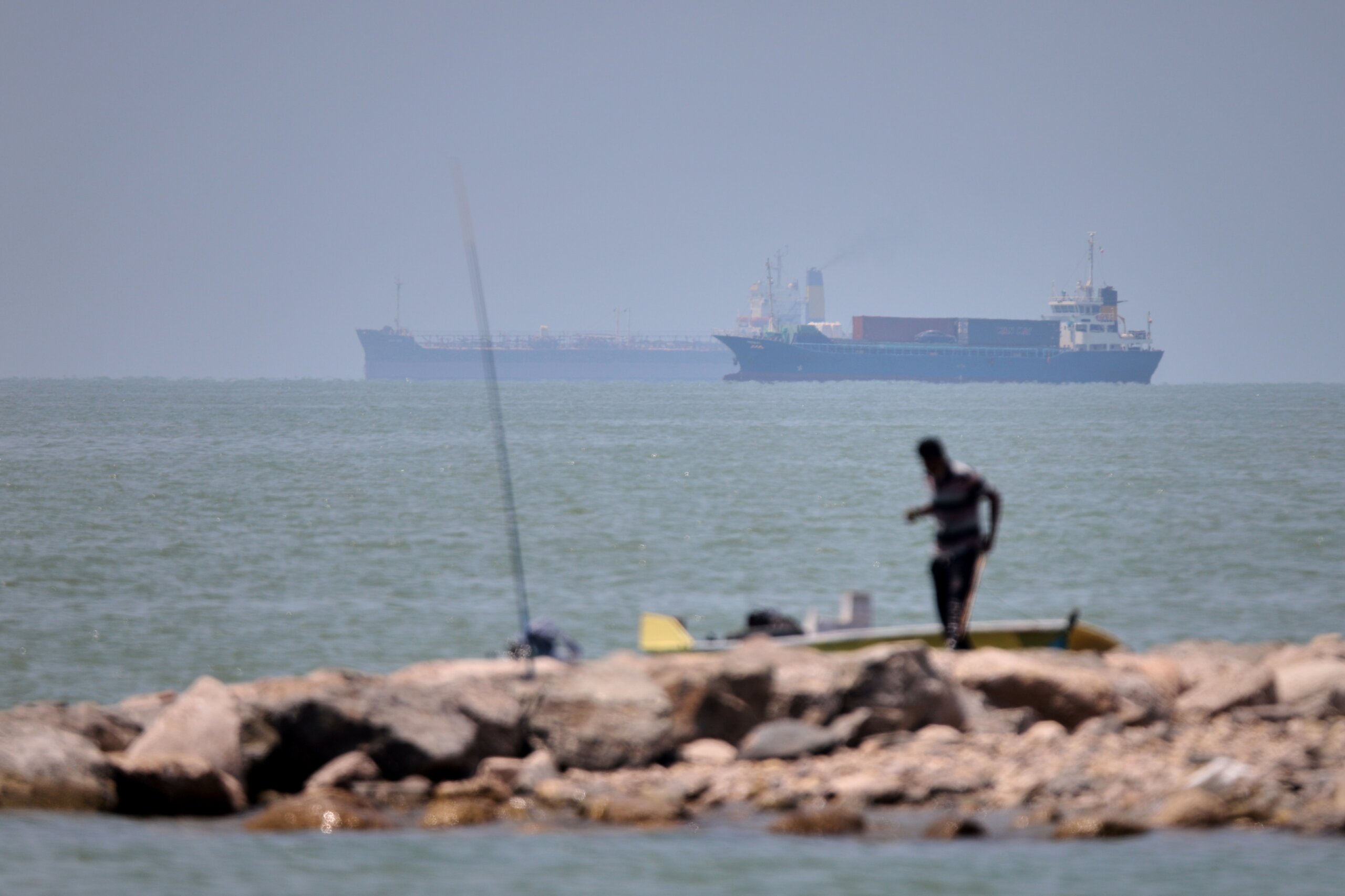
DUBAI, United Arab Emirates (AP) — Iran's paramilitary Revolutionary Guard launched drone and missile attacks Sunday targeting Bahrain and Kuwait in response to U.S. airstrikes that hit the Islamic Republic, and threatened a “complete halt” could come to negotiations to end the war if Washington continues its attacks. Efforts to reopen the Strait of Hormuz, the narrow mouth of the Persian Gulf that once carried a fifth of the world's oil and natural gas, without Iran's direct oversight sparked the crossfire now gripping the region. A multinational maritime body overseen by the U.S. Navy said Saturday that it would expand a route near Oman in the Strait of Hormuz to allow for both inbound and outbound traffic — setting up a new flashpoint with Tehran. Iran insists it alone must govern the strait after the war, upending decades of the world considering that the strait was international waters free for all, despite its sitting in Iran and Oman's territorial waters. Tehran has twice attacked vessels going through the Oman route, backed by a United Nations agency, in recent days. Early Sunday, the U.S. military’s Central Command said it struck Iranian military “surveillance infrastructure, communication systems, air defense sites, drone storage facilities and minelayer capabilities” following an attack on a ship at sea early Saturday morning. That ship, the Panamanian-flagged tanker Kiku, carried crude oil for the state-run energy company of Qatar, a key negotiator between Iran and the United States.
Read Next Story