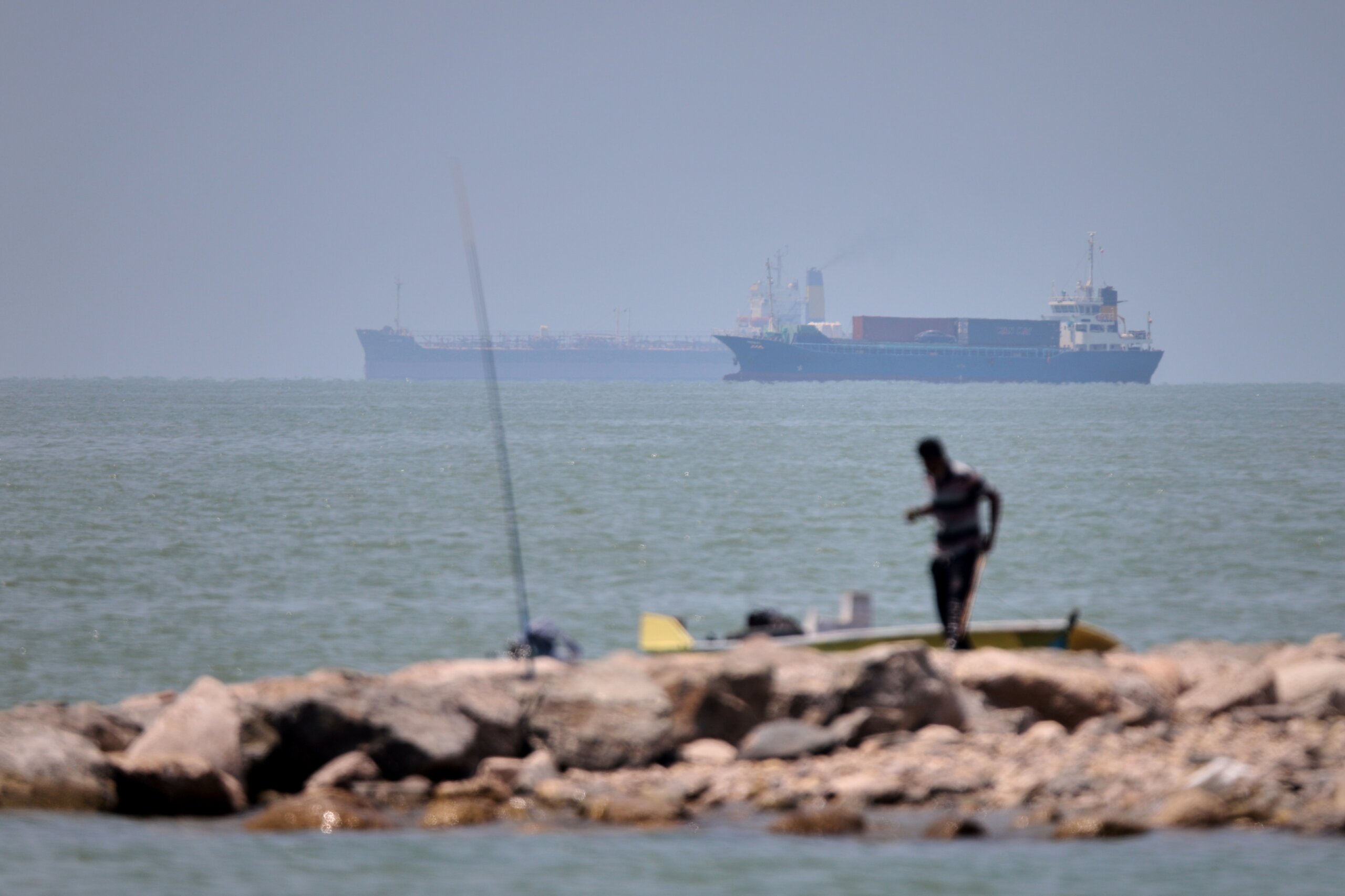
UNITED NATIONS (AP) — The United States and its Gulf allies have proposed a U.N. resolution threatening Iran with sanctions or other measures if it doesn’t halt attacks on ships in the Strait of Hormuz, stop imposing “illegal tolls,” and disclose the placement of all mines to allow freedom of navigation.
The draft Security Council resolution, obtained Tuesday by The Associated Press, also demands that Iran “immediately participate in and enable” United Nations efforts to establish a humanitarian corridor in the strait for the delivery of vital aid, fertilizer and other goods.
It is the latest diplomatic effort by the U.S. and its Gulf allies after a watered-down resolution aimed at opening the strait was vetoed by China and Russia hours before Washington and Tehran announced a temporary ceasefire in early April.
U.S. Secretary of State Marco Rubio in a statement on Tuesday accused Iran of continuing “to hold the world’s economy hostage” by trying to close the strait, threatening to attack ships, laying sea mines, and attempting to charge tolls “for the world’s most important waterway.”
While Rubio said he looks forward to the resolution being voted on in the coming days, he told journalists later in the day that he remained uncertain if “slight adjustments” the U.S. made to the text would be enough to avoid a veto from Tehran’s allies on the council. These adjustments included removing language authorizing the use of force and focusing instead on the threat of sanctions.
Whether the resolution succeeds will be “a real test” for the U.N. “as something that functions, that can solve global problems,” Rubio added at the White House briefing.
U.S. Ambassador Mike Waltz told reporters Monday he believes the new, narrow proposal will gain the necessary support it needs to pass the 15-member council, without triggering opposition or a veto from Iran’s allies.
The U.S. and Gulf nations proposed the new draft as the Trump administration tries to restore freedom of navigation in the strait, which carried about 20% of the world’s crude oil before the U.S. and Israel began the war on Feb. 28. A shaky ceasefire remains in effect.
The proposed resolution, which was drafted under Chapter 7 of the U.N. Charter and thus could be enforced militarily, threatens “effective measures that are commensurate with the gravity of the situation, including sanctions” if Iran doesn’t comply. The earlier resolution removed a Chapter 7 reference but was still vetoed.
One Security Council diplomat told AP that as in previous negotiations on Hormuz resolutions, specific language directly condemning Iran, without also reflecting U.S. and Israeli strikes, has been an issue with some members. The diplomat spoke on condition of anonymity to discuss sensitive deliberations.
The new draft resolution reaffirms the right of all countries to defend their vessels from attacks and provocations, and orders all other countries not to assist Iran in closing the strait or levying tolls.
The draft also “welcomes ongoing efforts to deconflict and coordinate safe and secure transit passage through the Strait of Hormuz, expresses support for ongoing efforts to seek a durable peace in the region, and encourages member states in the region to strengthen dialogue and consultations in this regard.”
The diplomat also said that the U.S. has been engaging in serious efforts to convince China to abstain from vetoing the resolution, including at the highest diplomatic levels as both countries prepare for President Donald Trump’s visit next week to meet with Chinese President Xi Jinping.