
German car-ramming suspect’s motive remains unclear. Officials say he had psychiatric treatment

BERLIN (AP) — The suspect in a car-ramming in the German city of Leipzig that left two people dead doesn’t appear to have had any political or religious motive, but had spent time recently at a psychiatric hospital, investigators said Tuesday.

The 33-year-old German man was arrested on Monday afternoon in the car that authorities say he had driven several hundred meters through a street in a busy central shopping area. Two people — a 63-year-old woman and a 77-year-old man, both of them German — were killed. Six other people were injured, two of them seriously.

The suspect is under investigation on suspicion of murder and attempted murder. Authorities believe that it was a deliberate rampage, but were still investigating his motive on Tuesday.

Police and prosecutors said in a statement that there was no evidence at present of a political or religious motive. They said he had come to authorities’ attention this year because of threats and “defamatory offenses.”

They said that police were deployed on April 17 because of a phone call from the suspect, following which he was admitted to a specialist hospital with his consent because of his “psychological condition.” He was treated there until Wednesday last week. He had no previous convictions and there were no other pending cases, the statement said.

The social affairs ministry in Saxony state said that the man had posed no danger to himself or others while being treated, and there had been no medical reason to prevent him from leaving, German news agency dpa reported.
Iran attacks Bahrain and Kuwait following US strikes, threatens to end talks to end the war

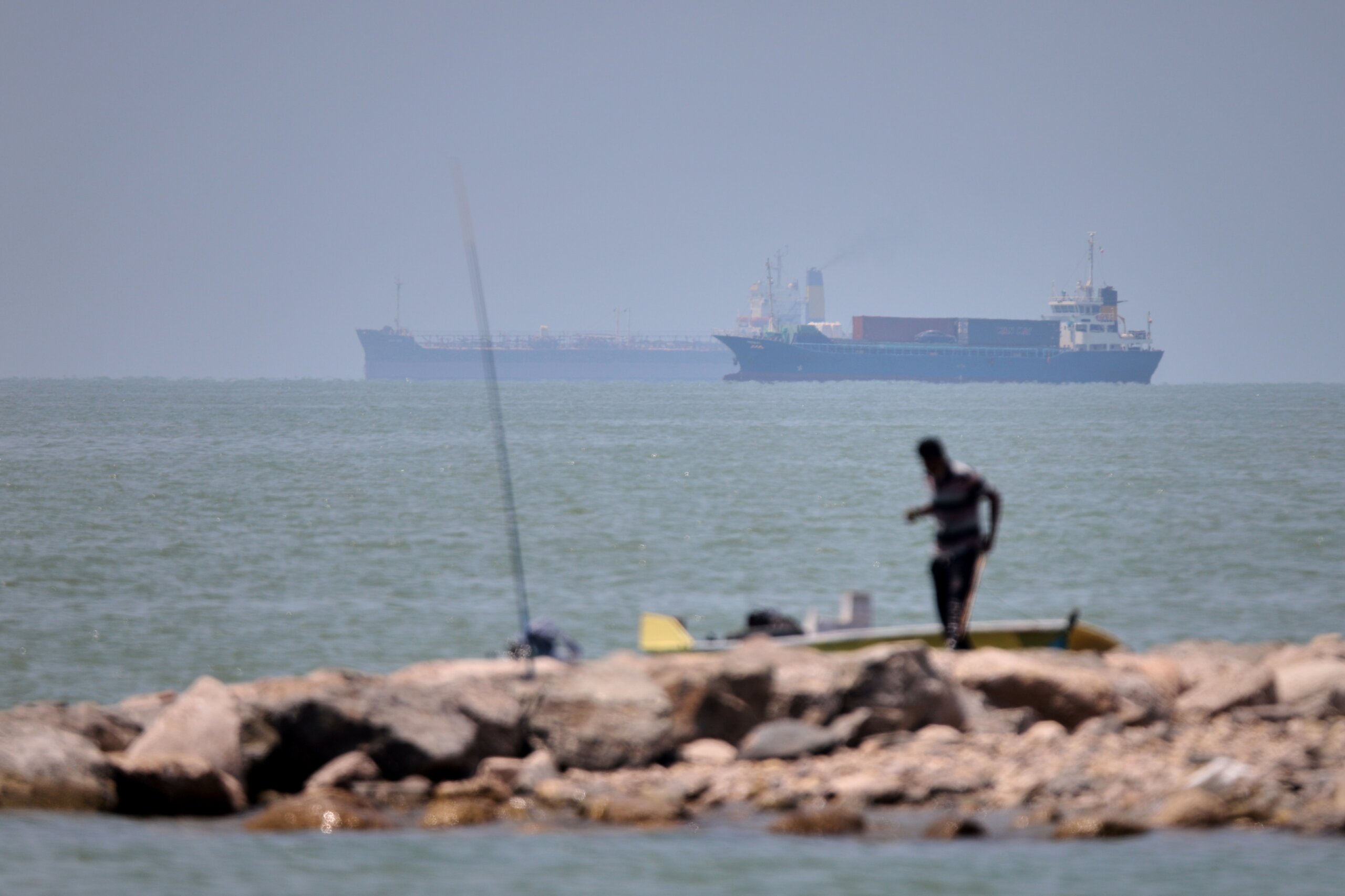
DUBAI, United Arab Emirates (AP) — Iran's paramilitary Revolutionary Guard launched drone and missile attacks Sunday targeting Bahrain and Kuwait in response to U.S. airstrikes that hit the Islamic Republic, and threatened a “complete halt” could come to negotiations to end the war if Washington continues its attacks. Efforts to reopen the Strait of Hormuz, the narrow mouth of the Persian Gulf that once carried a fifth of the world's oil and natural gas, without Iran's direct oversight sparked the crossfire now gripping the region. A multinational maritime body overseen by the U.S. Navy said Saturday that it would expand a route near Oman in the Strait of Hormuz to allow for both inbound and outbound traffic — setting up a new flashpoint with Tehran. Iran insists it alone must govern the strait after the war, upending decades of the world considering that the strait was international waters free for all, despite its sitting in Iran and Oman's territorial waters. Tehran has twice attacked vessels going through the Oman route, backed by a United Nations agency, in recent days. Early Sunday, the U.S. military’s Central Command said it struck Iranian military “surveillance infrastructure, communication systems, air defense sites, drone storage facilities and minelayer capabilities” following an attack on a ship at sea early Saturday morning. That ship, the Panamanian-flagged tanker Kiku, carried crude oil for the state-run energy company of Qatar, a key negotiator between Iran and the United States.
Read Next Story