NEW YORK (AP) — The U.S. stock market ticked to another record high Thursday as Wall Street waits for more clues about what will happen in the Iran war before making its next big move.
The S&P 500 rose 0.3%, a day after topping its prior all-time high set in January, for its 11th gain in 12 days. The Dow Jones Industrial Average added 115 points, or 0.2%, and the Nasdaq composite rose 0.4%.
U.S. stocks have leaped more than 10% since hitting a low in late March, driven by hopes for an end to the war or something that could avert a worst-case scenario for the global economy. Now, the wait is on to see if such hopes were prescient or just wishful thinking.
Pakistan’s powerful army chief met Thursday with Iran’s parliament speaker as part of efforts to press for an extension to a ceasefire that has paused almost seven weeks of war between Israel, the U.S. and the Islamic Republic.
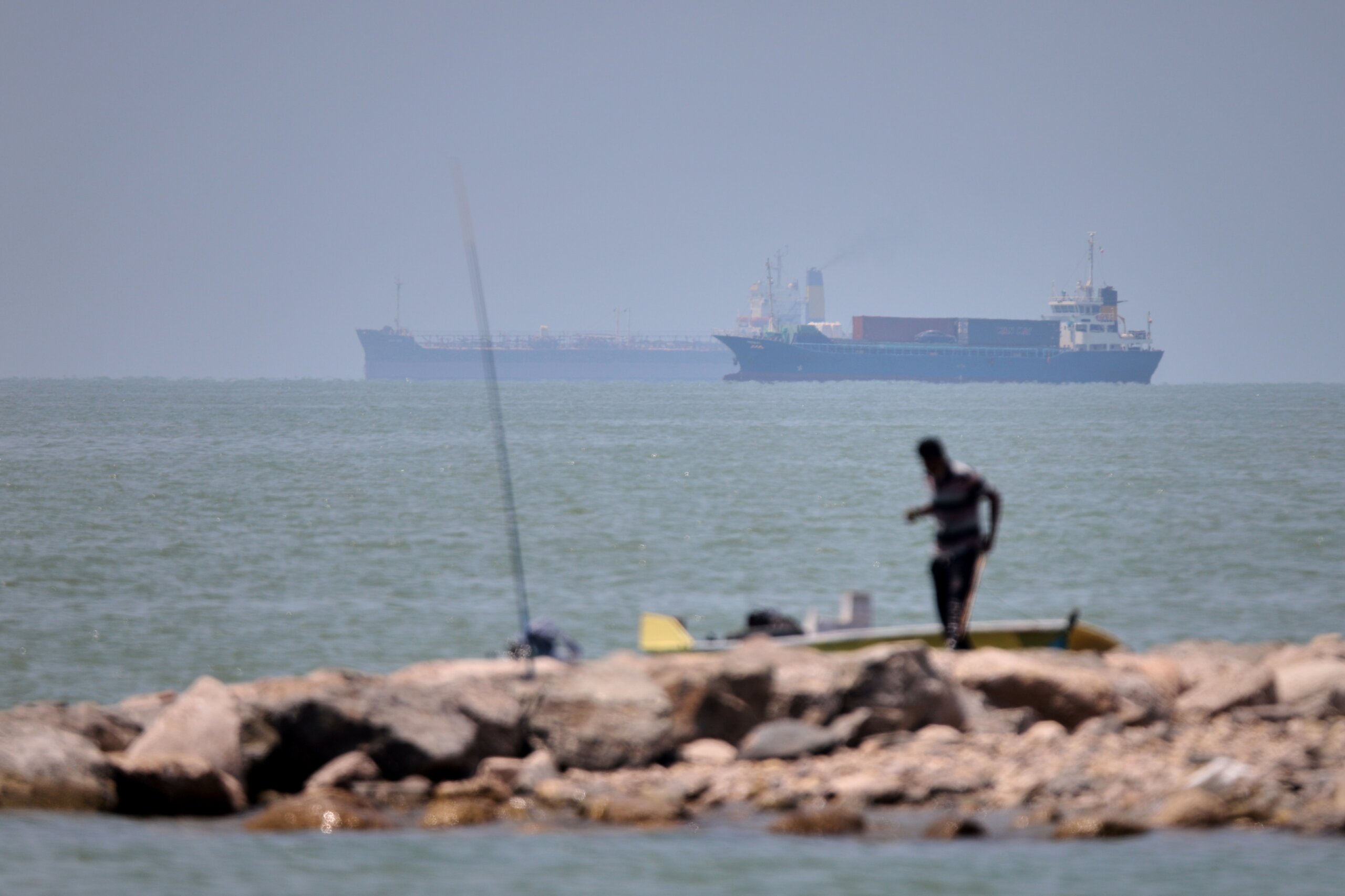
Oil prices climbed, showing that caution still remains in financial markets. The price for a barrel of Brent crude oil, the international standard, rose 4.7% to settle at $99.39. It’s gone from roughly $70 before the war to as high as $119 at times on uncertainty about how long the war will keep oil stuck in the Persian Gulf area and away from customers.
“The key upside risk for the market is that peace talks between the US and Iran break down,” ING Bank strategists Warren Patterson and Ewa Manthey wrote Thursday. “This isn’t an unrealistic scenario, given that US and Iranian demands remain fairly wide apart.”
In the meantime, big U.S. companies are continuing to deliver growth in profits for the start of 2026 that’s even better than analysts expected. Such growth is the lifeblood of the stock market, whose level tends to follow the track of corporate profits over the long term.
PepsiCo rose 2.3% after reporting better results for the latest quarter than analysts expected. Customers bought more snacks during the quarter, after the company said in February it would cut prices on Lay’s, Doritos, Cheetos and Tostitos chips to win back people frustrated by high prices.
J.B. Hunt Transport Services vroomed 6.3% higher, and Marsh & McLennan climbed 4.4% after both likewise delivered stronger results than expected.
Technology stocks also broadly got some support after Taiwan Semiconductor Manufacturing Co., an industry heavyweight, reported stronger revenue and profit for the start of 2026 than analysts expected. TSMC’s Chief Financial Officer Wendell Huang said the company expects strong demand to continue into the spring.
On the losing end of Wall Street was Abbott, which fell 6% even though it reported slightly better results than analysts expected. The health care company cut its forecast for profit over the full year, mostly because of its purchase of cancer-screening company Exact Sciences.
Allbirds slumped 35.8%, but that gave back only a portion of its 582% surge from the day before. The company formerly known for sneakers is pivoting to the artificial-intelligence industry and hopes to rent out the use of high-powered AI chips as a service.
All told, the S&P 500 rose 18.33 points to 7,041.28. The Dow Jones Industrial Average added 115.00 to 48,578.72, and the Nasdaq composite gained 86.69 to 24,102.70.
In stock markets abroad, indexes climbed across much of Europe and Asia. Japan’s Nikkei 225 jumped 2.4%, South Korea’s Kospi rallied 2.2% and Hong Kong’s Hang Seng rose 1.7% for some of the world’s larger moves.
China on Thursday reported 5% economic growth for the January-March quarter, an acceleration from the previous quarter. While economists say China has largely shrugged off the initial impacts of the Iran war, some are warning its massive export engine could be hit more significantly in the coming months on slower global economic growth.
In the bond market Treasury yields rose a bit after a report showed fewer U.S. workers applied for unemployment benefits last week.
The yield on the 10-year Treasury rose to 4.31% from 4.29% late Wednesday.
___
AP Business Writers Chan Ho-him and Matt Ott contributed to this report.