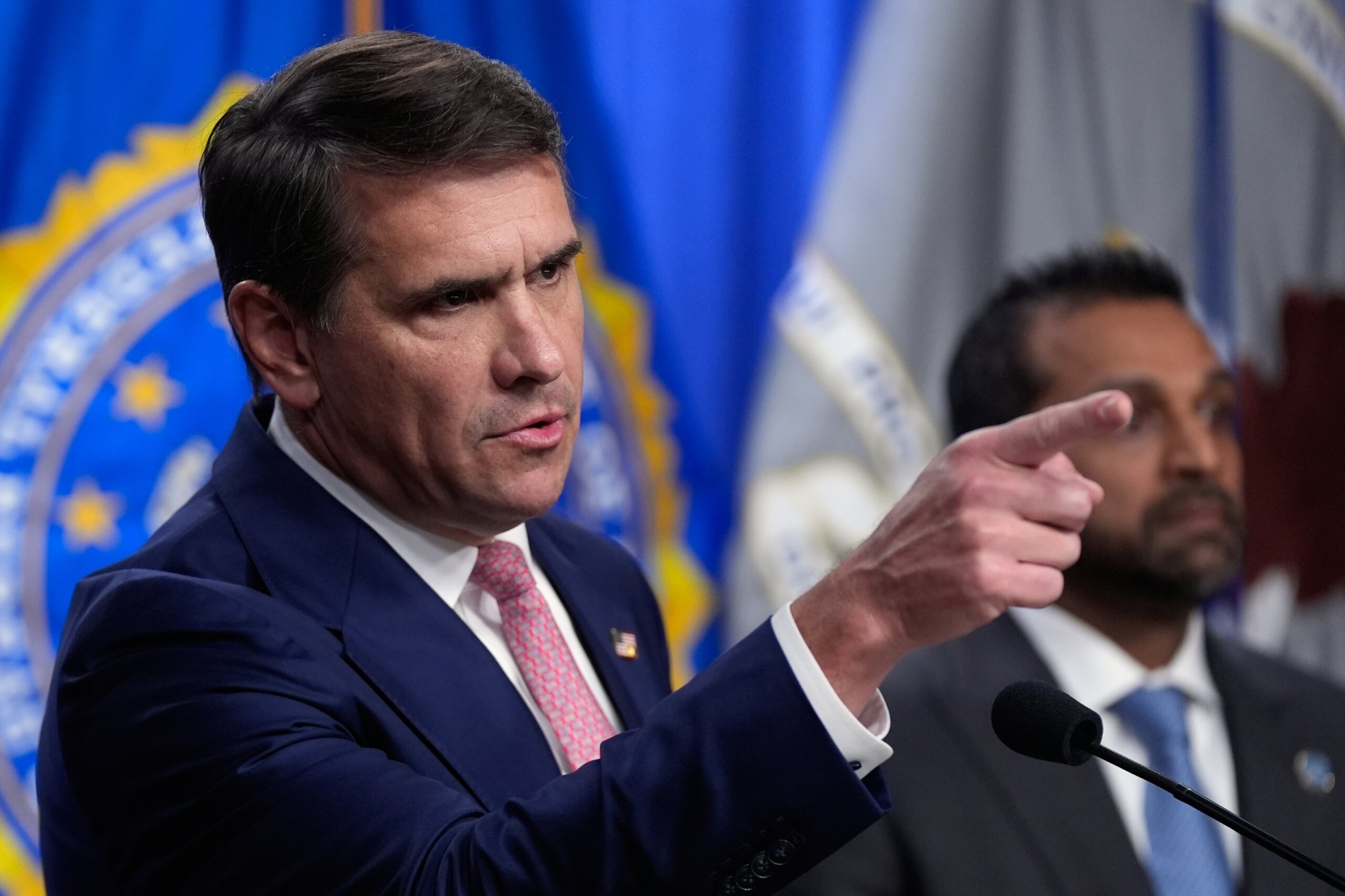
JEFFERSON CITY, Mo. (AP) — If Missouri voters get to decide whether to adopt new U.S. House districts backed by President Donald Trump, the ballot proposal presented to them won’t say a word about gerrymandering.
A state judge on Friday ordered a new, toned-down description of the redistricting plan after Missouri’s Republican secretary of state acknowledged that he had crafted an unfair summary likely to create bias for the new districts by describing the old ones as “gerrymandered.”
The ruling marked at least a partial victory for opponents of the new map, who previously submitted more than 300,000 petition signatures seeking to force a statewide referendum. But it remains to be seen whether the referendum actually will occur this November.
Election officials are still in the process of verifying whether opponents gathered enough valid petition signatures. And the state Supreme Court is considering a separate lawsuit seeking to invalidate the new map based on assertions that mid-decade redistricting isn’t allowed under the state constitution.
Missouri lawmakers approved new congressional districts last September — the second Republican-led state after Texas to respond to Trump’s call to redraw districts to try to give the GOP an advantage in this year’s midterm elections.
That triggered an unusual tit-for-tat redistricting battle that also spread to Republican-led North Carolina and Ohio and Democratic-led California and Virginia. Republican-led Florida is set to join the congressional redistricting debate with a special legislative session in April.
Missouri currently is represented in the U.S. House by six Republicans and two Democrats under a map passed in 2022 after the most recent census. The new map is intended to help Republicans win a Kansas City-area seat currently held by Democratic U.S. Rep. Emanuel Cleaver by reassigning portions to two neighboring districts and stretching the remainder into Republican-heavy rural areas.
Missouri Secretary of State Denny Hoskins, who supports the new districts, has until Aug. 4 — the date of the state’s primary elections — to determine whether the referendum petition met constitutional muster and got enough valid signatures. If so, then the new districts could be suspended until decided by voters.
As originally drafted by Hoskins, the ballot summary for the potential referendum would have asked voters whether to repeal “Missouri’s existing gerrymandered congressional plan that protects incumbent politicians” and replace it with new boundaries “that keep more cities and counties intact, are more compact, and better reflects statewide voting patterns.”
The opposition group People Not Politicians, which backed the petition drive, filed suit alleging Hoskins’ wording was biased and likely to lead people to vote for the new districts, which opponents contend are the true gerrymander.
Attorneys for Hoskins conceded during court proceedings it was unfair to describe Missouri’s current districts as gerrymandered and protecting incumbents. But Hoskins insisted the remaining description of the new districts was fine.
Cole County Circuit Judge Brian Stumpe struck much of the original wording but agreed with Hoskins that it was accurate to say the new districts are more compact and keep more counties and cities intact. He left those phrases in the new version that he ordered to be used.
Both sides took some satisfaction from the revised wording.
“If the referendum does eventually qualify for the ballot, Missourians will benefit from a fair ballot summary thanks to today’s ruling,” said Stephanie Whitaker, a spokesperson for Attorney General Catherine Hanaway, whose office represented Hoskins.
Chuck Hatfield, an attorney for People Not Politicians, described it as “a solid victory, and important victory.” But he said the group still objects to some of the remaining wording and would consider whether to appeal.