NEW YORK (AP) — A senior vice president of Super Micro Computer Inc. and two others affiliated with the company were charged Thursday with conspiring to smuggle billions of dollars of computer servers containing advanced Nvidia chips to China.
The men violated U.S. export controls laws by scheming to divert massive quantities of the high-performance servers assembled in the United States to China between 2024 and 2025, according to the indictment in Manhattan federal court.
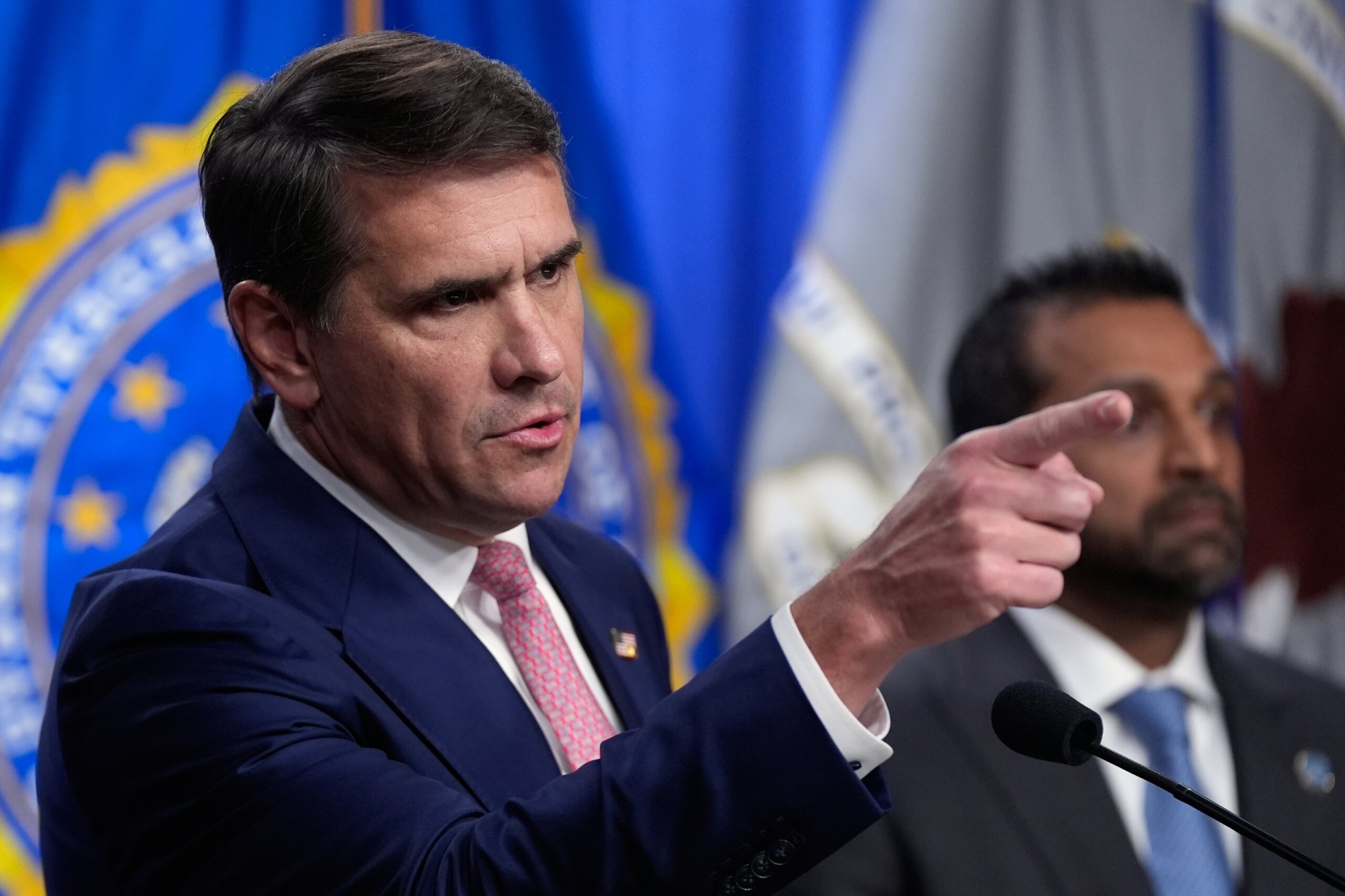
In a release, FBI Assistant Director in Charge James C. Barnacle Jr. said the defendants used fabricated documents, staged bogus equipment to pass audit inventories and utilized a pass-through company to conceal their misconduct and true clientele list.
U.S. Attorney Jay Clayton said schemes such as this “pose a direct threat to U.S. national security.”
Nvidia’s processors have emerged as indispensable building blocks for the data centers that power artificial intelligence — a potentially game-changing technology that could reshape society and change the balance of power in the world. For that reason, the U.S. and China are dueling to gain the upper hand in AI, evoking memories of the arms race between the U.S. and Germany to develop the first nuclear bomb during World War II.
To help gain the upper hand, President Joe Biden’s put restrictions on the sale of Nvidia’s AI chips to China — a prohibition that President Donald Trump has maintained on the company’s most powerful processors. The Trump administration last year began loosening the ban on Nvidia’s China sales for its lower-tier AI chips in exchange for a 15% commission paid to the U.S. government. But even with that concession, Nvidia still didn’t factor in any China sales in the revenue forecast included in its most recent financial report released late last month.
Yih-Shyan “Wally” Liaw, 71, a U.S. citizen and senior vice president and board member of Super Micro Computer, was arrested in California Thursday along with Ting-Wei “Willy” Sun, 44, a company contractor. Ruei-Tsang “Steven” Chang, a sales manager for the company in Taiwan, remains a fugitive, authorities said. Liaw, of Fremont, California, was released on bail while Sun, a citizen of Taiwan, was held for a bail hearing Friday. It was not immediately clear who represents them.
The indictment said Liaw and Chang directed executives of a company in Southeast Asia to place orders for $2.5 billion worth of servers from the San Jose, California-based Super Micro Computer between 2024 and 2025.
Authorities say the scheme became more brazen as time went on with at least $510 million worth of Super Micro Computer’s servers being diverted to China after their assembly in the United States.
The court papers did not identify the company, but Super Micro Computer Inc. issued a statement late Thursday in which it identified how the men who were arrested were affiliated with the company.
“The conduct by these individuals alleged in the indictment is a contravention of the Company’s policies and compliance controls, including efforts to circumvent applicable export control laws and regulations,” the company said. “Supermicro maintains a robust compliance program and is committed to full adherence to all applicable U.S. export and re-export control laws and regulations.”
The company, noting it was not indicted, also said it “has been cooperating fully with the government’s investigation and will continue to do so.”
In a release, Nvidia said “strict compliance is a top priority for Nvidia.”
“We continue to work closely with our customers and the government on compliance programs as export regulations have expanded. Unlawful diversion of controlled U.S. computers to China is a losing proposition across the board — NVIDIA does not provide any service or support for such systems, and the enforcement mechanisms are rigorous and effective,” the company said.
Nvidia’s processors have emerged as indispensable building blocks for the data centers that power artificial intelligence — a potentially game-changing technology that could reshape society and change the balance of power in the world. For that reason, the U.S. and China are dueling to gain the upper hand in AI, evoking memories of the arms race between the U.S. and Germany to develop the first nuclear bomb during World War II.
Even without sales to China, Nvidia’s fortunes have soared during a three-year trajectory that has seen its market value rise from about $400 billion at the end of 2022 to $4.3 trillion today — more than any other company in the world.
Earlier this week, Nvidia CEO Jensen Huang signaled the AI boom will continue by predicting it will soon have a $1 trillion backlog in chip orders, doubling from his estimate a year ago.
___
Associated Press Writer Michael Liedtke reported from San Francisco.