(NEW YORK) — A moderate geomagnetic storm could bring northern lights displays to U.S. states further south than usual, forecasts show.
The National Oceanic and Atmospheric Administration Space Weather Prediction Center has issued a storm watch for a G2 geomagnetic storm due to a coronal mass ejection expected to begin Wednesday at 8 p.m. ET and continue until Thursday at 8 p.m. ET.
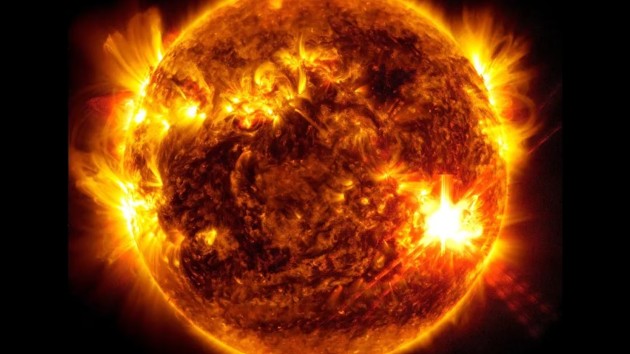
A coronal mass ejection is a massive eruption of solar material and magnetic field from the sun’s outer atmosphere.
Auroras can occur when the charged particles from the sun clash with the atoms and molecules in Earth’s upper atmosphere — causing those atoms and molecules to emit a glow that appears as a spectrum of light in the night sky.
In the U.S., northern lights could be visible in Alaska, Washington, Oregon, Idaho, Montana, Wyoming, North Dakota, South Dakota, Nebraska, Minnesota, Iowa, Wisconsin, Illinois, Michigan, New York, Vermont, New Hampshire or Maine, according to the NOAA aurora viewline map.
A G2 storm can also impact high-latitude power systems, spacecraft operation and high frequency radio propagation, according to NOAA. Fluctuations to weak power grids and minor impacts on satellite operations can occur as well.
Migratory animals could possibly be affected by geomagnetic storms, according to NOAA. A 2023 study found that inclement space weather may cause fewer birds to migrate during the disturbances — likely due to more difficulty in navigating — and NASA has researched whether solar storms cause an increase in marine mammal strandings, possibly due to similar navigation issues.
The month of March is often an active month for northern lights displays.
The weeks before and after the spring equinox on March 20 are considered “aurora season,” as geomagnetic storms are more likely due to the way solar wind interacts with the Earth’s magnetosphere, according to EarthSky.org.
The spring equinox comes as the solar maximum comes to a close. The sun’s 11-year cycle peaked around late 2024 and has continued to emit strong solar activity and geomagnetic storms, leading to an increase in aurora displays.
The best time to see the northern lights in the U.S. is generally between 10 p.m. and 4 a.m. local time, and traveling to the darkest location possible is recommended for the best viewing, according to NOAA.
Copyright © 2026, ABC Audio. All rights reserved.