There have been preemptive pardons and mass pardons in the past, but never has the United States seen both happening at once in the numbers that just occurred between the outgoing Biden administration and the incoming Trump administration.
“It’s quite striking,” said Karen Hult, a political science professor at Virginia Tech. “It is highly unusual, especially coming from both sides — both the outgoing president and the incoming president.”
Former President Joe Biden pardoned his siblings and their spouses on his way out of the White House on Monday, saying that his family had been “subjected to unrelenting attacks and threats, motivated solely by a desire to hurt me — the worst kind of partisan politics.”
That came after Biden pardoned Dr. Anthony Fauci, retired Gen. Mark Milley, members of the House committee that investigated the Jan. 6 attack on the Capitol and allies who have been targeted by President Donald Trump.
It was a remarkable use of Biden’s presidential power. None of the above have been charged with any crime, and the move was designed to guard against possible retribution by Trump.
“Probably the only other analog could be Gerald Ford’s pardoning of Richard Nixon because that, indeed, was preemptive before he’d actually been charged in a court of law for anything,” Hult said.
That happened back in 1974.
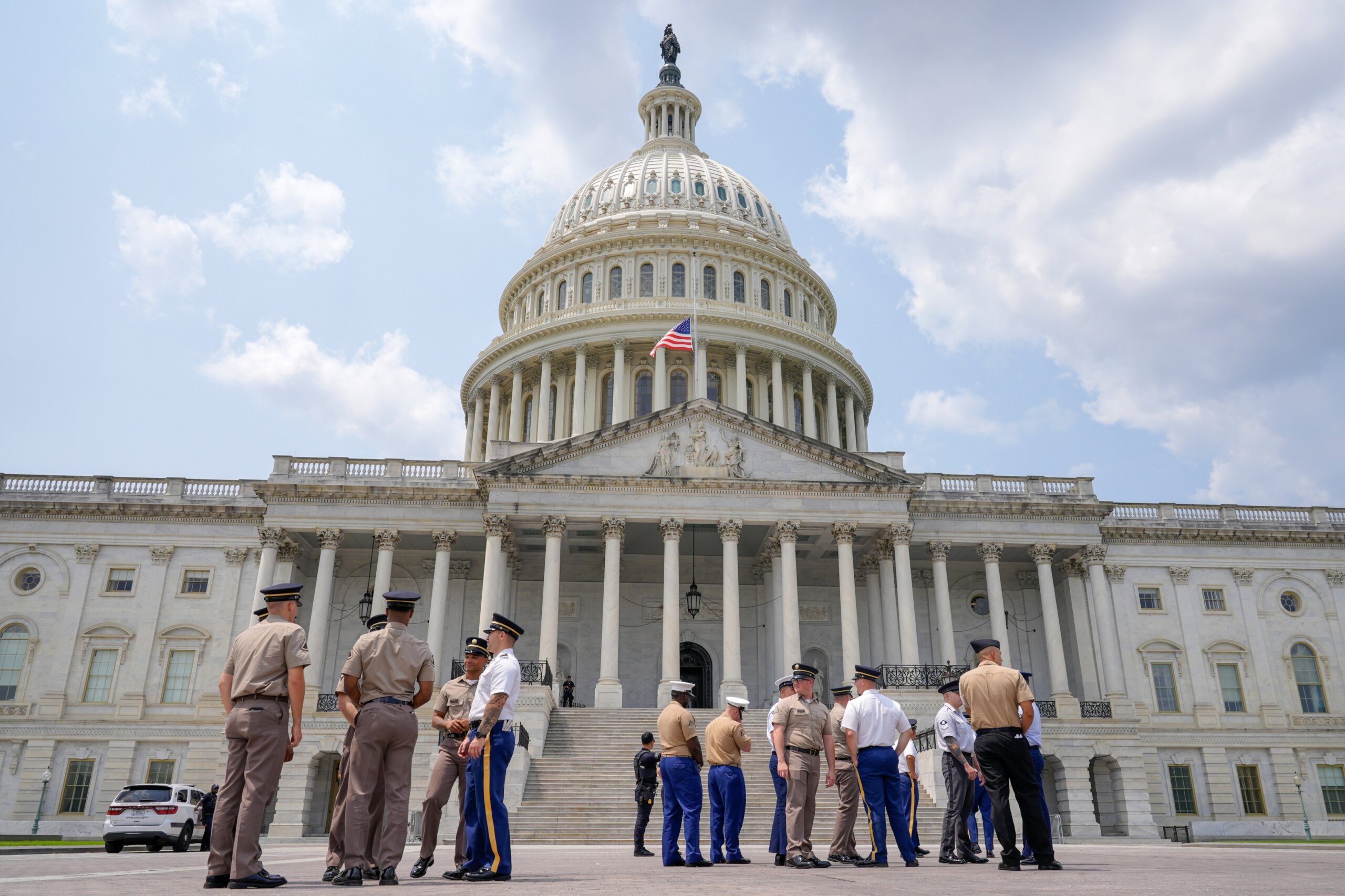
Shortly after taking office this week, Trump pardoned, commuted the prison sentences or vowed to dismiss the cases of all of the 1,500-plus people charged with crimes in the Jan. 6, 2021, U.S. Capitol riot, including people convicted of assaulting police officers.
According to Hult, that could be compared to former President Jimmy Carter’s pardon for those who evaded the Vietnam War draft between 1964 and 1973.
“That probably was closest to the scale that we saw with President Trump,” Hult said.
Notably, however, Carter’s proclamation excluded deserters, recipients of dishonorable discharges and those who committed violence during anti-war protests.
In a statement responding to the recent pardons, D.C. Mayor Muriel Bowser said the “events of January 6 cannot be forgiven or erased,” adding that the city was “assaulted on that day.”
Hult said she believed this new era, where the pardon has become front and center in politics, will likely be around for a while.
“It does seem as though that it may well be here, at least for the foreseeable future, and that’s to say perhaps for the next several decades,” Hult said.
The Associated Press contributed to this report.