Many Americans know about the Underground Railroad of slaves escaping the South to find freedom in the North.
However, what about the American slaves who managed to escape southward over the Mexican border?
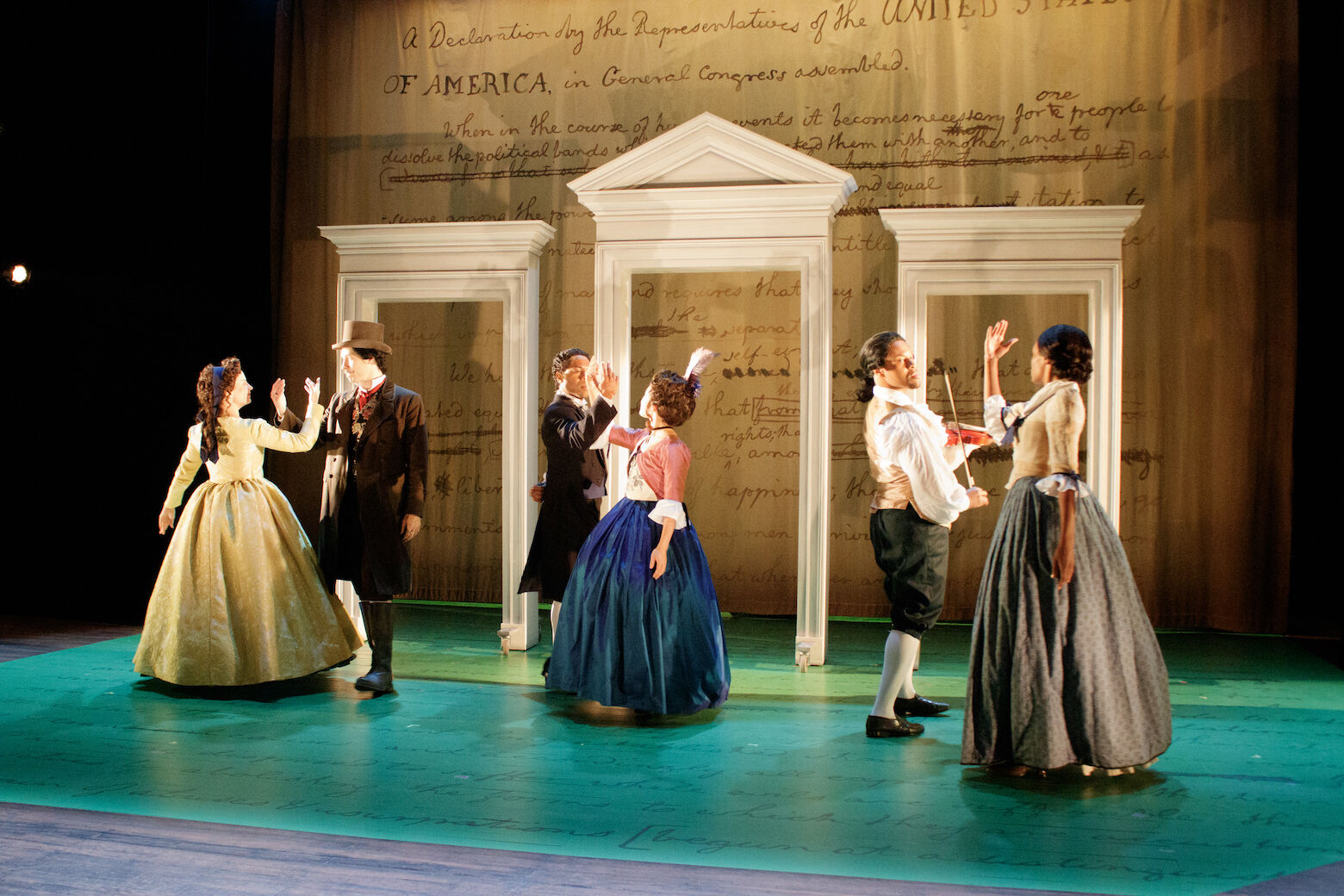
That’s the premise of the new musical “Mexodus” at the Atlas Performing Arts Center in Northeast D.C., running now through June 15 in a special co-production between Baltimore Center Stage and Mosaic Theater in D.C.
“‘Mexodus’ is the undertold story of the Underground Railroad that went south to Mexico,” co-creator and co-star Nygel D. Robinson told WTOP. “An estimated 4,000 to 10,000 slaves escaped from southern Texas and Louisiana and crossed the Rio Grande to get to Mexico, because Mexico had abolished slavery in 1829, so it’s like 30 or 40 years before the United States did. They were welcoming people and quickly turning fugitive slaves into citizens.”
Robinson co-creates the production with Brian Quijada, who began researching the little-known subject.
“Brian had found an article like two years before we met called ‘The Undertold Story of the Underground Railroad That Went South,'” Robinson said. “There was a Ph.D. student at the University of Texas in Austin and they were doing a dissertation on it. There’s been more information subsequently, but when we started working on it there wasn’t a whole lot, so the story that we are telling is made up but based on the few facts that we do have.”
Robinson and Quijada respectively play a runaway slave named Henry and a Mexican man named Carlos.
“Henry, who I play, is an enslaved person,” Robinson said. “The show starts on this plantation, but he has an altercation with the slave master’s son … so he has to run away. There’s a folk tale about someone crossing the Rio Grande on a bale of cotton because cotton has some buoyancy … so he floats across the Rio Grande, there’s a storm, he washes up on shore and is found by a man, Carlos, who Brian plays, who nurses him back to health.”
Not only does the title echo the Biblical story of Moses in “Exodus,” the story reveals deeper themes exploring why Mexico may have been quicker to abolish slavery than the U.S., which waited until after the Civil War in 1865.
“Not only is it the right thing to do morally and ethically, it’s also this monster we’re feeding and if I feed this monster it’s going to eat more of what I have,” Reinhold said. “When you are dealing with a group of people who are people of color under the same kind of colonial and imperial rule, of course they would try to get away from that as quickly as they can. It’s like they got their independence and said, ‘We’re not doing this thing anymore.'”
Such themes are reflected in the musical numbers, performed with live looping in real time on stage.
“Live looping is the future,” Robinson said. “Looping is layered music making. Les Paul created it pretty much, he had a single pedal and a guitar, so he would hit the pedal, play a loop, that would go on forever and he could noodle over it. … We use hip-hop in the show to pay homage to our forefathers who created this thing together, these Black and Brown people up in The Bronx. … We all eat rice, beans and chicken, we just season it in different ways.”