▶ Watch Video: Here’s where some fast-fashion clothes end up after being thrown away
This holiday shopping season, environmental groups are asking shoppers to reconsider buying cheaper fast-fashion items that may only get a few uses. These items often end up discarded quickly, harming the environment.
In Chile, a massive landfill of used clothing from around the world keeps growing, causing damage to the environment and the communities that live there.
The mountain can be found just 30 minutes away from Iquique, a port city known for its beaches and trade. It’s an illegal landfill, and one of the biggest in the area. By one estimate, there are at least 30,000 tons of waste in the pile.
“It’s sad, because these clothes don’t even come from here,” said Angela Astudillo, who lives in Alto Hosipicio, one of the cities near the landfill.
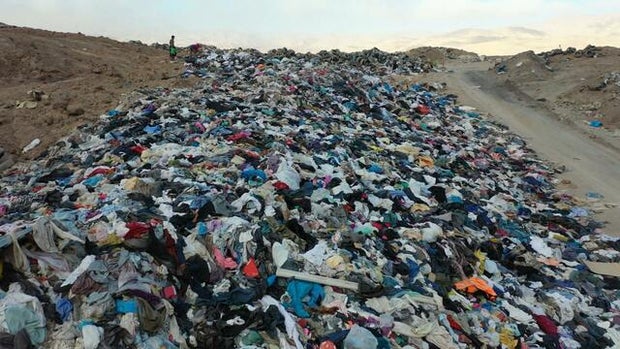
Inside the pile were clothes made all over the world and sold in the United States, including menswear from Alabama, H&M clothing made in Pakistan, and even a graduation sash from a high school in New Jersey. The second-hand items are mostly trash, Astudillo said, and it’s not the world she wants her daughter to inherit.
The United Nations found that Chile received 126,000 tons of used clothing in textiles in 2021. The majority of those clothes came from the European Union, China and the United States. Just a quarter of those used clothes were re-sold, with most ending up in illegal landfills.
The U.N. report said the problems were caused by “fast fashion” and “unregulated overproduction and overconsumption on a global scale.” African countries like Senegal and Ghana have similar problems.
The draw for importers to Chile is ports like those in Iquique, meaning little to no taxes are charged, but what people don’t use ends up illegally dumped. Jamie Soto, the general manager of the zone, said that he and other officials do not buy or sell used clothing, and are not responsible for the waste.
Patricio Ferreira, the mayor of Alto Hospicio, the city close to the dumps, told CBS Saturday Morning he and other officials are working to stop illegal dumping in the area. He showed CBS Saturday Morning the cameras recently installed around town, which are monitored from city hall.
City police also have an eye out for illegal dumping. It’s a small, local solution to the problems that Ferreira said are caused by worldwide overconsumption.
People also want changes in Chile. There have been calls for the country to change its laws and restrict what used items can be imported like other Latin American countries have done.
Until then, people like Astudillo and her daughter work to recycle what they can, turning trash into new clothing. But even she knows that it’s not enough to move mountains. Meanwhile, at the port, the ships keep coming.