
[connatix_element_embed script_id=a662dff3eef5410d9078b65131a8df24 player_id=9be9c680-c459-4acb-af21-654a2ccca384 video_id=e880f373-cd9e-4b52-b1b2-5cd53f6318a1]
The crowds gathered around a space just inside the entrance to the National Museum of the American Indian.
They listened as Misty Rose Nace [Solorio], a member of the Brokenhead Ojibway First Nation and the Roseau River Anishinabe First Nation, explained the story behind the dress Friday afternoon. A little girl was sick, Nace said, and as she danced in her dress decorated with silver cones, she was healed.
Nace said there are many versions of the story before sharing how when she suffered the unexpected loss of her older sister.
“I was broken,” she said.
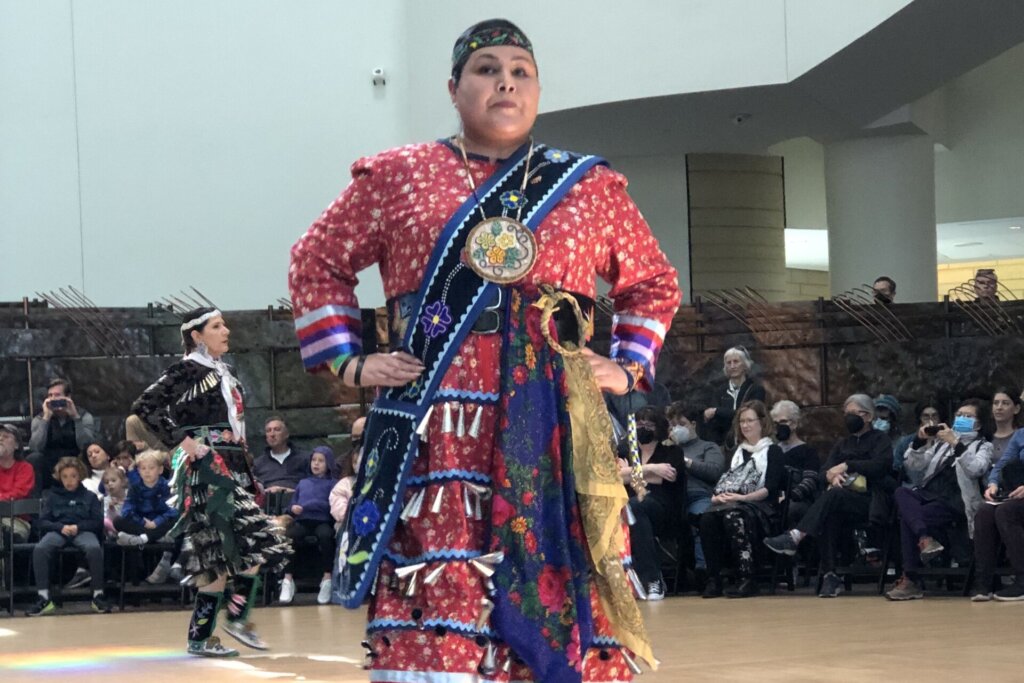
Though she had long taken part in dances tied to her heritage, she found the Jingle Dress Dance was truly a healing experience.
“Every lady that wears this dress, we all have a story as to why we wear it. And it’s such an honor,” she told the crowd. “I’m very grateful.”
With that, she began to dance, the sound of the silver cones that dangled from her dress mixing with the drum and vocal accompaniment from Ralph Zotigh and his son Dennis.
After the dances and presentations, members of the crowd got to visit with the dancers and ask questions.
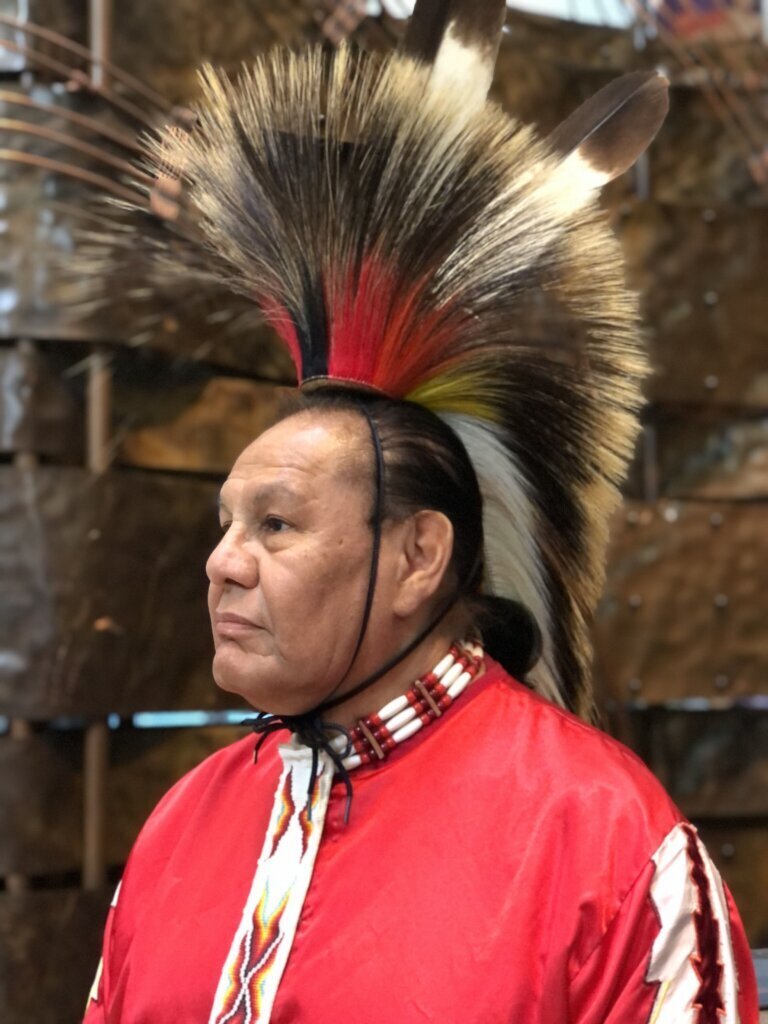
WTOP talked with Dennis Zotigh, a cultural specialist with the museum and writer for Smithsonian Magazine. Asked what question he gets most, Zotigh didn’t hesitate:
“Are you all Native American, or American Indian?”
Asked, what is the answer to that question, Zotigh said: “We’re none of these. Because they’re in the English language, and English is a foreign language. It did not originate here, it was brought here by immigrants.”
Zotigh explained the general preference is for someone to be identified by their tribe.
“Secondarily,” he said, “We can be called Native American, American Indian, simply American, Aboriginal, First Nations, all these different secondary English titles that were put upon us.”
But, he explained, “American Indian is the language of the law.” And added, “When the president, the courts and the Congress deal with American tribes, American Indian is the language of the law.”
In his case, “My father is a full-blooded Kiowa Indian from Oklahoma. My mother is two tribes, Ohkay Owingeh Pueblo from New Mexico and Isante Dakota from Nebraska — and I’m all three,” he said with a broad smile.
The museum provides education and cultural experiences throughout the year. The Native Art Market will be held Saturday and Sunday, Dec. 2 and 3. Admission is free.