Online and in stores, cheap versions of charging cables for Apple and Android phones aren’t hard to find. But how sturdy are the less pricey cables?
Consumer Reports found that with several cables you get what you pay for, but other times that’s not the case.
The testing pitted Apple’s $30 charge cable up against two much cheaper cords, Amazon Basics’ $10 cable and Onn’s $8 cable. It also compared Samsung’s $15 USB-C cable to Amazon Basics’ nearly $7 cable, Onn’s $5 version and Bytech’s $6 cable.
All the cables tested had a USB-A connection on the side you plug into the wall or your car.
[connatix_element_embed script_id=e6ff67e088c14eacbfae1ffd32870489 player_id=9be9c680-c459-4acb-af21-654a2ccca384 video_id=8d517af0-b613-45d1-bb83-29a8bb46ee8b]
Video above of Consumer Reports testing a charging cable.
To test the cables, a mechanical arm was used to repeatedly twist and bend the cables to see how long it took before they became defective.
“We figured those were the two areas where cords tend to get stressed the most,” said Consumer Reports Deputy Tech Editor Chris Raymond.
Raymond said the first test was the twist. All seven wires had no problems with that, but that wasn’t the case with the second test.
“When we put them through the bend test, that’s when we started to see some real differences,” he said.
The machine bent the cables 90 degrees repeatedly, and Raymond said by 796 bends, both the Amazon Basics and Onn lightning cables quit working. The clear winner ended up being the more expensive Apple cable with 11,500 bends.
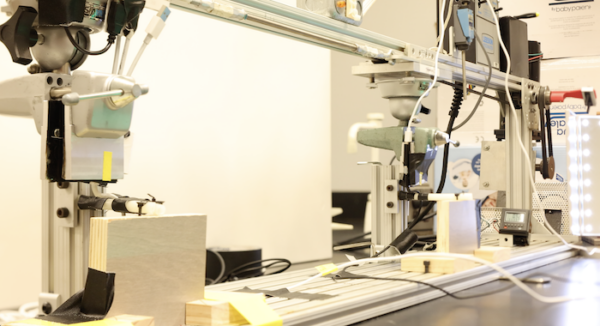
With USB-C charge cables, the conclusion was much different. Samsung’s charge cable as well as the Bytech version did not make it past 1,000 bends. The Onn cable lasted until 1,656 bends. The winner among USB-C cables was Amazon Basics’ cable, surviving 11,500 bends.
In fact, both the Apple lightning and the Amazon Basics USB-C cables never failed, Raymond said.
“To be honest, we ended up having to shut the rig down after we got to that 11,500 bends, because there was no sign of either one of those cords letting up,” he said.
The testing showed that brand, price or even how a cable looks really cannot tell you how sturdy a cable is, according to Raymond. He said some of the cables that did not last had braided covers, others were thicker than the cables that did the best.
“I think the problems with these cords ended up being sort of on the inside,” he said.
He believes the results could help manufacturers better design the inner workings of the cables so they last longer.
Raymond said the fact that the more affordable Amazon Basics USB-C cable did the best is good news for not only Android users, but also for iPhone users about to upgrade — the iPhone 15 has a USB-C connection for charging.