Having your car break down is bad, and not being able to call for a tow makes it worse. Now, AAA and Apple are teaming up with a solution.
Users of the new iPhone 15, as well as iPhone 14, will be able to connect to AAA for Roadside Assistance by satellite, even in remote locations where there is no Wi-Fi or cellular service.
The assistance is available to users of the newest iPhone models, regardless of whether they are current AAA members. If AAA responds to a stranded motorist, the nonmember will pay for the auto club’s assistance.
Here’s how it works, according to Apple:
- In Messages, tap the New Message button to start a conversation.
- In the address field, type “Roadside.” When you’re off the grid with no cellular and Wi-Fi coverage, you’ll see the option to request Roadside Assistance via Satellite.
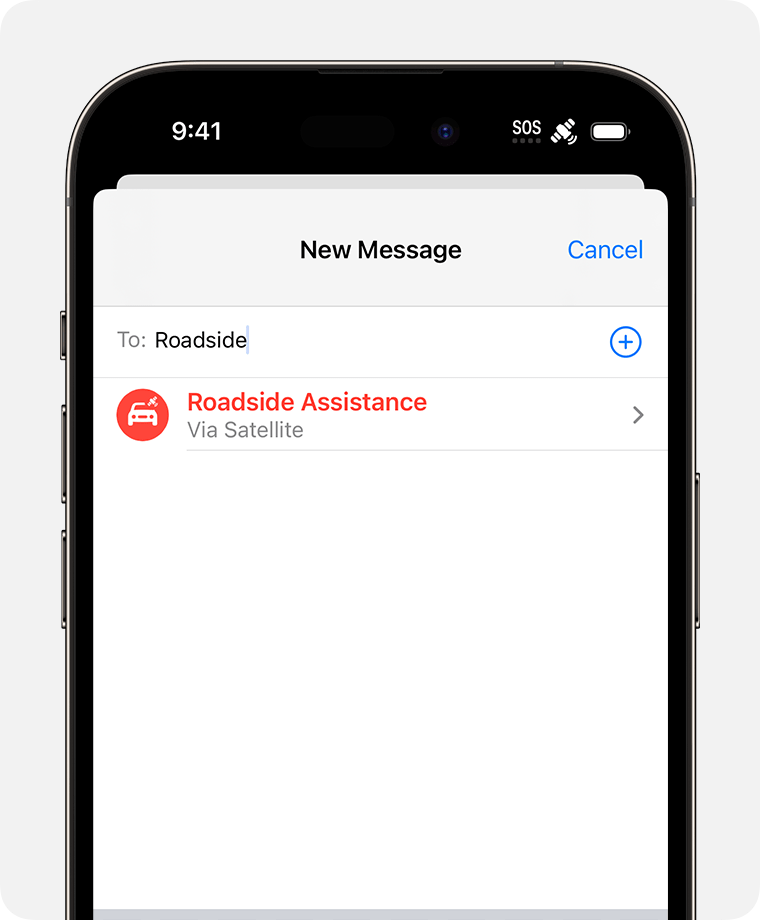
Users of the new iPhone 15, as well as iPhone 14, will be able to connect to AAA for Roadside Assistance by satellite when there is no Wi-Fi or cellular service. (Courtesy Apple) - Tap “Roadside Assistance.”
- Follow the on-screen instructions to connect to a satellite and request help.
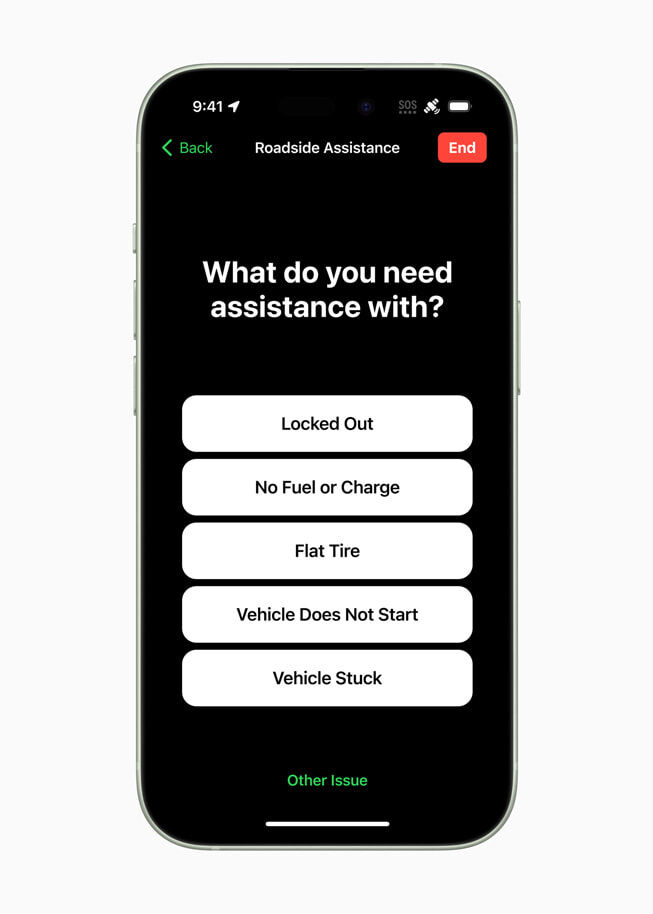
As another option, if you try to dial 911 and your call won’t connect, you’ll have the option to text either emergency services or a roadside assistance provider via satellite, Apple said.
According to Apple, to connect to a satellite with an iPhone, the user has to be outdoors, with a clear view of the sky and horizon.
Roadside Assistance via satellite is available only in the U.S. It’s free for two years after the activation of an iPhone 14, iPhone 14 Pro, iPhone 15, or iPhone 15 Pro.
AAA said stranded drivers need to be near a road to receive assistance, and it doesn’t provide off-road vehicle recovery.