Lucky Buns, a burger chain known for both traditional and exotic burgers and chicken sandwiches, opens a third location on Wednesday at The Wharf in Southwest D.C.
The original Lucky Buns opened in Adams Morgan in 2017. There is a second location at D.C.’s Union Market, and an airport version of Lucky Buns is planned for Reagan National Airport.
The Wharf location will be open for brunch, lunch and dinner, as well as late night.
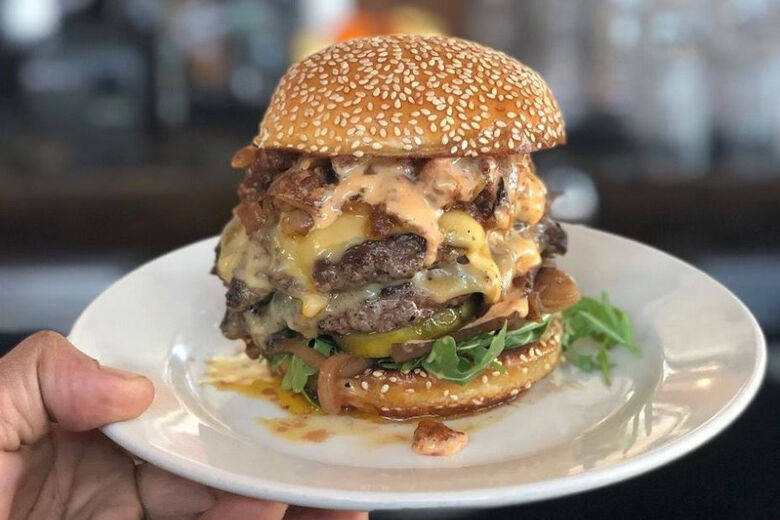
The Lucky Buns menu has six versions of double patty burgers with toppings such as Gouda cheese, Gordy’s pickles, hatch chili relish, cotija cream, grilled pineapple, pickled beetroot and bacon XO jam. There are also four chicken sandwiches, some tandoori prepared and appetizers that include chickpea hummus, guacamole, crab rangoon and mac & cheese.
All beef and chicken is Halal and produce is locally sourced.
Lucky Buns began as a pop-up inside a rotating restaurant in D.C.’s Park View in 2016 before graduating to its original brick-and-mortar store at 2000 18th Street, N.W., replacing longtime Adams Morgan restaurant L-Enfant Cafe & Bar, which closed in 2017.
The new location is part of The Wharf’s Phase 2 development at 675 Wharf Street, and includes both inside and outside seating. Its late-night hours are extended to 1 a.m. on Wednesdays and Saturdays, and 2 a.m. on Thursdays and Fridays.