
It turns out Mother Nature also celebrated Dry January. And February and March, too.
While we notice it more during the growing season, when the grass dries out and lawns turn brown, the numbers show D.C. needs a few rainy days.
For the first two and a half months of the year, 2023 is the sixth driest start to the calendar year on record in the D.C. area.
Precipitation (melted snow, ice and rainfall) is more than 3 inches behind average. March has only delivered 18% of average rainfall so far.
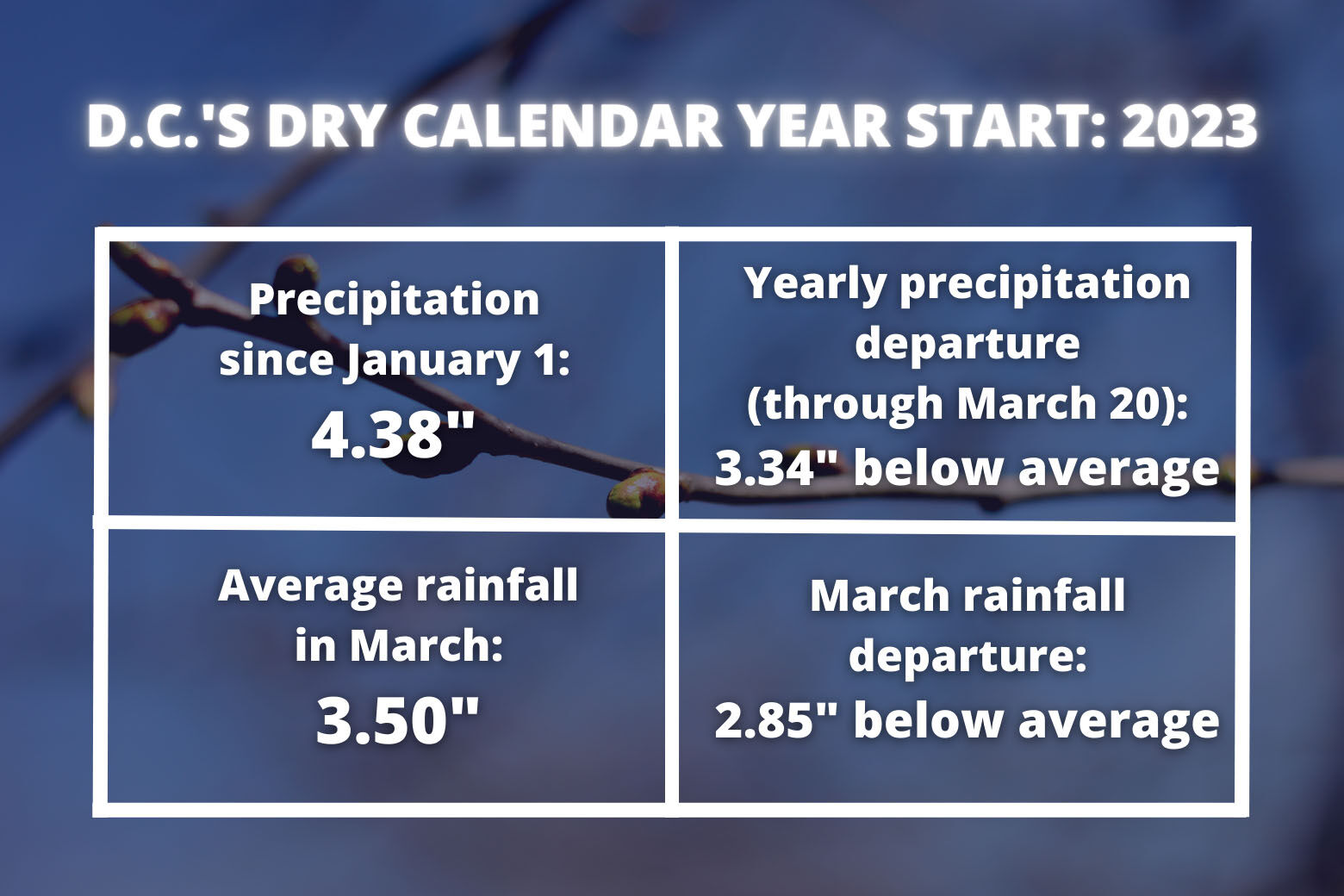
The primary storm track has been too far north to bring D.C. appreciable rainfall.
As of its latest update on Thursday, March 16, the U.S. Drought Monitor did not officially list D.C. as having an “abnormally dry” spell, which is one level away from “moderate drought.”
However, its update later this week could expand the “abnormally dry” area from southern Pennsylvania, southern New Jersey and southern Maryland north into the D.C. area.
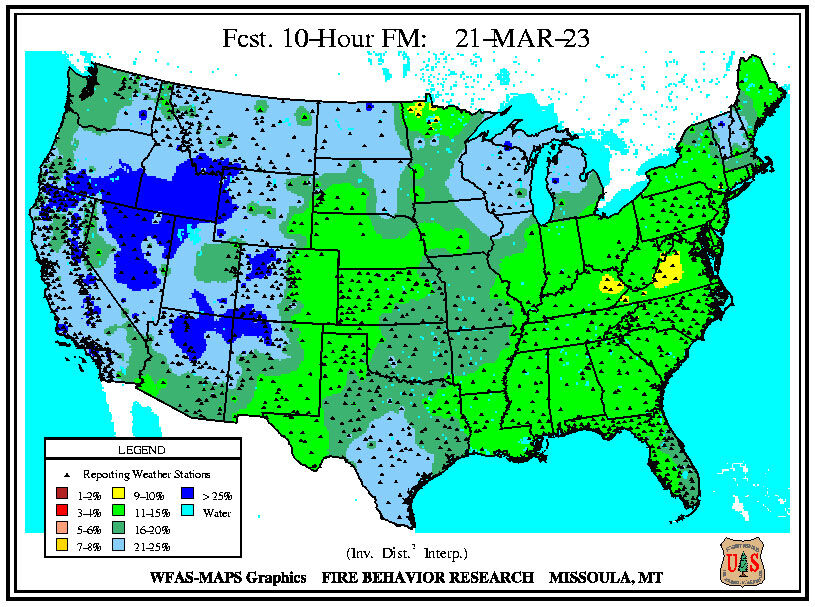
The recent dry streak has primed the ground for an enhanced risk for brush fires on warm, windy days. Recent 10-hour fuel moisture has dropped to 10% for the Mid-Atlantic. Our next opportunity for an enhanced brush fire risk could be Thursday afternoon due to the breezy and warm weather expected.
Fortunately, the latest trends support occasional rain late this week into next week, which will help make up for some of March’s loss and keep the region out of a developing drought. Historically, May through July are D.C.’s wettest months of the year, so there is ample opportunity to make up for a dry winter.