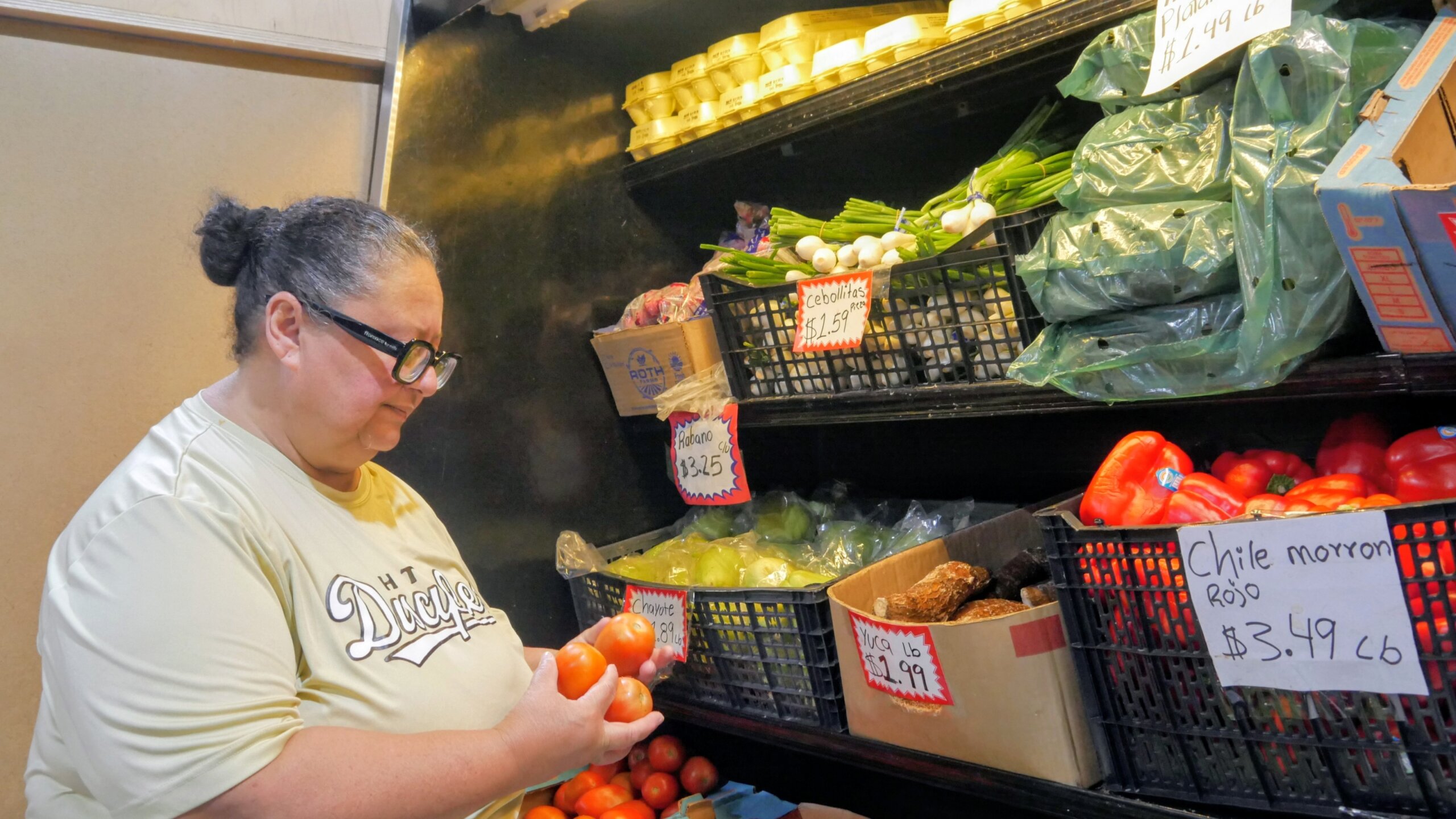
Grocery stores don’t sell everything in the produce aisle before it passes its prime, but Rockville, Maryland-based MOM’s Organic Market doesn’t let past-prime food go to the dumpster.
According to the grocer’s annual sustainability report, it donated the equivalent of $1 million in food waste to D.C. area nonprofits in 2022. It included more than 60 food banks, soup kitchens and churches.
MOM’s also runs a huge recycling program for customers at its stores, and its annual report says customers recycled 38 tons of batteries last year; 11.5 tons of shoes; 4,800 old cellphones and tablets; and 30,000 oyster shells.
Last year, MOM’s began charging customers 25 cents for single-use paper bags and donating proceeds to the Anacostia Watershed Society in Bladensburg, Maryland. It banned disposable plastic bags in 2005, the first grocery store to do so. It says as a result, it avoided nearly 3.8 million disposable bags in 2022.
It was also the first retail chain to ban the sale of plastic bottled water in 2010. All of its stores have been powered by 100% renewable energy since 2005.
MOM’s has 16 stores in D.C., Maryland and Virginia, and recently expanded to New York, New Jersey, Massachusetts and Pennsylvania.
The company dates back to 1987, when founder Scott Nash sold organic produce out of his family garage in Beltsville.