Longtime Capitol Hill sports bar Capitol Lounge in D.C., which closed permanently during the first months of the pandemic in 2020, is making a one-day comeback as a pop-up version at its onetime Hill staffer rival Union Pub.
Capitol Lounge, two blocks from the Cannon House Office Building on the House side of the U.S. Capitol, opened in 1994 and was co-owned by James Silk. Union Pub is on the Senate side of the U.S. Capitol, and is owned by Silk’s friend Matthew Weiss.
The idea originally began as an April Fool’s Day joke, but the two say the idea took shape into what will now be a day-long celebration … on April 1.
“What better day to pretend to be a different bar,” said Union Pub general manager Chris Haley, who worked at Capitol Lounge from 2012 to 2020. “Maybe we can host a takeover of a different bar or concept every year on April 1.”
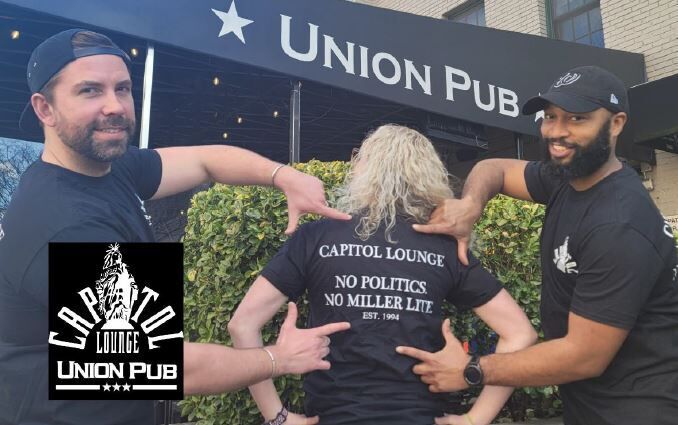
The Capitol Lounge pop-up will take place from 11 a.m. to 2:30 a.m. and will feature souvenirs, posters, and popular food and drink special the old Capitol Lounge menus.
There will also be T-shirts with Capitol Lounge’s motto: “No politics, No Miller Lite.”
Weiss and Silk said former staff and regulars, some of whom are traveling from as far away as California for the one-day event, have already made their plans to attend known.
Capitol Lounge, known as “The Lounge” to regulars, survived two fires, in 2005 and again in 2007.