Amazon has closed the purchase of its future PenPlace piece of HQ2, paying developer JBG Smith $198 million for the 12 acres to be developed as the final portion of HQ2.
The site, at 12th Street South and South Fern in Pentagon City, Virginia, will include 3.2 million square feet of new development, including office buildings, retail, 2.75 acres of open public space and HQ2’s signature Helix tower.
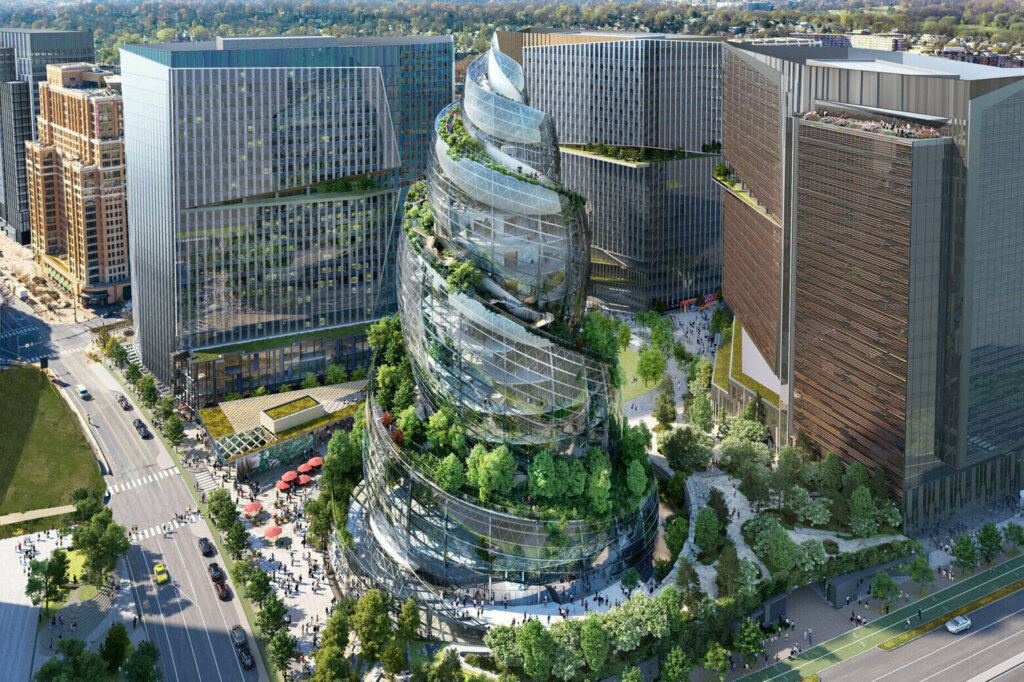
The development was recently approved by Arlington County.
Amazon purchased the Metropolitan Park phase of its HQ2, which is currently under construction, in 2020.
“Finalizing this deal allows us to move forward with our partners, realize Amazon’s vision and complete its second home here in the region. Metropolitan Park and PenPlace will bring exciting new amenities to the broader neighborhood including public parks, dynamic retail and infrastructure improvements,” said JBG Smith Executive Officer Matt Kelly.
Amazon and JBG Smith recently celebrated the “topping out” of the 22nd and final level at Metropolitan Park.
To date, Amazon has hired 5,000 employees for its HQ2, with at least 20,000 more expected in coming years.
Bethesda, Maryland-based JBG Smith, which owns the office buildings in Crystal City that Amazon has leased for its initial HQ2 workers, remains the developer for both Metropolitan Park and PenPlace. Metropolitan Park is expected to be completed next year. PenPlace will follow in 2026.