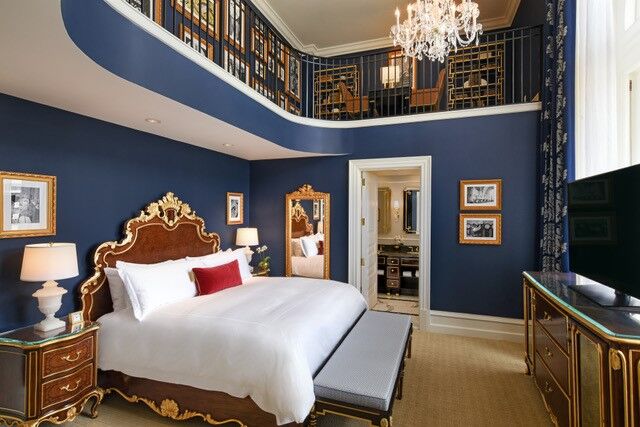
The former Trump Hotel at the historic Old Post Office Pavilion in D.C. has already reopened as the Waldorf Astoria, barely three weeks after the Trump signs came down. The hotel is definitely for well-heeled travelers.
According to the hotel’s booking website, a deluxe king bed guest room for a one-night stay this weekend starts at $1,231, though Hilton Honors members get a $56 discount. A junior suite is $1,950 a night.
Valet parking is $60.
McLean, Virginia-based Hilton Worldwide now manages the hotel as part of its Waldorf Astoria portfolio. The property’s GSA lease was purchased from the Trump Organization by Miami investment group CGI Merchant Group LLC, a deal that closed May 12 for $375 million. The Washington Business Journal notes that was a record price for a hotel sale in the District, at $1.43 million per room.
Trump won the rights to buy the lease and redevelop the historic property as a hotel in 2012.
The hotel’s restaurant is still Sushi Nakazawa, an upscale sushi restaurant with a one-star Michelin rating.
The bar has been renamed Peacock Alley, as are lounges named at other Waldorf Astoria properties. It serves the hotel’s signature Peacock Egg Cocktail, a balloon frozen in the shape of an egg that is filled with lemonade, blue Curacao and gin.
The 263-room hotel has 40,000 square feet of event space and 17 meeting rooms. The former Ivanka Trump Spa is now named the Waldorf Astoria Spa.