The D.C. metro area has often been labeled a transient market, with election cycles and its population of young professionals leading to a constant churn of people moving in and out.
While those dynamics are real, the D.C. area really isn’t that much more transient than other large metros right now.
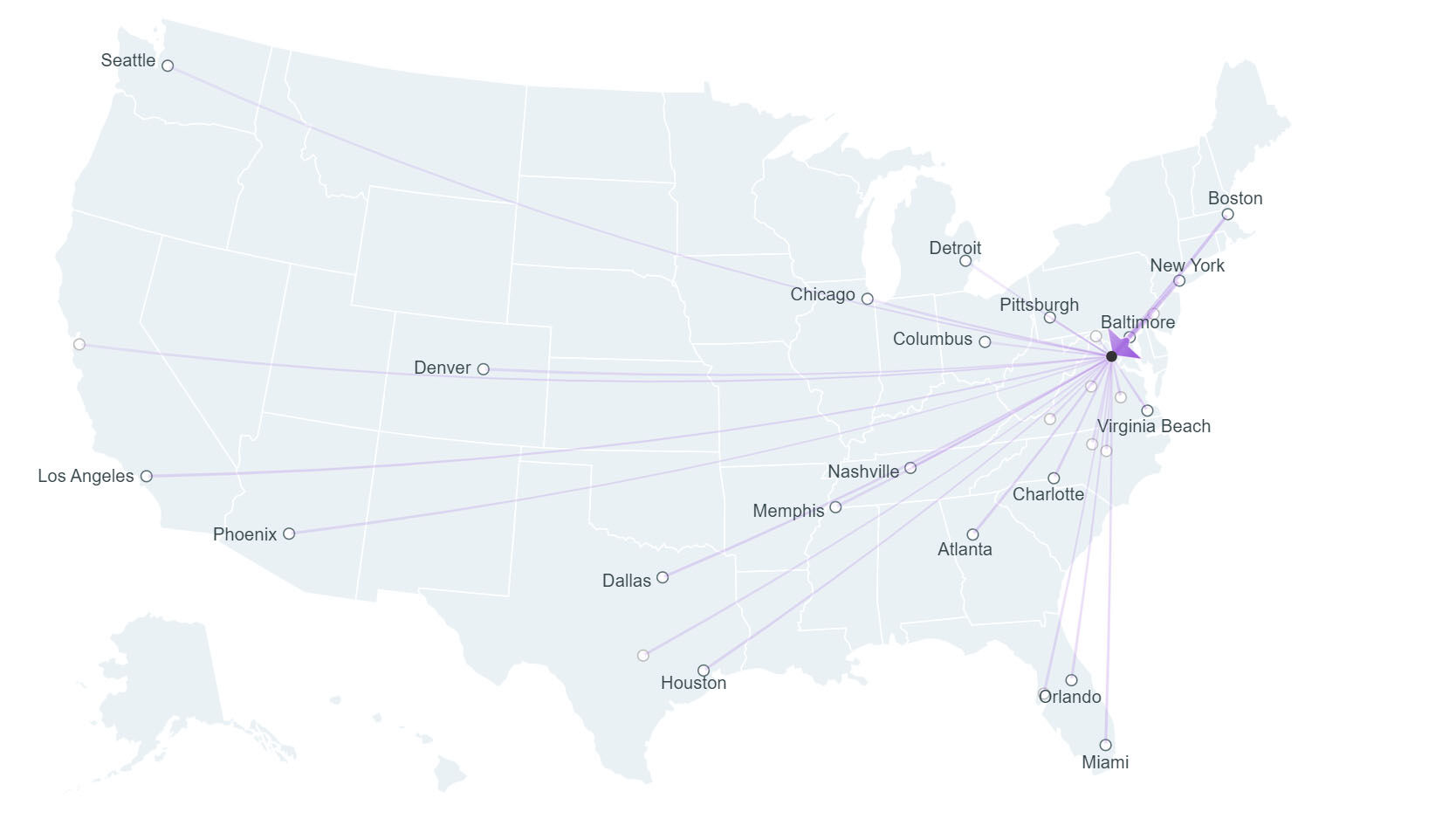
“When we look at everyone who is looking to move to the Washington, D.C., metro, we find that 37% are searching from out of town. That is roughly in line with the national average — actually a little below the national average, which is about 40%,” said Chris Salviati at Apartment List, citing the apartment search site’s April Renter Migration report on inbound and outbound searches.
Another 43% of D.C.-area apartment hunters are looking for homes outside of the D.C. area, also in line with other large metro trends.
Those looking to move to the D.C. area are not looking to move far.
“A lot of it definitely is centered in the Northeast. So top inbound searches for D.C. are Baltimore, New York and Boston, as well as Philadelphia,” Salviati said.
D.C. is an expensive housing market, though, and the new rise in work-from-anywhere may change the dynamic.
“The places that have a high concentration of tech jobs are seeing a higher level of that transience. If anything, we might see a little bit more of a heightened impact in D.C. from that,” Salviati said.
Apartment List’s interactive Migration Report lists inbound and outbound searches in map form for the top major metro areas.