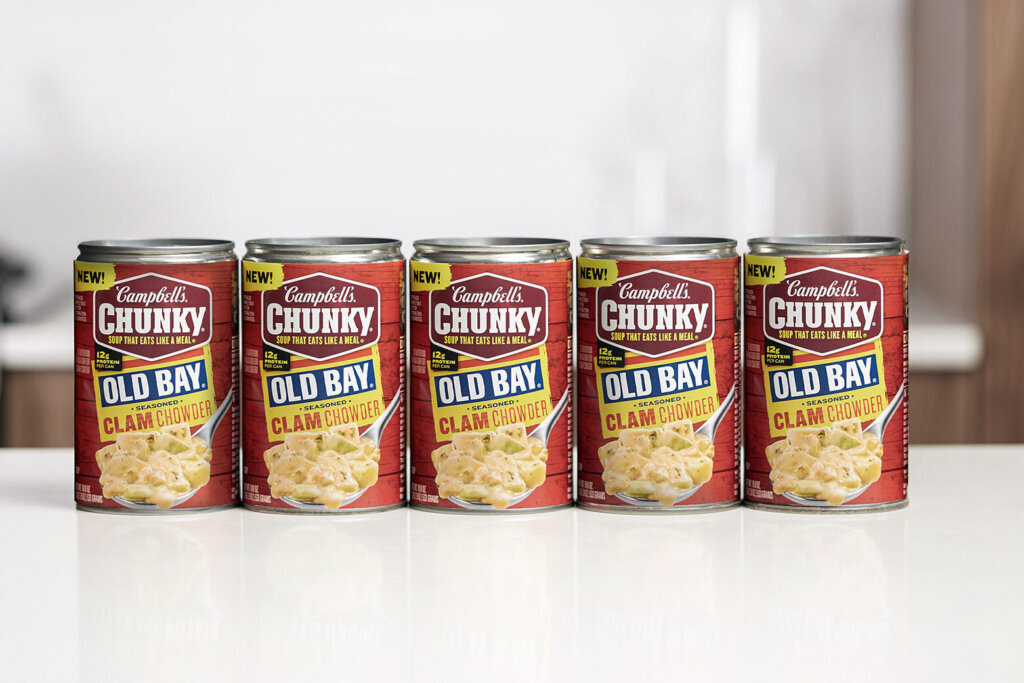
Just a week after Pepperidge Farms announced a limited edition Old Bay-seasoned Goldfish crackers, Campbell Soup has announced an Old Bay-seasoned version of its chunky clam chowder.
If the Goldfish mashup is any indication, the soup will be a hit. The limited edition crackers sold out online in nine hours, though more are headed to stores.
Campbell Soup owns Pepperidge Farms.
The Old Bay clam chowder is available now at select retailers and nationwide beginning in June. It has a suggested retail price of $3.19 for an 18.8 ounce can.
“Old Bay Seasoned Clam Chowder offers a bold twist on a hearty classic, combining our hearty New England Clam Chowder, our second-leading variety, with the nation’s leading seafood spice, resulting in a bold, rich and flavorful way to satisfy your appetite,” Campbell’s said in a statement.
The collaboration with Hunt Valley, Maryland-based Old Bay maker McCormick & Co. is the first flavor collaboration for Campbell’s Chunky Soup line.
Old Bay is having its moment.
Earlier this year, McCormick partnered with Berlin, Maryland-based George’s Beverage Company to release an Old Bay-flavored vodka which is distilled at McLintock Distilling in Frederick, Maryland.
Old Bay also has its own versions of Bloody Mary mixes and hot sauces. Last year, Pepperidge Farm released a limited edition Frank’s Red Hot-flavored Goldfish crackers. McCormick also owns Frank’s.