Homes that are selling in the D.C. region continue to sell for more, but this is shaping up to be a slower spring for sales than last year.
Listing service Bright MLS said the number of closed sales in the D.C. metropolitan area was down 17.7% from a year ago in April, the fifth consecutive month year-over-year sales were lower.
The number of contracts signed, but sales not yet closed, was down 10.4% from April 2021.
Fewer potential buyers are looking, evidenced by the number of home showings by real estate agents in April, which was down 5.2% from March and 26% lower than a year earlier.
There is now less than one month’s supply of homes for sale in the D.C. metropolitan area, or the time it would take for all listed properties to sell at the current pace, though it is about twice that for higher-priced homes.
The total number of homes for sale as of the end of April was 5,622 — 22.5% lower than a year earlier and nearly half the number of homes on the market two years ago.
The number of new listings that came on the market last month was just over 9,000 — 13.4% fewer than April 2021.
What does sell, sells fast. Of the 6,300 closed sales in April, 204 of them went under contract the first day of listing, and half went under contract in one to 10 days.
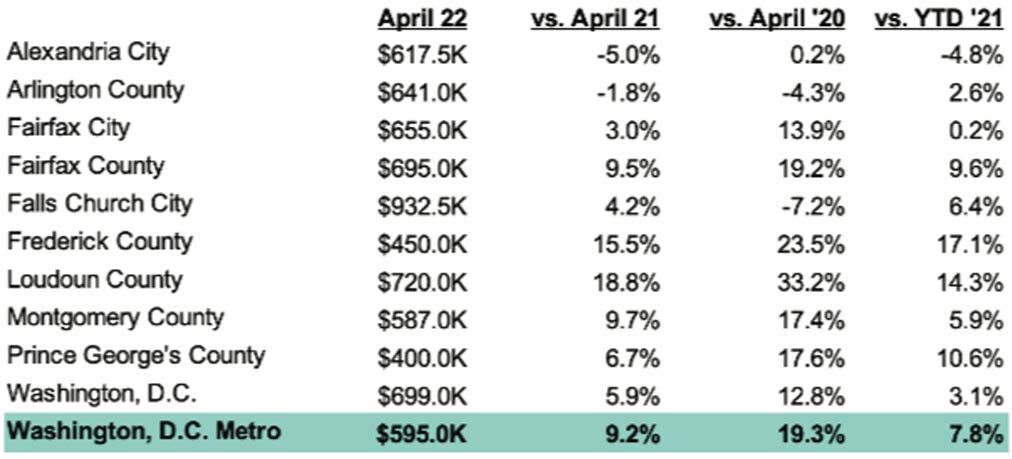
The median price of what sold in the D.C. metropolitan area during April was $595,000 — up 9.2% from a year ago.
Below are selling prices in April by jurisdiction, courtesy of Bright MLS: