
Maximus moves into post-pandemic hybrid HQs in Tysons

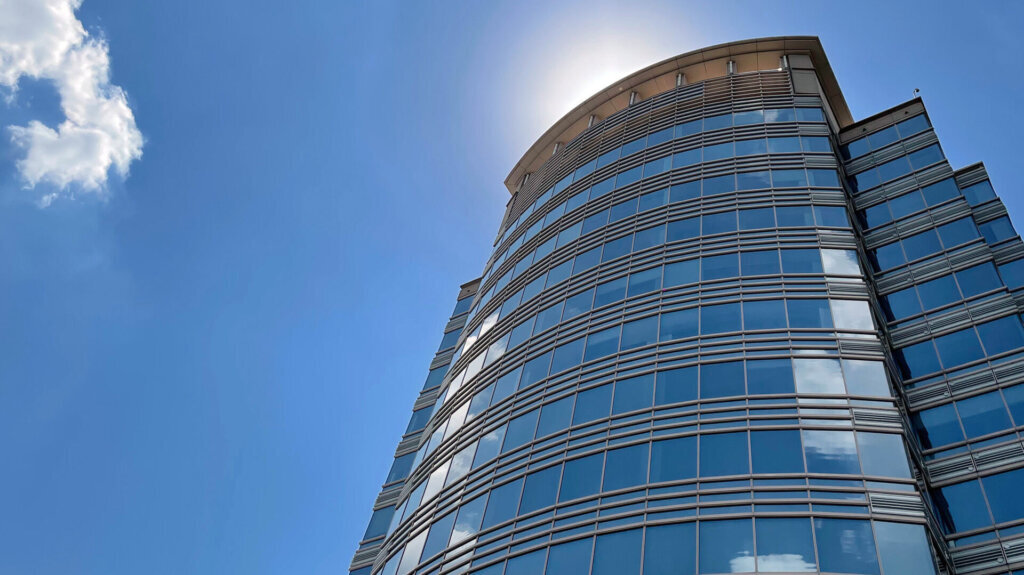
Maximus -- which runs state and federal government programs -- now occupies 90,000 square feet spread across five floors at 1600 Tysons Blvd.
Maximus — which runs state and federal government programs — now occupies 90,000 square feet spread across five floors at 1600 Tysons Blvd. (Courtesy Maximus)

Government contractor Maximus has officially moved its headquarters from Reston to Tysons, and its new global collaboration hub incorporates many of the post-pandemic office designs that architects and companies are emphasizing.

Maximus — which runs state and federal government programs such as Medicare, Medicaid, veterans services and state unemployment benefits — now occupies 90,000 square feet spread across five floors at Lerner Enterprises’ 1600 Tysons Blvd.


Maximus said the new offices are designed to improve collaboration and well-being for a hybrid workforce. They’re centered on a sense of community and shared-purpose workspaces, including open areas, independent workspaces, conference rooms and innovative technology.
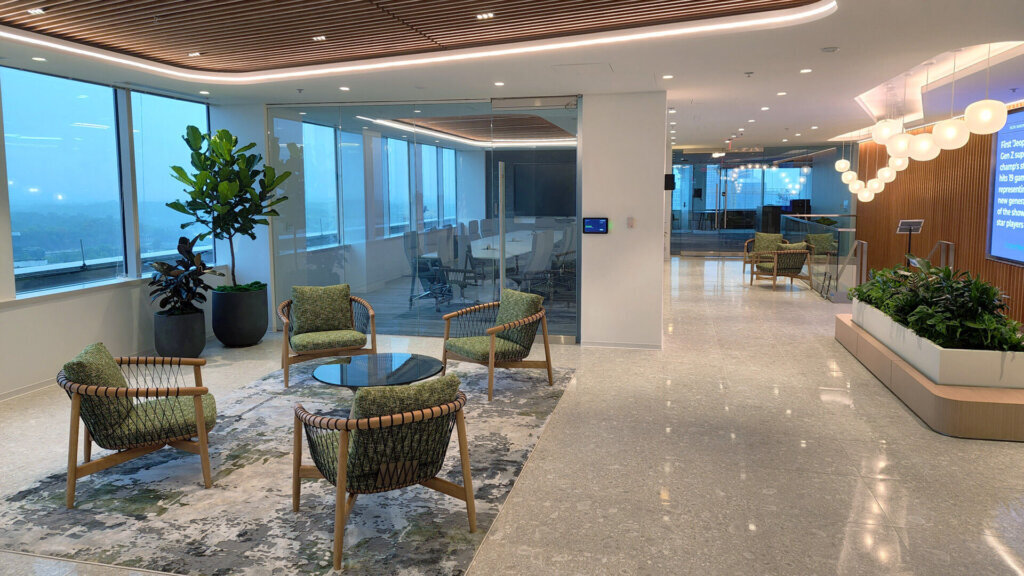
 The new offices are designed to improve collaboration and well-being for a hybrid workforce.
The new offices are designed to improve collaboration and well-being for a hybrid workforce. (Courtesy Maximus)

“As we navigate a new approach to work in the wake of the COVID-19 pandemic, we want all Maximus employees — remote, hybrid and on-site — to have access to the same tools and experience to be successful,” CEO Bruce Caswell said.

The hybrid office spaces are designed so up to half of Maximus’s roughly 1,000 D.C.-area employees can work there at any given time.

There are cafes on every floor and free healthy snacks, a fitness center, “recharge rooms” and adjustable office equipment.

1600 Tysons — a 13-story, 305,000-square-foot building — is two blocks from the Tysons Corner Metro, and is connected via walkway to Tysons Galleria.

Maximus is one of the 15 largest government contractors in the D.C. region. It has 35,000 employees worldwide and $4.5 billion in annual revenue. In addition to the U.S., it does contracting work for governments in Australia, Canada, Italy, Saudi Arabia, Singapore, South Korea, Sweden and the UK.

Massachusetts court hears arguments in lawsuit alleging Meta designed apps to be addictive to kids

BOSTON (AP) — Massachusetts' highest court heard oral arguments Friday in the state's lawsuit arguing that Meta designed features on Facebook and Instagram to make them addictive to young users. The lawsuit, filed in 2023 by Attorney General Andrea Campbell, alleges that Meta did this to make a profit and that its actions affected hundreds of thousands of teenagers in Massachusetts who use the social media platforms. “We are making claims based only on the tools that Meta has developed because its own research shows they encourage addiction to the platform in a variety of ways,” said State Solicitor David Kravitz, adding that the state's claim has nothing to do the company's algorithms or failure to moderate content. Meta said Friday that it strongly disagrees with the allegations and is “confident the evidence will show our longstanding commitment to supporting young people.” Its attorney, Mark Mosier, argued in court that the lawsuit “would impose liabilities for performing traditional publishing functions” and that its actions are protected by the First Amendment.
Read Next Story