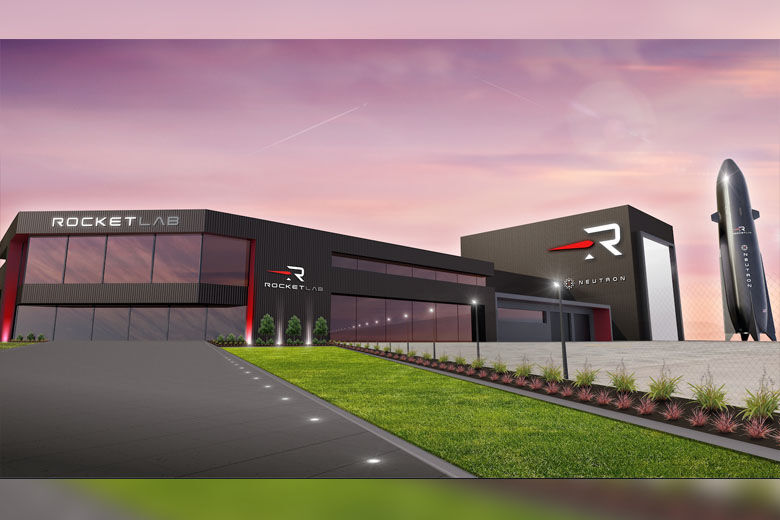
Long Beach, California-based Rocket Lab USA has chosen Wallops Island on Virginia’s Eastern Shore for its launch site and manufacturing and operations facilities for its next generation reusable Neutron rocket.
The company is receiving $45 million in incentives for the project, including site improvements and construction support. Rocket Lab says the new Neutron manufacturing and launch site will create 250 jobs.
The Neutron production complex and launchpad will be within the NASA Wallops Flight Facility and Mid-Atlantic Regional Spaceport, and near its existing launch site for its smaller Electron launch vehicle.
The Neutron rocket is designed to land back on the launchpad after a space mission, and will be refurbished on-site after each use.
“Neutron is a new generation of rocket that will advance the way space is accessed, and Virginia makes perfect sense as a significant site for Neutron’s early development,” said Rocket Lab founder and CEO Peter Beck. “Virginia is home to an active and experienced aerospace workforce we can pull from to support Neutron’s development and launch.”
Neutron will be the world’s first carbon composite large launch vehicle. Its design is 131 feet tall with a maximum payload of 33,000 pounds. It is also designed to potentially carry passengers. Flight tests are scheduled to begin in 2024.
Rocket Lab has already won a $24 million development contract for Neutron from the U.S. Space Force.
Rocket Lab also has two launch sites in New Zealand. On Monday, it had its 24th successful Electron launch from New Zealand.