
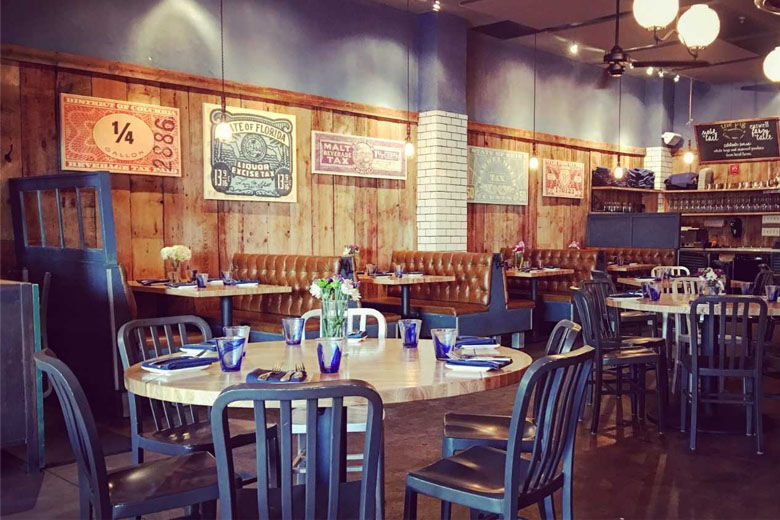
Restaurant operator EatWell DC is temporarily closing two of its D.C. restaurants for the winter, citing pending new indoor dining restrictions in the District.
Seafood restaurant Grillfish, in D.C.’s West End, and barbecue restaurant The Pig in Logan Circle, will close for the winter after dinner service on Dec. 13, the day before D.C. has ordered restaurants to cut indoor dining capacity to 25% — down from 50% currently.
“That reduction in seating coupled with cold weather and no bar service are gut punches we cannot endure. We will thusly shut down Grillfish and The Pig for the winter, with the hope of reopening in the spring,” said EatWell DC principal David Winer.
Winer added, “We have team members who have been with us for decades. Their well-being is preeminent, as difficult a decision this is for us all, this is the only path we see to remain solvent and get to the other side.”
That does not mean Grillfish and The Pig patrons can’t still get the food they serve.
The Grillfish menu will be available at Commissary, and The Pig menu will be available from Logan Tavern, two other EatWellDC restaurants in Logan Circle. Both of those restaurants will remain open for indoor dining and “streatery” dining, as well as for takeout and delivery.
EatWell DC also operates The Charles in La Plata, Maryland. It will remain open for indoor and outdoor dining. EatWell DC is also opening Market at The Charles, a gourmet grocer that will sell specialty foods, wines, beers, fresh fish and prepared meals.
Employees at Grillfish and The Pig are being offered positions at Commissary, Logan Tavern and The Charles.