
Bethesda, Maryland-based Marriott International has created a global cleanliness council, comprised of senior leaders from its own housekeeping, engineering, food safety, occupational health and employee well-being divisions, as well as lead scientists and infectious disease experts — as the coronavirus crisis impacts the world.
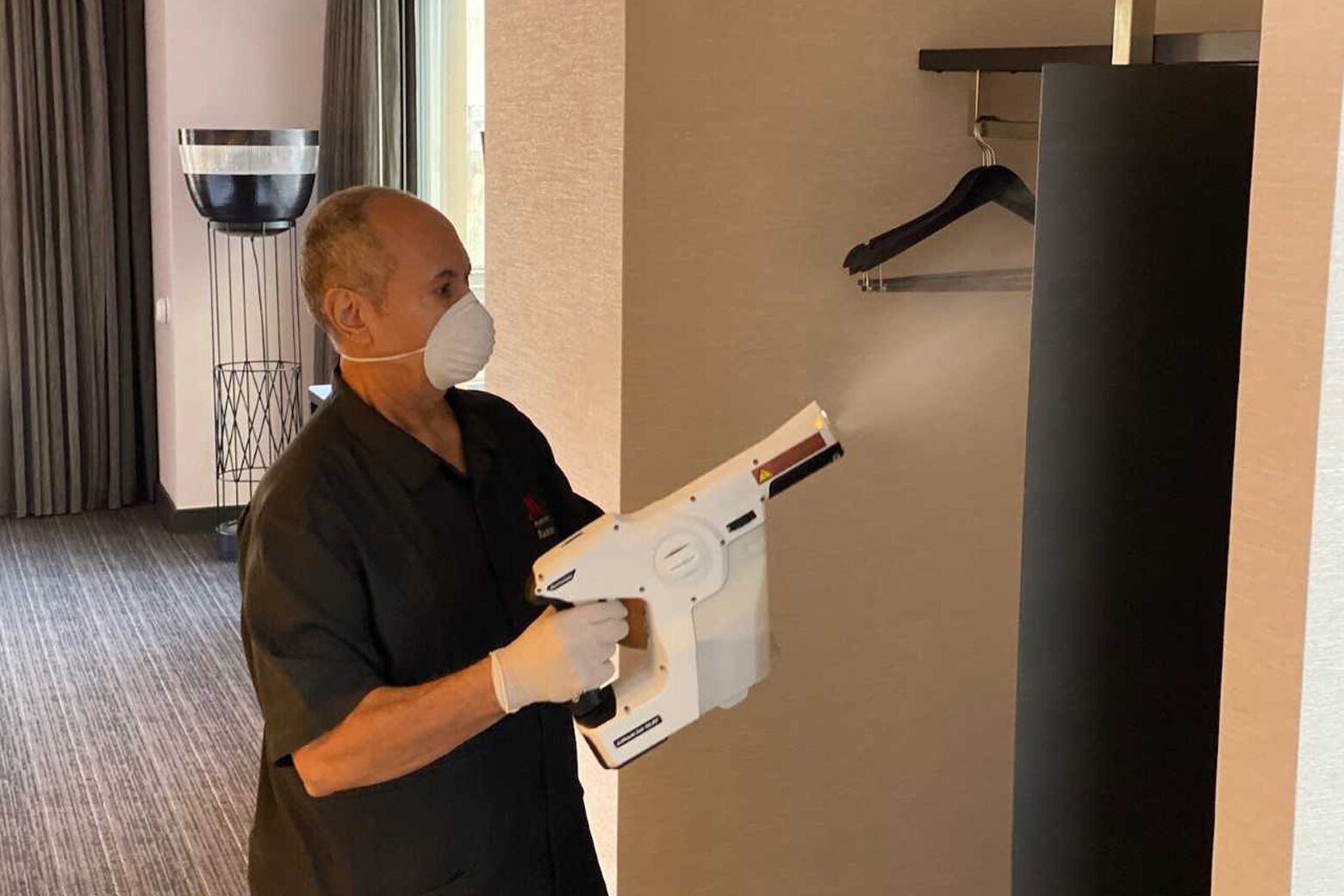
Among new technology Marriott is rolling out at its hotel properties are electrostatic sprayers with hospital-grade disinfectant to sanitize surfaces.
Marriott said it uses the highest classification of disinfectants recommended by the Centers for Disease Control and Prevention and the World Health Organization.
It is now using the sprayers to clean guest rooms, lobbies, gym equipment and other public areas.
Marriott is testing ultraviolet light technology for sanitizing keys and devices shared by hotel employees.
Marriott now requires all surfaces to be treated with hospital-grade disinfectants, with cleaning done more frequently.
Rooms also include disinfecting wipes for guests to use.
Furniture in hotel lobbies and other public spaces is being rearranged with social distancing in mind — and Marriott’s hotels may install partitions at front desks, although it has yet to do so.
“We want our guests to know that we are doing everything we can to welcome them back to a safe and clean hotel environment when they start traveling again,” said Ray Bennett, Marriott chief global officer, who is heading the company’s cleanliness council.
Marriott has closed 25% of its more than 7,000 hotels, and furloughed tens of thousands of workers, including thousands at its Bethesda headquarters.
Hotel occupancy in the U.S. was just 21% in the week ending April 11, according to Bloomberg data.
- Sign up for news alerts from WTOP
- Middleburg purchases thousands of restaurant vouchers for residents
- How golfers can contribute to coronavirus food aid with backyard practice
- Coronavirus diary: Under quarantine at home and delivering the news
- WTOP coronavirus poll: Stimulus checks helping, hope comes from perspective
- How coronavirus changed how WTOP brings you news
- PHOTOS: WTOP during the coronavirus pandemic
- Coronavirus FAQ: What you need to know
- Coronavirus timeline: Key dates as the virus spread in DC, Maryland and Virginia