
Uber is reminding its drivers to take extra steps to stay healthy as the spread of coronavirus continues.
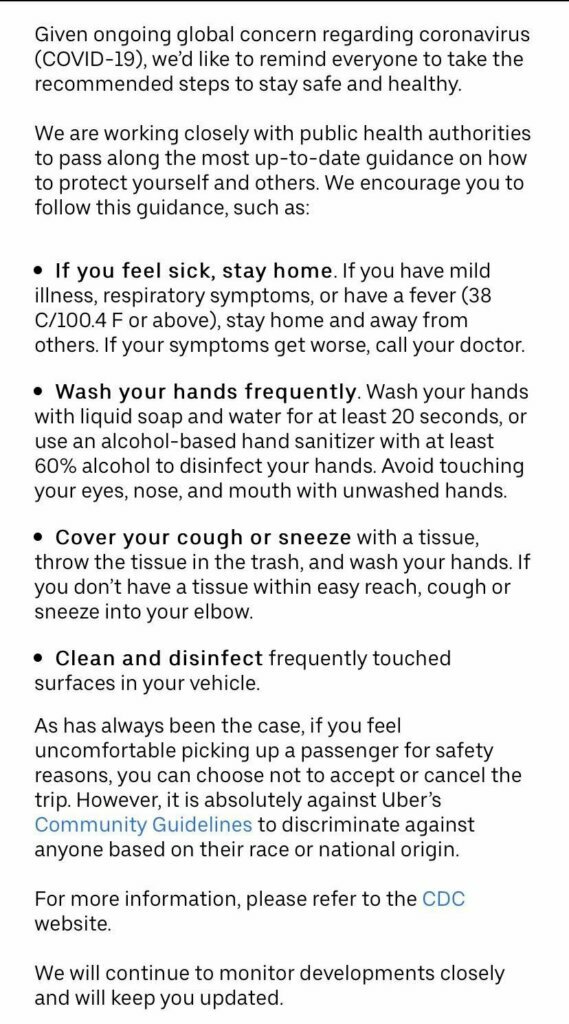
The ride-hailing service is asking drivers who feel sick or have a fever to stay home, to always wash hands frequently and to use an alcohol-based sanitizer.
More on the coronavirus:
- Full coronavirus coverage
- Coronavirus FAQ
- Organizers: Coronavirus fears won’t derail DC’s Cherry Blossom Festival
Drivers are also encouraged to clean and disinfect their vehicles often. For drivers who feel uncomfortable picking anyone up, Uber also says they can cancel or not accept the trip but stressed the importance of avoiding discrimination.
Uber says it is cooperating with public health authorities to keep drivers up to date with the latest information.
“We are always working to help ensure the safety of our employees and everyone on the Uber platform, and we continue to be concerned by the ongoing spread of coronavirus,” Uber said in a statement.
“We have formed a dedicated global team of Uber operations, security and safety executives, guided by the advice of a consulting public health expert, to respond as needed in each market where we operate around the world. We remain in close contact with local public health organizations and will continue to follow their recommendations.”
Uber added it encourages both drivers and riders to follow the guidance of local authorities to help prevent the spread of the virus.
According to Uber, there have been no reported cases of coronavirus spread between an Uber rider or driver.
The yellow cab company of D.C. says they’re also working on a plan to make sure drivers and customers are safe.
See the memo below:
WTOP’s Rob Woodfork contributed to this report.
