
Progressive Voice: Arlington’s Smart Growth

Progressive Voice is a weekly opinion column. The views and opinions expressed in this column are those of the author and do not necessarily reflect the views of ARLnow.com.
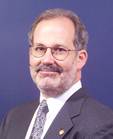
John SnyderArlington is a national leader in the smart growth movement.

Throughout the country, we are seeing a strong trend for younger workers and older suburban homeowners to choose to move to transit-oriented communities.

Arlington has developed successful transit-oriented corridors — using those corridors as a focal point for development while simultaneously protecting the character of suburban neighborhoods across Arlington.

On May 15, the Coalition for Smarter Growth honored Arlington Board member Walter Tejada with its Livable Communities Leadership Award bestowed annually to those who have made significant contributions to smart growth in our region.

In Walter’s case, CSG honored his work on the Columbia Pike corridor, adding that Walter “ensured that the Columbia Pike planning process brought everyone to the table, addressed the needs of current residents, and placed affordable housing at the forefront.

“Walter demonstrated outstanding leadership in making the case for the plan and the Streetcar, which is essential to supporting the increased density and ridership expected in the corridor, while spearheading innovative housing policy and funding strategies to preserve and add affordable housing in the corridor as it redevelops.”

Note that CSG recognized that Arlington is trying to use transit-oriented development to save, not displace affordable housing, and that we need high quality, high capacity transit to make it work.

In the Columbia Pike Neighborhoods Plan, we leverage economic forces to preserve affordable housing. By allowing developers additional density, we can also require that at least 25 percent of the new development is affordable housing. The Plan would preserve 6,200 affordable apartments, equal to all the market rate affordable apartments on the Pike.

On Columbia Pike, we are lucky to live in a respectful and friendly community that is one of the most diverse neighborhoods anywhere. It’s a place where papusas and pad thai are comfort food, while the soft ice cream sign at The Broiler is a welcome sign of summer.

The diversity is remarkable to people in my generation, but not to our kids. They have grown up in neighborhoods and schools where everybody is who they are and not defined by their skin tone or accent.  The world can learn a lot from the Pike.

Affordable housing makes the Pike culture possible. Yet our property is becoming more desirable. Our aging apartment buildings will soon need renovation and the easiest route for owners is to move everybody out, install upgrades, and triple the rent. They can do that by right.

To keep the cultural identity of the Pike, we need an alternative — to make it possible, and profitable, for property owners to keep affordable units when they inevitably renovate. It would cost over $2 billion to buy and renovate the 6,200 affordable apartments we now have. We can’t afford that, so to save affordable housing we have to create more property value by allowing more density.

We also need to respect surrounding neighborhoods. By putting taller buildings on the Pike itself, we can buffer our neighborhoods. But we can’t jam more traffic on the Pike and more parked cars on neighborhood streets.

How do you add thousands more apartments and move people more quickly than they can move now? Answer: a modern streetcar system. 

We need higher capacity transit that people will use in greater proportions than they do now. Buses won’t cut it. As the Pike redevelops, peak demand in future years will far exceed the capacity of even the best bus system. We can expect 1,900 to 2,100 riders per hour at peak. Streetcars and buses together can handle 2,300. Buses can handle 1,600 — far less than the anticipated demand. That just won’t work.

With the streetcar, the Pike Neighborhoods Plan can work. We can preserve thousands of units of affordable housing, the county gets more property tax revenue, and the Pike will be a better place to live. That is what local governments are supposed to do — foster great neighborhoods.

To cancel the Pike streetcar line is to cancel the Plan. Property owners can’t make the commitment to affordable housing preservation without the added value of the streetcar to draw the rents that offset those of affordable units.  The neighborhoods will reject development without necessary transportation capacity.

As Walter and CSG know, opposing the Pike streetcar is the same as opposing the best affordable housing plan ever developed in Virginia. When the Pike’s affordable housing is gone, the community it supports will also be gone, and won’t be coming back.  Save the Pike we love — build the Pike streetcar.

John Snyder is former President of the Douglas Park Civic Association, Board member of the Columbia Pike Revitalization Organization and AHC, Inc., a non-profit affordable housing developer, and Chair of Arlington Streetcar Now.

Don’t Settle for Student Loans to Pay for Online Education

Online college programs are becoming a more popular choice for prospective students, with one study finding that more than 6 million students enrolled in at least one online course in fall 2015. The popularity of these courses can be attributed in part to their flexibility with working adults' schedules, students' ability to progress more quickly through online programs and, oftentimes, cheaper tuition. [See 10 low-cost online bachelor's programs for out-of-state students.]Online degrees can be beneficial to many college students, but some studies have shown online learners complete their programs at lower rates than students at traditional brick-and-mortar campuses. Individuals with student loans but no degree comprise two-thirds of defaulted borrowers. Though these numbers are not encouraging, just like for traditional programs, there are ways to reduce how much you'll need to borrow for an online program to ensure you won't become one of these statistics. Don't just settle on borrowing student loans to cover the whole cost of your program and living expenses. Instead, start thinking about how to cut costs and cover your balance in different ways, such as the following. -- Grants and scholarships: Even though you are taking an online course, you can still apply and receive grants and scholarships. But your first step should be to complete the Free Application for Federal Student Aid, commonly referred to as the FAFSA, which will allow you to receive a Pell Grant if your expected family contribution is low enough. The EFC criteria and award amounts are adjusted annually, but the 2017-2018 academic year awards range from $606 to $5,920, which could significantly lower the amount you borrow annually. Your next step is to apply for scholarships. You can start by checking online scholarship search engines, such as the Salt Scholarship Search, College Board's BigFuture and Peterson's. But don't forget to take advantage of local organizations and your school's financial aid office. Both may offer scholarships that you can't find with a national scholarship search. [Review these 10 sites to kick off your scholarship search.]For instance, organizations like the Elks Club, Knights of Columbus or the Rotary Club typically offer scholarships annually to local students. Just because you're going to school online doesn't mean you're ineligible. Visit your local library for scholarship listings, and ask around town. You might be surprised how many local organizations offer scholarships. While these scholarships typically aren't large, every little bit counts. Each dollar you receive in a scholarship is a dollar you don't have to borrow and pay interest on. -- Work-study: Another option for online students may be work-study awards. Not all students enrolled in online programs are eligible, but students at some schools -- including, for example, SUNY Empire State College and Liberty University -- are. Work-study awards are not given upfront like scholarships and grants. In most cases, they are an offer to earn up to the awarded amount if you secure an eligible work-study job. While there is a misconception that all work-study jobs must be on campus, students can work for off-campus, nonprofit or public employers as long as the work is in the public's interest. You may be able to work for a for-profit employer if the job is relevant to your course of study. No matter who the outside employer is, it will need to have an established agreement with your college for you to receive work-study funds. Remember, to be eligible for federal financial aid, you must be enrolled and pursuing a degree or certificate. If you're not working toward a credential, Pell Grants and work-study won't be option, but you may still be able to take advantage of private scholarships -- just be sure to read the eligibility criteria carefully. [Explore what to know about financial aid in online programs.]-- Pay as you go: One of the great benefits to enrolling online is the flexible schedule, which can allow you to complete your college coursework around your responsibilities. But prospective students often overlook using their part- or full-time job earnings as an option for paying for college. Almost 80 percent of college students in 2015 worked at least part time while attending classes, according to the National Center for Education Statistics. By budgeting and thinking strategically about your college costs, you can likely reduce your dependence on student loans by paying a portion out of pocket. Many -- but not all -- online programs are less expensive than traditional programs and often have shorter payment periods. Six, eight or 10 weeks are common course durations. Because of the frequency of payments in an online setting, you may be well-placed to pay as you go and possibly avoid borrowing altogether. Attending college online and avoiding student loans may be challenging, but if you are willing to put in the effort, you can limit the amount you need to borrow. More from U.S. News Q&A: Understanding Student Loan Discharge Eligibility Student Loan Refinancing Isn't Right for All Borrowers
Read Next Story