 This week, we asked the candidates for competitive House of Delegates races in Arlington districts to write a sub-750 word essay describing why residents of their districts should vote for them on Election Day (Nov. 5).
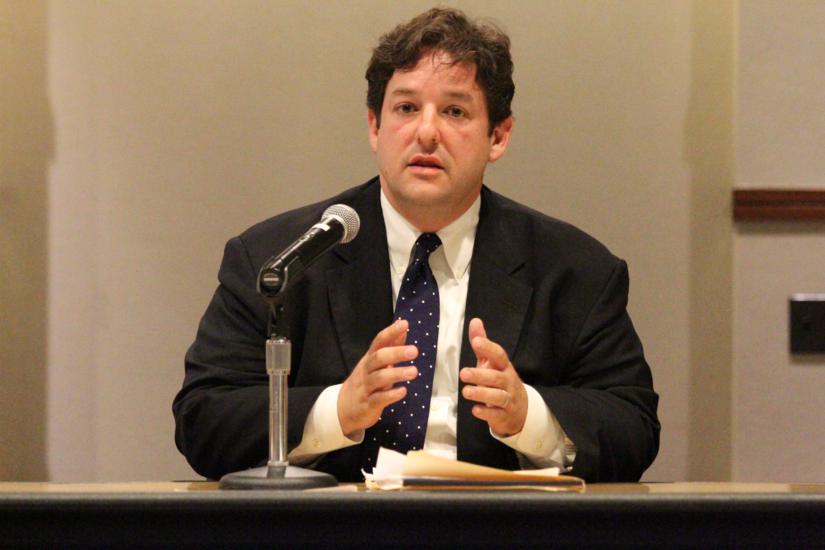
Here is the unedited response from 49th District candidate Alfonso Lopez:
I currently have the privilege of serving our community in the Virginia House of Delegates. I represent the 49th District, which runs along Columbia Pike from Pentagon City to Bailey’s Crossroads and up Route 7 to Seven Corners.
Two years ago, I asked for your vote so that I could fight for our values in Richmond, protect the social safety-net upon which my parents and so many others have relied, and address many of the biggest issues facing our community: transportation, affordable housing, education and job creation.
As your Delegate, I have worked to restore funding in Virginia’s budget for Free Health Clinics, such as the Arlington Free Clinic, that provide critical health care for our uninsured neighbors. I was also able to restore funding for our network of Child Advocacy Centers, which bring together health care professionals, social workers, and investigators to address the needs of child abuse victims in Virginia.
Building on the work of former Senator Mary Margaret Whipple, I successfully sponsored legislation creating the Virginia Affordable Housing Trust Fund and was named the Virginia Housing Coalition’s 2013 Legislative Leader. As a revolving loan fund, the Trust Fund will help create affordable housing and address homelessness throughout the Commonwealth. While we secured $8 million in funding through the budget process, the Trust Fund will need a permanent, dedicated source of revenue in order to effectively meet the needs of Virginians. Over the next two years, finding a steady source of revenue will be one of my top priorities.
Another top priority will be protecting public education funding. A strong public education system is an essential part of our region’s economic development and competitiveness. I am proud to have been named theVirginia Education Association’s 2012 Rookie of the Year and to be endorsed for re-election by theArlington Education Association. As the foundation for a high-quality education, I will also continue fighting to ensure that teachers receive the respect and fair wages they deserve.
As a leading environmental advocate in the House of Delegates, I will continue fighting to have Virginia do more to preserve our environment for future generations. I was honored to have been the recipient of the Sierra Club’s Energy Freedom Award for my efforts promoting renewable energy in Virginia and to have been named a Legislative Hero by the Virginia League of Conservation Voters in both 2012 and 2013. Working in a bipartisan way, I was able to pass legislation making it easier for environmentally-friendly vehicles to be built in Virginia. For the past several months, I have also been negotiating with electricity providers, renewable energy producers, and the environmental community on legislation that will encourage utilities to develop new renewable energy sources in Virginia.
Although we have seen some success over the past two years, there is a great deal of work that still needs to be done in Richmond. I will continue fighting to expand Medicaid, protect the civil rights of all, and defend a woman’s right to choose. I am proud to have received a 100% score for my voting record from NARAL Pro-Choice Virginia and Equality Virginia Advocates.
I will continue fighting to create jobs, support small business, and promote economic development. I will also continue to work to prioritize smart growth, increase public transit, and invest in our transportation infrastructure. While it was by no measure a perfect bill, I voted to support the transportation compromise, which created the first increase in dedicated transportation funding for Virginia in almost 27 years. Next session, I will work with my colleagues in the House of Delegates to repeal the hybrid tax, which raises little revenue and is bad public policy.
Finally, I am proud of the work I have done pushing the Virginia DREAM Act further than it has ever gotten before in the House of Delegates. With a diverse coalition of supporters including chambers of commerce, state colleges and universities, faith-based organizations, education advocates, and immigrant rights groups, I am hopeful that we will succeed in passing this legislation in the near future because every student should have an opportunity to achieve the American Dream.
Thank you for the opportunity to serve our community in the House of Delegates. I am honored to have been recognized as an effective advocate for our values in Richmond and I am committed to ensuring that Northern Virginia remains the best place to live, work, and raise a family. I hope I have earned your vote on November 5th.
Ed. Note: Terry Modglin, a member of the Independent Green Party running against Lopez in the 49th District, did not respond to multiple requests from ARLnow.com.