
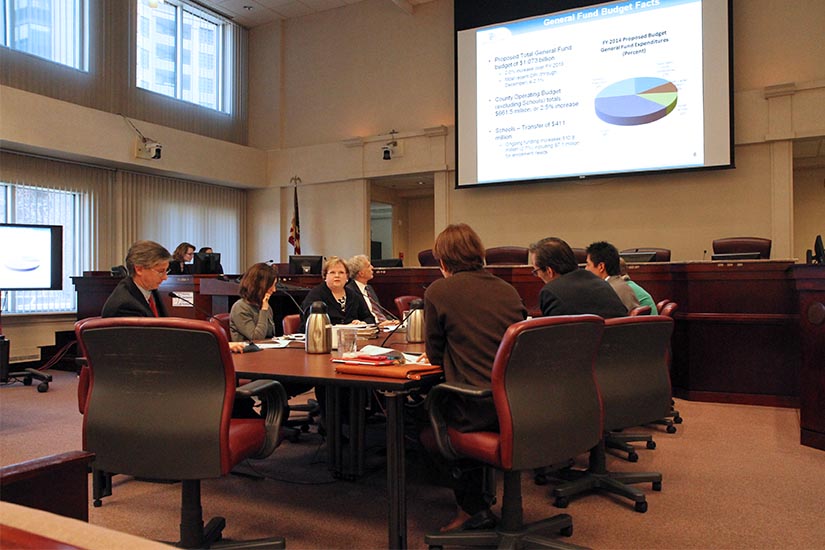
 Arlington County Manager Barbara Donnellan’s proposed FY 2014 budget will raise property taxes while cutting county jobs, including positions in the police and fire departments.
Facing a $35 million budget gap, Donnellan said she did her best to strike a balance between cuts and tax hikes, given the budget guidance given to her by the County Board.
“It is not an easy thing to recommend an increase in the property tax rate,” she said in a statement. “We have tried to maintain services that Arlingtonians hold dear and to respect the values of our community. To do that, we are forced to ask our community and our staff to contribute to closing this budget gap.”
Donnellan’s budget proposes a 3.2 cent tax hike, bringing the overall residential property tax rate to $1.003 for every $100 in assessed value. That represents an annual tax increase of about $262 for the average homeowner. That and other modest fee increases are expected to bring in an additional $13 million in revenue for the county.
As we previously reported, Donnellan’s budget would cut about 46 county government jobs.
Those will include 7 jobs in the police department and 3 jobs in the fire department, all of which will be cut by attrition. The police department would also see its district policing effort consolidated from 3 districts to 2. The fire department’s reserve “rover” staffing — extra personnel who fill in when a firefighter is not able to make it to work — will be reduced from 3 to 2 rovers per shift. One job will also be eliminated from the county’s 911 dispatch center.
 While all county departments are taking cuts, one of the hardest hit county departments under Donnellan’s budget is the Department of Human Services, with 15 proposed job cuts. Those cuts will reduce the number of school nurses in the county, reduce home aides for seniors and the disabled, reduce employment services for the mentally ill, and reduce inmate medical services at the county jail.
Donnellan said cuts were proposed where efficiencies could be found or where services were underutilized. She said the county is working to find new positions for employees whose jobs are set to be eliminated.
All told, the cuts are expected to save about $9.3 million per year. But with remaining employees working harder as a result of the various cuts, Donnellan is proposing $3.4 million in merit-based salary increases in FY 2014. The proposed budget also keeps existing county services largely in tact.
A library administrative aide will be eliminated, but library hours — previously a hot budget topic — will remain the same.
Artisphere will still be funded largely by county tax dollars. At the same time, however, the facility is being placed on notice, with half of its $1.8 million budget coming from one-time rather than on-going funding. Donnellan suggested that the money-losing cultural center could be on the chopping block next year.
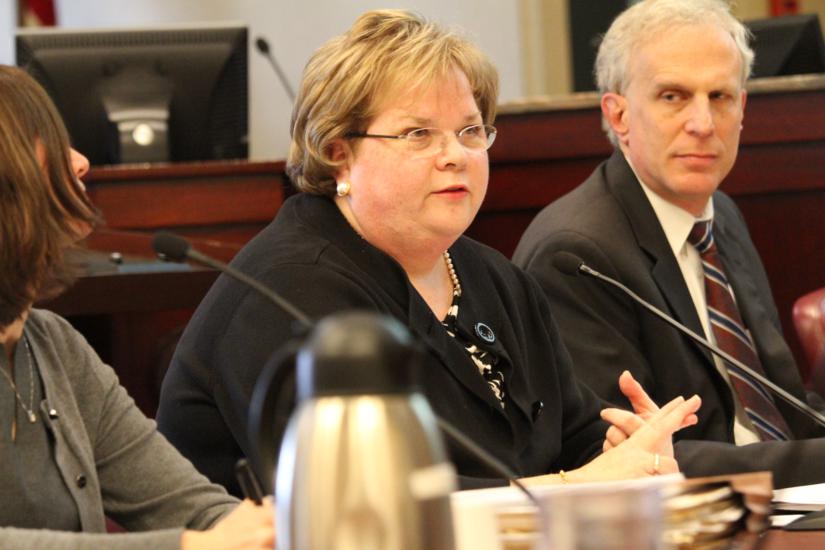 “I am assessing its performance and programming model,” she wrote in a note to the County Board. “The combination of one-time and ongoing funds will allow us to pursue a variety of options as we consider the future of the Artisphere.”
Local taxpayer funding for housing programs will remain a significant portion of the county budget — $32.3 million, or about 5 percent of the $661.5 million county operating budget. (Arlington Public Schools accounts for $411 million of the $1.073 billion overall proposed budget, up from $405.1 million of the $1.052 billion budget last year.)
Housing expenditures include $9.5 million for the Affordable Housing Investment Fund, $8 million for rental assistance, $5.2 million for real estate tax relief for the elderly and disabled, and $3.75 million for facilities and programs for the homeless.
Donnellan said increases in the budget were necessitated by new county facilities and increasing public school enrollment.
Once it opens, the new year-round homeless shelter and county office building in Courthouse is expected to cost as much as $2.5 million per year, with annual operating and maintenance costs of $1 million, homeless service expenses at $0.5 million, and debt service at $1 million. The new ConnectArlington fiber optic network will cost $800,000 annually when fully implemented. The new Arlington Mill Community Center accounts for $2.5 million in operating costs. And debt service for the soon-to-be-built Long Bridge Park Aquatics Facility comes to about $1.5 million for FY 2014.
While Arlington has previously enjoyed a windfall of new tax revenue thanks to increasing property values, property assessments were flat for the past year, and Donnellan warned that the lack of tax base growth could continue into FY 2015 and 2016, while new facilities and expenditures come online. Such a scenario could lead to additional spending cuts and tax hikes in the coming years, she warned.
Donnellan also cautioned that while her proposed budget does not call for any changes in funding levels for community-based nonprofits, such organizations are facing cuts in federal grant funding and might lobby the Board for additional county funds.
The Arlington County Board will hold a series of budget work sessions over the next month, before holding public budget hearings on March 26 and 28. Final budget adoption is scheduled for April 20.
Arlington Public Schools Superintendent Dr. Patrick Murphy is scheduled to unveil his proposed FY 2014 school budget next week.
