
Independent’s Day: Gerrymandering Again?

Independent’s Day is a weekly opinion column by published on Wednesdays. The views and opinions expressed in the column are those of the author and do not necessarily reflect the views of ARLnow.com.
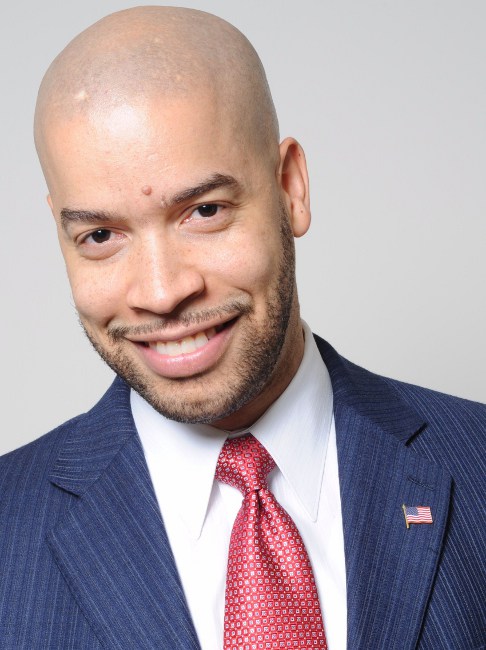
Independent Congressional candidate Jason HowellOn one of the most innocuous days in politics, the Presidential Inauguration, partisanship once again took a bold new step in Richmond.

On Wednesday night the Washington Post reported that some of our Virginia Senators cast a vote to change our local districts and favor their party. They did this despite the reality that our Commonwealth, along with many states in our union, just recently redistricted all of the state “lines” last year.

Around this time a year ago, I shared a conversation with fellow Virginia independent candidate for U.S. Congress, Mr. Mark Gibson. He ran against newly re-elected U.S. Representative Gerry Connolly in Virginia’s 11th Congressional district. Mark shared that Reston, part of the then current 8th Congressional District, was being moved back to the 11th. I hadn’t realized that this was going into effect so soon. I nervously made multiple phone calls to our Virginia State Board of Elections. It wasn’t until late March that the new districts had been confirmed and my signature gathering process could confidently continue.

As frustrating as the jostling of entire townships was to me as a first-time candidate, it was even more disheartening to read into the possible motives.  The documentary film Gerrymandering describes well the process, perpetrated by both major parties, that leaves the true “electing” to state representatives. The movie used to be free on their website but now you may have to dig around on-line for it. It’s worth the find but be careful; the film may encourage you to do something crazy like run for office as an independent.

In simple terms, gerrymandering is the process by which politicians outline the neighborhoods that will likely vote in their party’s favor; they then “draw” them into their voting district. This nearly guarantees that their party will win the November elections (and that unless they lose in the primary, they will win individually). November elections have become less of a deciding factor than the primary elections held earlier in the election year, when fewer people are casting votes. This is a big reason why we have had U.S. Congressional retention rates hovering over 80% since 1964. In addition, most people casting votes in June (our 2012 primary month) are traditionally more partisan; which leads to more polarity in our political choices.

The apparent gerrymandering in Richmond this week continues to drive a familiar political wedge between our neighborhoods. These divisions are not reflective of our true nature to understand then be understood. We are better able to “come to the table” when we are not sent to our corners — so are our legislators.

Our governor has an opportunity to veto this bill should he be interested in distancing himself from the appearance of unhealthy partisanship. Having just performed a redistricting action last year, he could easily question the constitutionality of another plan, just one year later. Governor McDonnell could also have a U.S. Supreme Court decision on the Voting Rights Act to lean on for this veto action, should he go in that direction.

Virginia is once again making national news with this latest action by members of our legislature. Here’s hoping our Governor has the support he needs to make a wise decision about our commonwealth’s future and reputation.

Jason Howell, a former accountant and a motivational speaker, ran as an independent candidate for U.S. Congress in 2012.

Don’t Settle for Student Loans to Pay for Online Education

Online college programs are becoming a more popular choice for prospective students, with one study finding that more than 6 million students enrolled in at least one online course in fall 2015. The popularity of these courses can be attributed in part to their flexibility with working adults' schedules, students' ability to progress more quickly through online programs and, oftentimes, cheaper tuition. [See 10 low-cost online bachelor's programs for out-of-state students.]Online degrees can be beneficial to many college students, but some studies have shown online learners complete their programs at lower rates than students at traditional brick-and-mortar campuses. Individuals with student loans but no degree comprise two-thirds of defaulted borrowers. Though these numbers are not encouraging, just like for traditional programs, there are ways to reduce how much you'll need to borrow for an online program to ensure you won't become one of these statistics. Don't just settle on borrowing student loans to cover the whole cost of your program and living expenses. Instead, start thinking about how to cut costs and cover your balance in different ways, such as the following. -- Grants and scholarships: Even though you are taking an online course, you can still apply and receive grants and scholarships. But your first step should be to complete the Free Application for Federal Student Aid, commonly referred to as the FAFSA, which will allow you to receive a Pell Grant if your expected family contribution is low enough. The EFC criteria and award amounts are adjusted annually, but the 2017-2018 academic year awards range from $606 to $5,920, which could significantly lower the amount you borrow annually. Your next step is to apply for scholarships. You can start by checking online scholarship search engines, such as the Salt Scholarship Search, College Board's BigFuture and Peterson's. But don't forget to take advantage of local organizations and your school's financial aid office. Both may offer scholarships that you can't find with a national scholarship search. [Review these 10 sites to kick off your scholarship search.]For instance, organizations like the Elks Club, Knights of Columbus or the Rotary Club typically offer scholarships annually to local students. Just because you're going to school online doesn't mean you're ineligible. Visit your local library for scholarship listings, and ask around town. You might be surprised how many local organizations offer scholarships. While these scholarships typically aren't large, every little bit counts. Each dollar you receive in a scholarship is a dollar you don't have to borrow and pay interest on. -- Work-study: Another option for online students may be work-study awards. Not all students enrolled in online programs are eligible, but students at some schools -- including, for example, SUNY Empire State College and Liberty University -- are. Work-study awards are not given upfront like scholarships and grants. In most cases, they are an offer to earn up to the awarded amount if you secure an eligible work-study job. While there is a misconception that all work-study jobs must be on campus, students can work for off-campus, nonprofit or public employers as long as the work is in the public's interest. You may be able to work for a for-profit employer if the job is relevant to your course of study. No matter who the outside employer is, it will need to have an established agreement with your college for you to receive work-study funds. Remember, to be eligible for federal financial aid, you must be enrolled and pursuing a degree or certificate. If you're not working toward a credential, Pell Grants and work-study won't be option, but you may still be able to take advantage of private scholarships -- just be sure to read the eligibility criteria carefully. [Explore what to know about financial aid in online programs.]-- Pay as you go: One of the great benefits to enrolling online is the flexible schedule, which can allow you to complete your college coursework around your responsibilities. But prospective students often overlook using their part- or full-time job earnings as an option for paying for college. Almost 80 percent of college students in 2015 worked at least part time while attending classes, according to the National Center for Education Statistics. By budgeting and thinking strategically about your college costs, you can likely reduce your dependence on student loans by paying a portion out of pocket. Many -- but not all -- online programs are less expensive than traditional programs and often have shorter payment periods. Six, eight or 10 weeks are common course durations. Because of the frequency of payments in an online setting, you may be well-placed to pay as you go and possibly avoid borrowing altogether. Attending college online and avoiding student loans may be challenging, but if you are willing to put in the effort, you can limit the amount you need to borrow. More from U.S. News Q&A: Understanding Student Loan Discharge Eligibility Student Loan Refinancing Isn't Right for All Borrowers
Read Next Story