
Independent’s Day: Solitary Confinement

Independent’s Day is a weekly opinion column by published on Wednesdays. The views and opinions expressed in the column are those of the author and do not necessarily reflect the views of ARLnow.com.
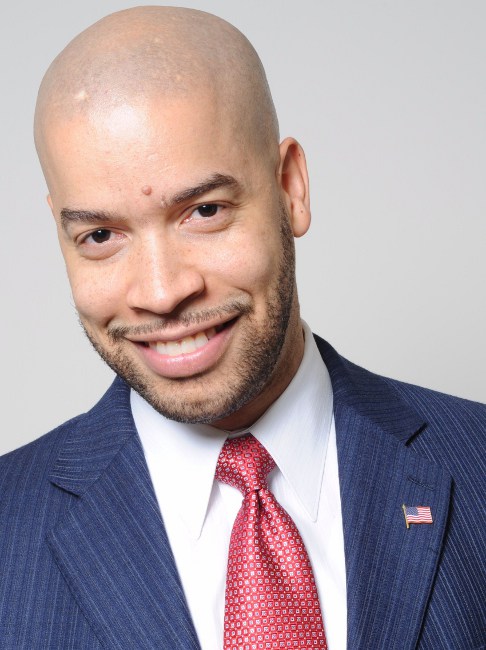
Independent Congressional candidate Jason Howell“Torture is always wrong.” That’s not just a bumper sticker sitting on my desk; it’s also a quote from Rev. Richard Killmer, Executive Director of the National Religious Campaign Against Torture (NRCAT).

On December 3rd of last year, less than a month after the election, I had two options for continued civic participation: attend the Realize Rosslyn Kickoff Event or the Program on Virginia’s Use of Solitary Confinement. I chose the latter. The Program on Virginia’s Use of Solitary Confinement was held at Arlington Central Library and hosted by NRCAT, Social Action Linking Together (SALT), and Amnesty International (Arlington Chapter). Each speaker highlighted a reality that can be lost on the majority of us who have never had the experience: extensive, unlimited, solitary confinement is a violation of the 8th Amendment’s protection from cruel and unusual punishments.

In August of 1998, in Wise County Virginia, the Red Onion State Prison opened as a security level “S.” Its Virginia location was likely the reason for the presence of State Delegate Patrick Hope (D-Arlington) at the meeting I attended. According to Red Onion’s website, their average population is 799 prisoners but a Washington Post article reported 505 of 745 inmates were held in solitary confinement as of last October. I have no way of knowing whether two-thirds of inmates housed by Red Onion “deserve” lonely lockdown for 23 hours per day. The prisoners were accused of crimes and sentenced by our criminal courts after being afforded all of the normal rights we associate with our justice system. What the meeting I attended highlighted however, was to the extent that they were being punished versus being rehabilitated.

The mission of the Virginia Department of Corrections is to enhance public safety by providing effective programs, re-entry services, and supervision of sentenced offenders in a humane, cost efficient manner, consistent with sound correctional principles and constitutional standards. Accomplishing any part of that mission is impossible if the 8th Amendment to our United States Constitution is not being upheld.

Heather Rice, formerly of NRCAT, is featured in their 20 minute video, “Solitary Confinement: Torture in Your Backyard” and spoke at the meeting. In the video she states that extensive solitary confinement “…Destroys people from the mind outward.” This is especially the case when prisoners are held not just for days or weeks but months and years, for 23 hours at a time. Sustainable re-entry into the public or even “general population” in prison is nearly impossible; especially after having so severely damaged a human’s ability to psychologically interact with other humans. Public safety cannot be enhanced by reinforcing paranoia, delusions or sociopathic tendencies.

Spoiler alert: the movie Zero Dark Thirty mistakenly depicts torture as the means by which we found Osama Bin Laden. NRCAT pulled quotes from Senator McCain, and Former CIA Directors Michael Hayden and Leon Panetta disputing those claims. In September of 2011, FBI agent Ali Soufan gave an interview on 60 minutes asserting that his knowledge of Middle Eastern culture and fluency in Arabic – not torture – help identify Khalid Sheik Mohammed as the 9/11 mastermind. Torture rarely, if ever, nets a quality outcome. The inflictor suffers nearly as much as the receiver. If extensive solitary confinement is torture, then we cannot expect a quality outcome for our prisoners or guards.

Last year Del. Hope submitted legislation to study this issue. It is currently being held in committee but it is legislation I can support in good conscience. Perhaps you can too. Along with Del. Hope, Del. Charniele Herring (D-Alexandria) and Sen. Adam Ebbin (D-Arlington) all visited Red Onion State Prison last year to personally assess and address complaints. There are plans for another visit this March or April to corroborate the reported decline in solitary confinements since their last visit.

We can be both “tough on crime” and remember our humanity. We debase our prison guards by allowing potential dehumanization of our prisoners. Our mission in prisons must be more than warehousing bad people if for no other reason than we will someday release them.

On a lighter note, I no longer wear my nametag. Thanks for asking.

Jason Howell, a former accountant and a motivational speaker, ran as an independent candidate for U.S. Congress in 2012.

Don’t Settle for Student Loans to Pay for Online Education

Online college programs are becoming a more popular choice for prospective students, with one study finding that more than 6 million students enrolled in at least one online course in fall 2015. The popularity of these courses can be attributed in part to their flexibility with working adults' schedules, students' ability to progress more quickly through online programs and, oftentimes, cheaper tuition. [See 10 low-cost online bachelor's programs for out-of-state students.]Online degrees can be beneficial to many college students, but some studies have shown online learners complete their programs at lower rates than students at traditional brick-and-mortar campuses. Individuals with student loans but no degree comprise two-thirds of defaulted borrowers. Though these numbers are not encouraging, just like for traditional programs, there are ways to reduce how much you'll need to borrow for an online program to ensure you won't become one of these statistics. Don't just settle on borrowing student loans to cover the whole cost of your program and living expenses. Instead, start thinking about how to cut costs and cover your balance in different ways, such as the following. -- Grants and scholarships: Even though you are taking an online course, you can still apply and receive grants and scholarships. But your first step should be to complete the Free Application for Federal Student Aid, commonly referred to as the FAFSA, which will allow you to receive a Pell Grant if your expected family contribution is low enough. The EFC criteria and award amounts are adjusted annually, but the 2017-2018 academic year awards range from $606 to $5,920, which could significantly lower the amount you borrow annually. Your next step is to apply for scholarships. You can start by checking online scholarship search engines, such as the Salt Scholarship Search, College Board's BigFuture and Peterson's. But don't forget to take advantage of local organizations and your school's financial aid office. Both may offer scholarships that you can't find with a national scholarship search. [Review these 10 sites to kick off your scholarship search.]For instance, organizations like the Elks Club, Knights of Columbus or the Rotary Club typically offer scholarships annually to local students. Just because you're going to school online doesn't mean you're ineligible. Visit your local library for scholarship listings, and ask around town. You might be surprised how many local organizations offer scholarships. While these scholarships typically aren't large, every little bit counts. Each dollar you receive in a scholarship is a dollar you don't have to borrow and pay interest on. -- Work-study: Another option for online students may be work-study awards. Not all students enrolled in online programs are eligible, but students at some schools -- including, for example, SUNY Empire State College and Liberty University -- are. Work-study awards are not given upfront like scholarships and grants. In most cases, they are an offer to earn up to the awarded amount if you secure an eligible work-study job. While there is a misconception that all work-study jobs must be on campus, students can work for off-campus, nonprofit or public employers as long as the work is in the public's interest. You may be able to work for a for-profit employer if the job is relevant to your course of study. No matter who the outside employer is, it will need to have an established agreement with your college for you to receive work-study funds. Remember, to be eligible for federal financial aid, you must be enrolled and pursuing a degree or certificate. If you're not working toward a credential, Pell Grants and work-study won't be option, but you may still be able to take advantage of private scholarships -- just be sure to read the eligibility criteria carefully. [Explore what to know about financial aid in online programs.]-- Pay as you go: One of the great benefits to enrolling online is the flexible schedule, which can allow you to complete your college coursework around your responsibilities. But prospective students often overlook using their part- or full-time job earnings as an option for paying for college. Almost 80 percent of college students in 2015 worked at least part time while attending classes, according to the National Center for Education Statistics. By budgeting and thinking strategically about your college costs, you can likely reduce your dependence on student loans by paying a portion out of pocket. Many -- but not all -- online programs are less expensive than traditional programs and often have shorter payment periods. Six, eight or 10 weeks are common course durations. Because of the frequency of payments in an online setting, you may be well-placed to pay as you go and possibly avoid borrowing altogether. Attending college online and avoiding student loans may be challenging, but if you are willing to put in the effort, you can limit the amount you need to borrow. More from U.S. News Q&A: Understanding Student Loan Discharge Eligibility Student Loan Refinancing Isn't Right for All Borrowers
Read Next Story