
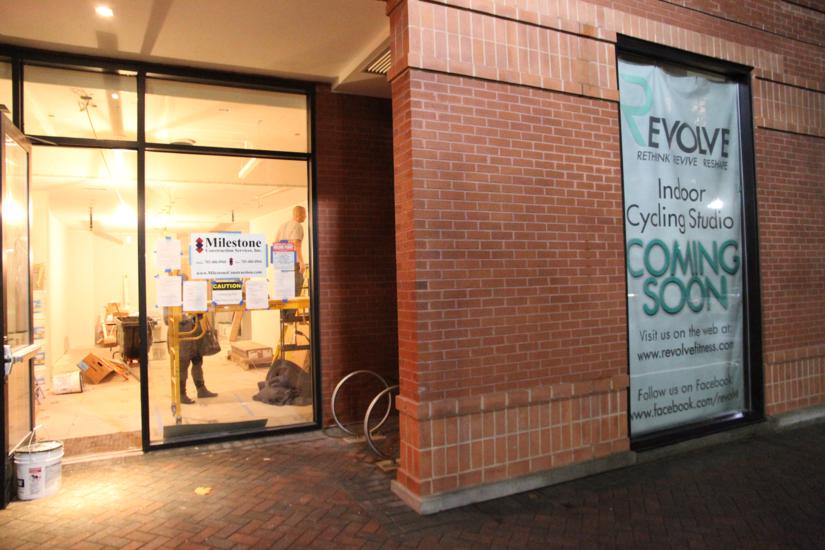
Indoor Cycling Studio Coming to Clarendon

Stand-alone indoor cycling studios are becoming trendy across the country, and soon Arlington will have one such facility to call its own.

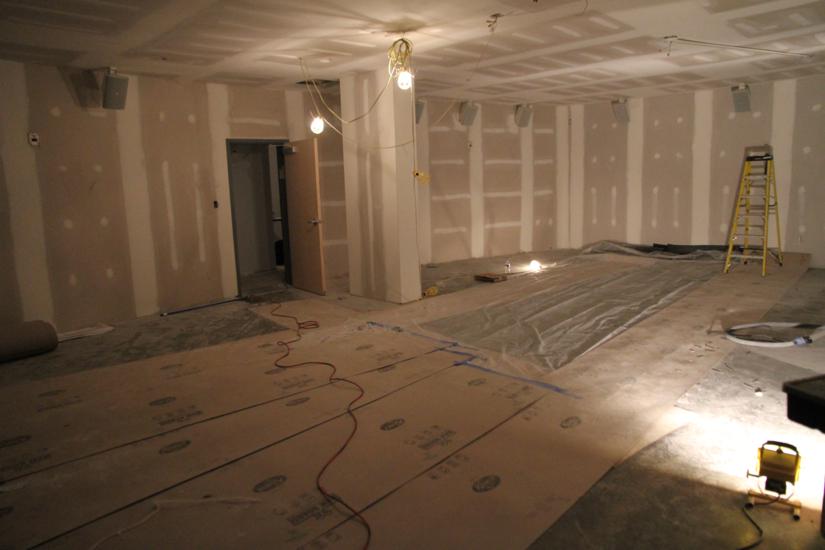
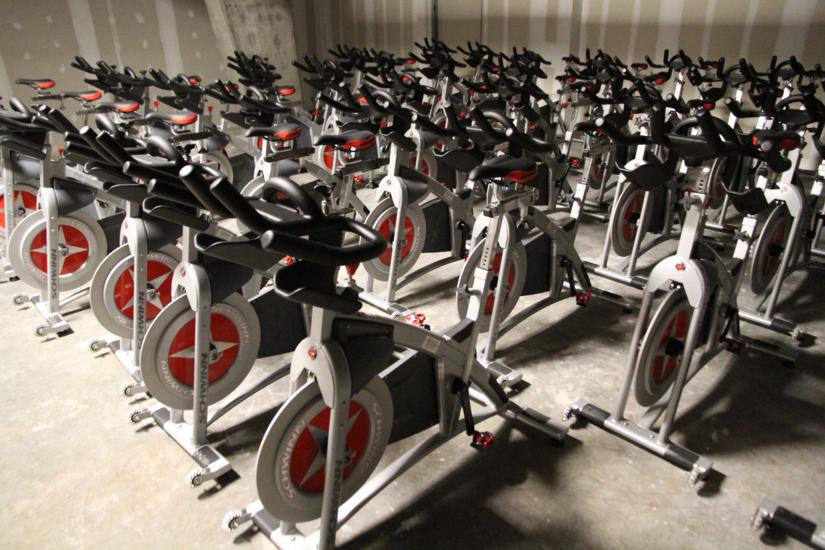
Revolve, which describes itself as a “high-end specialized indoor cycling studio,” is hoping to open at 1025 N. Fillmore Street in Clarendon by the end of the month. The studio, which is currently under construction in the ground floor of the Zoso Flats building, will eventually feature 40 Schwinn exercise bikes in a room surrounded by nearly a dozen speakers — to help pump in music to keep participants energized.

Revolve will offer three different types of classes classes, which will last 45 to 60 minutes and cost $17 to $20 per session. From a press release:

Revolve’s Fitness Consultant, Christianne Phillips, has designed three revolutionary classes to be featured exclusively at Revolve: Real Ride, Complete Body Ride and Barre Ride. A more traditional cycle class focusing on endurance, the Real Ride class will provide participants with an indoor journey that feels like an outdoor ride. Complete Body Ride is a full-body workout that incorporates cardio, strength and flexibility, and keeps participants moving while engaging in upper body weight training. Barre Ride is a revolutionary hybrid workout that combines cardio with toning barre-based exercises. In a Barre Ride class, participants will burn calories while sculpting muscles, using the bikes’ handlebars as a ballet-style bar.

Sylvan Garfunkel, who left the “rat race” of his job as a corporate attorney in New York City to run the studio as a co-owner, says what will set Revolve apart from the “big box gyms” is more personal service and an emphasis on camaraderie among the cyclists.

“Group fitness enthusiasts, especially indoor cyclists, feel a special kinship with their fellow participants,” Garfunkel said. “We want our studio to offer a community-like atmosphere, where bonds with instructors and fellow riders grow beyond the cycle room.”

In addition to regularly-scheduled classes, Revolve will offer special events like charity rides, private corporate and group rides and a monthly event featuring a live DJ. The business, which counts two college-aged brothers among its other two co-owners, is hoping to do a “soft opening” by the end of this month, with a full opening expected by mid-December.
Don’t Settle for Student Loans to Pay for Online Education

Online college programs are becoming a more popular choice for prospective students, with one study finding that more than 6 million students enrolled in at least one online course in fall 2015. The popularity of these courses can be attributed in part to their flexibility with working adults' schedules, students' ability to progress more quickly through online programs and, oftentimes, cheaper tuition. [See 10 low-cost online bachelor's programs for out-of-state students.]Online degrees can be beneficial to many college students, but some studies have shown online learners complete their programs at lower rates than students at traditional brick-and-mortar campuses. Individuals with student loans but no degree comprise two-thirds of defaulted borrowers. Though these numbers are not encouraging, just like for traditional programs, there are ways to reduce how much you'll need to borrow for an online program to ensure you won't become one of these statistics. Don't just settle on borrowing student loans to cover the whole cost of your program and living expenses. Instead, start thinking about how to cut costs and cover your balance in different ways, such as the following. -- Grants and scholarships: Even though you are taking an online course, you can still apply and receive grants and scholarships. But your first step should be to complete the Free Application for Federal Student Aid, commonly referred to as the FAFSA, which will allow you to receive a Pell Grant if your expected family contribution is low enough. The EFC criteria and award amounts are adjusted annually, but the 2017-2018 academic year awards range from $606 to $5,920, which could significantly lower the amount you borrow annually. Your next step is to apply for scholarships. You can start by checking online scholarship search engines, such as the Salt Scholarship Search, College Board's BigFuture and Peterson's. But don't forget to take advantage of local organizations and your school's financial aid office. Both may offer scholarships that you can't find with a national scholarship search. [Review these 10 sites to kick off your scholarship search.]For instance, organizations like the Elks Club, Knights of Columbus or the Rotary Club typically offer scholarships annually to local students. Just because you're going to school online doesn't mean you're ineligible. Visit your local library for scholarship listings, and ask around town. You might be surprised how many local organizations offer scholarships. While these scholarships typically aren't large, every little bit counts. Each dollar you receive in a scholarship is a dollar you don't have to borrow and pay interest on. -- Work-study: Another option for online students may be work-study awards. Not all students enrolled in online programs are eligible, but students at some schools -- including, for example, SUNY Empire State College and Liberty University -- are. Work-study awards are not given upfront like scholarships and grants. In most cases, they are an offer to earn up to the awarded amount if you secure an eligible work-study job. While there is a misconception that all work-study jobs must be on campus, students can work for off-campus, nonprofit or public employers as long as the work is in the public's interest. You may be able to work for a for-profit employer if the job is relevant to your course of study. No matter who the outside employer is, it will need to have an established agreement with your college for you to receive work-study funds. Remember, to be eligible for federal financial aid, you must be enrolled and pursuing a degree or certificate. If you're not working toward a credential, Pell Grants and work-study won't be option, but you may still be able to take advantage of private scholarships -- just be sure to read the eligibility criteria carefully. [Explore what to know about financial aid in online programs.]-- Pay as you go: One of the great benefits to enrolling online is the flexible schedule, which can allow you to complete your college coursework around your responsibilities. But prospective students often overlook using their part- or full-time job earnings as an option for paying for college. Almost 80 percent of college students in 2015 worked at least part time while attending classes, according to the National Center for Education Statistics. By budgeting and thinking strategically about your college costs, you can likely reduce your dependence on student loans by paying a portion out of pocket. Many -- but not all -- online programs are less expensive than traditional programs and often have shorter payment periods. Six, eight or 10 weeks are common course durations. Because of the frequency of payments in an online setting, you may be well-placed to pay as you go and possibly avoid borrowing altogether. Attending college online and avoiding student loans may be challenging, but if you are willing to put in the effort, you can limit the amount you need to borrow. More from U.S. News Q&A: Understanding Student Loan Discharge Eligibility Student Loan Refinancing Isn't Right for All Borrowers
Read Next Story